
 Zoe Nora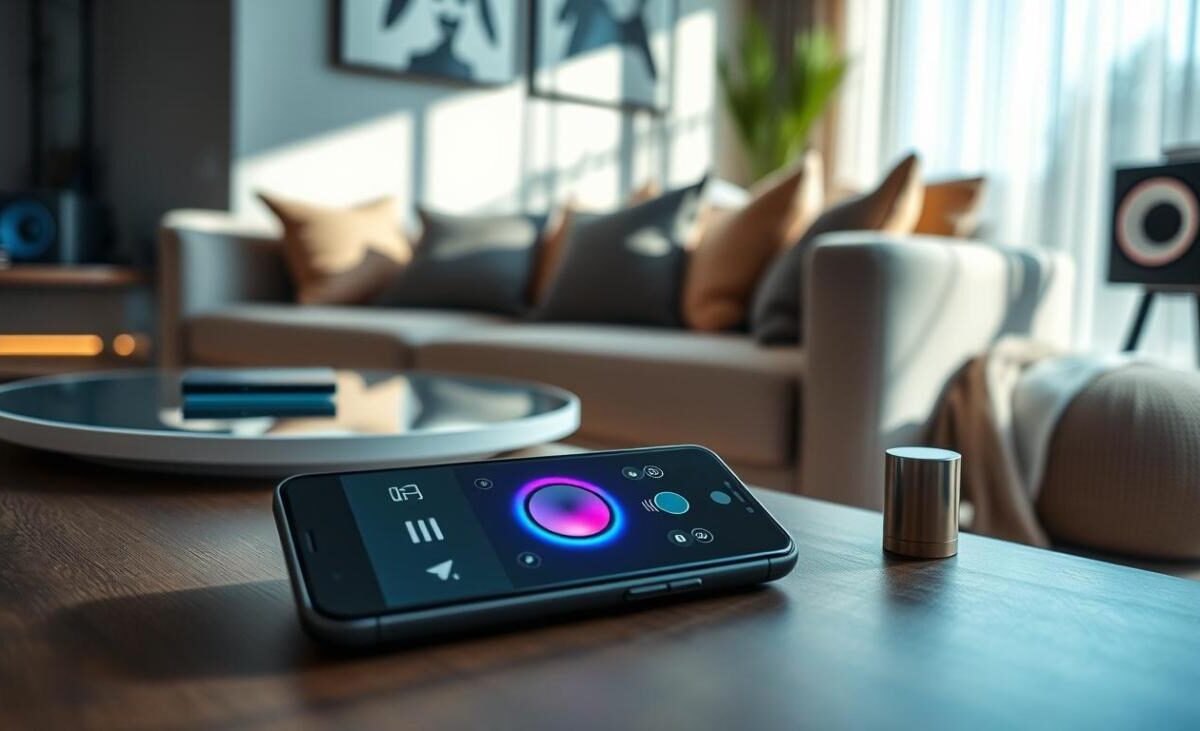
Did you know over 80% of modern smartphone users manage their daily life with digital tools? This change has greatly impacted how we interact with our surroundings. It’s true for our personal soundscapes too.
We’re moving into a time where a mobile-controlled sound system offers top-notch customization in our hands. Whether at home or in a bustling city, these tools let us control our environment with a few taps.
Today’s tech, like hearing aid apps, lets us tweak frequencies and volumes on the fly. With app-controlled audio, we can customize our listening to fit our personal tastes. This guide will help you use these systems daily for a clearer, more vibrant life.
Key Takeaways
- Smart interfaces allow for precise, real-time sound adjustments.
- Mobile technology makes high-quality sound management accessible to everyone.
- Personalized settings improve clarity in noisy or challenging environments.
- Integrating these tools helps us stay connected to our surroundings.
- Modern software bridges the gap between complex hardware and user-friendly control.
What is App-controlled Audio?
We’re moving into a time where our audio gear responds to our likes instantly. With app-controlled audio, we can tailor our sound just how we want it. This tech connects our digital devices to speakers, letting us tweak settings like pros.
Definition and Functionality
This tech is all about using software to tweak sound in real time. It lets us fine-tune frequency, volume, and more, keeping sound clear and comfy. Smart audio control changes how we enjoy home entertainment, making it as easy as mixing a song.
Using these tools, we talk to our gear to get the best sound for our space. Whether it’s a big room or a small office, the software adjusts for the best sound. This ensures our listening is always top-notch.
Key Features of App-controlled Audio
Today’s systems come with cool tools to make our listening better. These features let us customize our sound without touching the hardware.
- Real-time EQ adjustments: Music Volume EQ lets us tweak sound on the fly, even when switching apps or locking screens.
- Spatial Sound Mapping: We can tweak the sound’s depth and width for a more immersive feel.
- Dynamic Volume Normalization: This keeps volume steady, avoiding loud jumps between tracks or sources.
With these advanced tools, we’re in charge of our sound world. Using app-controlled audio is the best way to make sure our sound system is always at its best.
Advantages of App-controlled Audio
We can now change our daily soundscapes with mobile technology. Moving away from knobs and dials, we get precision we couldn’t before in home or personal audio.
Enhanced Customization
The main benefit is making personalized sound profiles. We can adjust treble, bass, and balance on our smartphones, whether with high-end headphones or hearing aid apps.
This wireless audio control lets us match audio to our current environment. We don’t have to stick to factory settings anymore. We can fine-tune our listening experience for our unique hearing needs.
Seamless Device Integration
Strong audio app integration keeps our settings the same on all devices. Switching from a smartphone to a tablet, our sound preferences stay the same. This gives us a seamless user experience.
With remote app audio, we can manage multiple zones in our homes from anywhere. This creates a unified system where every device works together for great sound.
| Feature | Manual Control | App-Controlled |
|---|---|---|
| Sound Tuning | Limited | Advanced |
| Accessibility | Physical Proximity | Remote Access |
| Consistency | Device Specific | Cross-Platform |
| Ease of Use | Moderate | High |
Popular App-controlled Audio Devices
Today, we have a lot of power in our hands. We can turn our homes into professional studios with a mobile-controlled sound system. These devices use easy-to-use software to connect complex hardware to us.
Smart Speakers
Smart speakers are key in today’s connected homes. They let us control music in different rooms with just a tap on our phones. We can also adjust the sound to fit our taste with built-in equalizers.
Wireless Headphones
High-end headphones now work closely with apps. These Bluetooth audio devices let us switch features like noise cancellation and transparency modes. Apps like Boom 3D add spatial effects for a bigger sound experience.
Soundbars
Soundbars give us a movie theater feel at home. They support Dolby Atmos for virtual surround sound that fills the room. Through apps, we can fine-tune these systems for the best sound for movies, games, or sports.
How to Choose the Right App-controlled Audio Device
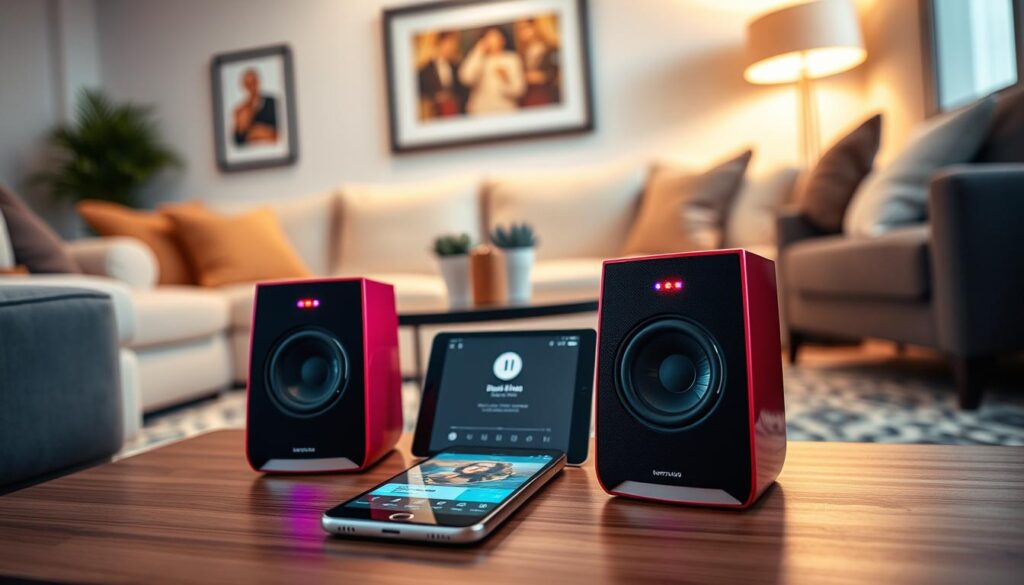
Choosing the right audio hardware means looking at how devices work together. We need to think about our specific needs. This ensures that any app-connected audio devices we buy will make us happy for a long time. By focusing on quality and how well they work together, we can create a sound system that improves our daily lives.
Budget Considerations
First, we need to set a budget. Mid-range Bluetooth audio devices usually offer the best value. It’s key to find options that give us good value over time, not just the cheapest price.
Thinking about the long-term cost is also important. High-quality devices last longer and get better software updates. This saves money in the long run. Choosing a reliable brand means our remote app audio experience will stay great for years.
Compatibility and Ecosystem
Before buying, check if the device works with our smartphone. Many app-connected audio devices need specific software to work right. Looking at the manufacturer’s website for compatibility lists helps avoid setup problems.
It’s also important to choose Bluetooth audio devices that get regular updates. These updates fix bugs and add new features to our remote app audio setup. A well-maintained ecosystem means all our smart home devices work smoothly together.
| Device Category | Budget Range | Key Feature | Compatibility |
|---|---|---|---|
| Entry-Level Speakers | $50 – $150 | Portability | iOS & Android |
| Mid-Range Headphones | $150 – $300 | Noise Cancellation | Universal |
| Premium Soundbars | $300+ | Surround Sound | Smart Home Hubs |
Setting Up App-controlled Audio Devices
We think setting up your home audio system should be easy and stress-free. Modern tech makes installing high-quality sound hardware simple for everyone.
Step-by-Step Installation Guide
Connecting your new gear is often as easy as pairing Bluetooth audio devices with your phone. Just follow a few steps to make sure you have a stable connection every time you play your favorite songs.
- Download the official manufacturer app from your device’s app store.
- Enable Bluetooth on your smartphone and put your audio hardware into pairing mode.
- Open the app and follow the on-screen prompts to detect and sync your new equipment.
- Complete any necessary firmware updates to ensure the latest features are active.
Tips for Optimal Configuration
Once your system is connected, you can fine-tune your listening space with wireless audio control. Check the app settings to adjust your sound based on your room’s acoustics.
Also, save custom presets for different spots in your home. This way, your app-connected audio devices will always sound great, whether you’re in the living room or office. Consistency is key for a top-notch sound experience everywhere.
The Role of App-controlled Audio in Home Automation
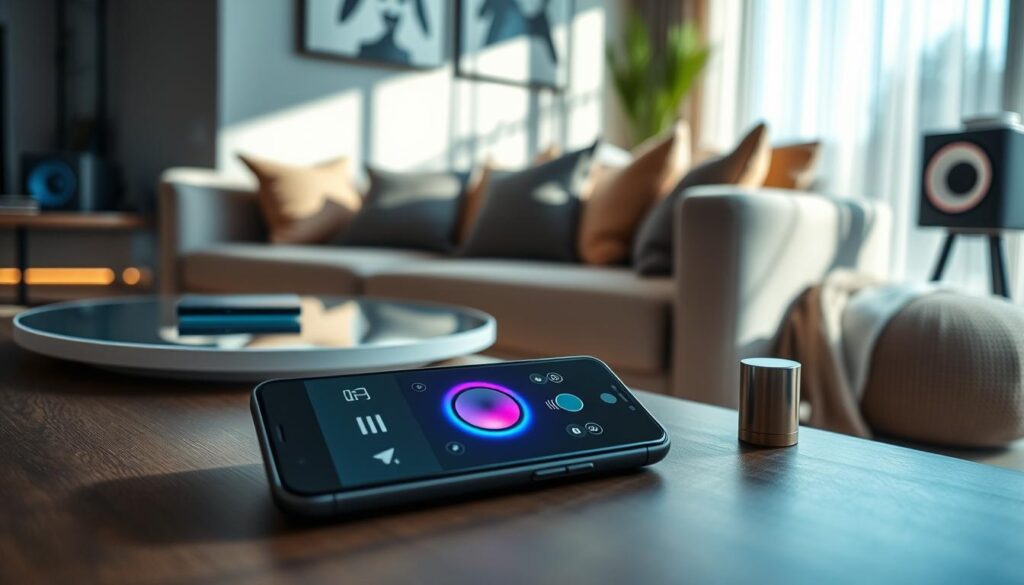
Adding sound to our home automation makes our living space more immersive and responsive. We can now control our environment to react to our presence and preferences. This move towards smart audio control lets us move smoothly between rooms with consistent sound quality.
Integrating with Smart Home Systems
Today, we need a unified tech approach. That’s why audio app integration is key. Connecting our speakers to automation platforms lets us start music scenes based on events like coming home or starting a dinner party. You can check out high-end audio solutions for a seamless experience.
Connecting our entertainment systems with lighting, climate, and security makes our homes work better together. This simplifies managing multiple apps. A unified system is more reliable and fun for everyone.
Voice Control Capabilities
The growth of smart speaker control has changed how we use media. We don’t need to use a phone or tablet to change songs or adjust the volume. Simple voice commands let us control our music hands-free.
This hands-free feature is great when we’re busy or have guests. It makes our daily lives easier and more convenient. Here’s how these features improve our tech interactions.
| Feature | Manual Control | Automated Integration |
|---|---|---|
| Volume Adjustment | Physical buttons | Voice commands |
| Playlist Selection | App navigation | Contextual triggers |
| Device Syncing | Manual pairing | Unified ecosystem |
| System Response | Immediate | Predictive/Scheduled |
Exploring Popular Audio Apps
We can now unlock our sound systems’ full potential with advanced software. These platforms change how we interact with our music, giving us control over our listening spaces. With a mobile-controlled sound system, every song is played as the artist meant it to be.
Today’s audio app integration lets us switch to high-resolution playback and tweak equalizers from our phones. Whether setting up a multi-room audio system or enjoying music alone, these tools are key for a top-notch experience.
Spotify and Apple Music
Spotify and Apple Music lead the pack, with huge libraries and easy-to-use interfaces. They’re great at connecting with different devices, making them essential for many home setups.
- Spotify Connect: Makes switching between devices smooth, without stopping the music.
- Apple Music Integration: Offers high-quality spatial audio for a deeper soundstage.
- User Experience: Both platforms have strong playlist management and taste-learning algorithms.
Tidal and Amazon Music
For those who value sound quality, Tidal and Amazon Music are top picks. They stand out by offering built-in high-resolution playback enhancers for audiophiles.
Using these apps, we get access to studio-quality streams that redefine digital audio. The audio app integration in these services ensures our hardware gets the best data rate. Pairing these platforms with a high-quality mobile-controlled sound system gives us a listening experience as good as a professional studio.
Troubleshooting Common Issues with App-controlled Audio
Even the most advanced app-controlled audio systems can face technical problems. These systems need a stable network and software to work well. We can usually fix these issues with a few easy steps to get our sound back.
Connection Problems
One common issue is signal drops between devices and the network. If your remote app audio stops working, check your router’s signal strength. Physical barriers or other electronics can weaken the signal to your app-connected audio devices.
Make sure your firmware is up to date for the best network compatibility. If problems continue, try restarting your audio gear and router. This reset often fixes temporary errors that stop playback.
App Glitches
Software performance is as crucial as hardware when managing sound systems. If the app freezes or doesn’t respond, check for updates in your app store. Developers often release fixes for bugs that cause unexpected behavior.
Also, watch how these apps use your phone’s resources. App-controlled audio can quickly drain your battery if it runs in the background. Close unused apps and clear the app cache to keep your remote app audio efficient. By keeping up with these habits, we ensure a smooth and enjoyable listening experience.
Future Trends in App-controlled Audio
We’re on the cusp of a new era where our music choices become super personal and smart. The fast growth of innovation in music and audio apps means our devices will soon guess what we want to listen to before we even ask.
Technological Evolution
Future tech will use advanced AI to adjust sound in real time. This change will keep smart audio control smooth, tweaking sound quality based on where we are. We’re looking forward to systems that learn our likes, creating the perfect sound for our day.
Market Expansion
The need for clear sound and easy connection across devices is pushing the industry forward. As smart speakers become common in homes, we’ll see them work better with wearables and smart home systems. This will change how we enjoy music and shows, making every listen more exciting.