
 Zoe Nora
Did you know that nearly 70% of home audio systems fail to reach their full potential? This is because of poor signal transmission. Many enthusiasts spend thousands on high-end components but forget about the path that carries the sound to their ears.
Many modern consumers don’t know much about the technical side of connectivity. But choosing the right speaker wire is key for high-quality sound. Knowing about wire gauge and home audio wiring helps avoid common problems that lower performance.
By making smart choices, you can make sure your system works at its best. We aim to guide you through these technical details. This way, you can enjoy the true clarity of your music. Getting the right speaker wire is the last step to a professional listening experience.
Key Takeaways
- Most audio systems underperform due to inadequate signal paths.
- Proper cabling is essential for maintaining sound fidelity.
- Understanding gauge ratings helps prevent signal loss.
- Quality connections protect your investment in audio gear.
- Small adjustments in your setup lead to significant acoustic improvements.
Understanding Speaker Wire Basics
We often focus on the speakers themselves, but the path the signal takes is just as vital to your listening experience. A high-quality speaker wire acts as the essential bridge between your amplifier and your speakers. Without this connection, your system cannot function as intended.
The Role of Speaker Wire in Audio Systems
A sound system wire conducts an electrical signal from your receiver to your speakers. This signal powers the magnetic coils inside the speaker drivers. As these coils receive power, they move the speaker cones back and forth to create sound waves.
If the connection is weak or inefficient, the signal may degrade before it reaches its destination. Using a reliable audio cable ensures that the electrical energy remains stable. This stability is crucial for maintaining clarity and volume in your home audio setup.
Types of Speaker Wire Materials
Most manufacturers use copper as the primary material for high-performance cables. Copper is highly conductive, allowing for a smooth flow of electricity with minimal resistance. You might also encounter silver-plated options or oxygen-free copper, which are designed to prevent corrosion over time.
While some budget-friendly options use copper-clad aluminum, pure copper remains the gold standard for most enthusiasts. Choosing the right material for your audio cable can prevent signal loss and ensure your system performs at its peak. Always check the specifications to ensure you are getting a durable product.
Importance of Wire Gauge
The thickness of the metal inside your speaker wire is known as the gauge. A lower gauge number indicates a thicker wire, which generally offers less resistance to the electrical current. This is important for long runs where thin wires might struggle to deliver enough power.
Selecting the correct gauge for your sound system wire helps maintain the integrity of the audio signal. If you use a wire that is too thin for the distance, you may notice a drop in sound quality or volume. Investing in the proper thickness is a simple way to maximize the efficiency of your entire audio chain.
Key Considerations When Choosing Speaker Wire
Setting up a home theater means thinking about how far apart your components are. Picking the right speaker cable is key. It’s all about planning for the best signal transfer in your room.
Distance Between Speaker and Receiver
Wire resistance goes up with longer lengths, hurting sound quality. If your receiver is far from your speakers, sound might suffer. Proper planning helps avoid these issues.
For longer distances, thicker wires help keep the signal strong. A top-notch audio cable keeps your sound clear from start to finish. Shorter runs are always better for clear sound.
Considerations for Indoor vs. Outdoor Use
Where you put your system affects your wiring needs. Indoor surround sound cable is made for easy setup behind walls or under carpets. It usually has a standard PVC jacket for indoor use.
Outdoor setups need cables that can handle the weather. Look for ones with UV-resistant jackets and moisture-proof insulation. The right material keeps your system working well, no matter the weather.
Speaker Wire Gauge Explained
The quality of your sound system depends on a simple measurement called wire gauge. Many people ignore this detail, but it’s crucial for keeping the signal strong from your amplifier to speakers.
Choosing the right speaker cable means your audio signal travels well. Knowing about these measurements helps you avoid problems that can ruin your listening experience.
What is AWG?
The American Wire Gauge (AWG) system is how we measure wire thickness. Remember, a lower number means a thicker wire.
A 12 AWG wire is much thicker than a 16 AWG wire. This thickness is key because it affects how much current the speaker wire can carry over a certain distance.
Choosing the Right Gauge for Your Setup
When setting up your system, think about your speakers’ power needs and the wire length. Thinner wires have more resistance, which can cause power loss and lower sound quality over long distances.
For example, 16 AWG wire has a resistance of 4-Ohms per 1000 feet. This is a big deal for long runs. If your speaker cable will go across a big room, choose a lower gauge number to reduce resistance.
- 12-14 AWG: Great for long runs or high-power home theaters.
- 16 AWG: Good for shorter distances and standard bookshelf speakers.
- 18 AWG: Best for very short, low-power connections.
Always go for a thicker wire gauge if you’re not sure about the distance. Investing in the right thickness now stops signal loss and makes sure your system works its best.
Copper vs. Aluminum Wires
Choosing the right material for your speaker wire is key to a great audio system. The metal affects how well your amplifier sends signals to speakers. Copper wire and aluminum are common choices, with copper being better for sound quality but more expensive.
Advantages of Copper Speaker Wire
Pure copper is the top choice for audio because of its exceptional conductivity. It has low signal resistance, keeping your sound clear and accurate. High-end systems often use oxygen-free copper wire to keep signals strong over time.
Using copper helps your speakers work their best. If you want the best sound and reliability, choose high-quality copper for your system.
When to Consider Aluminum
Copper-Clad Aluminum, or CCA, is cheaper with a copper layer over aluminum. It’s good for those on a strict budget or wiring large areas. It’s not as good as pure copper but works for simple, short setups.
But, aluminum is not as durable and can corrode more than oxygen-free copper wire. Use CCA for temporary setups or where sound quality isn’t the main goal.
| Feature | Pure Copper | Copper-Clad Aluminum |
|---|---|---|
| Conductivity | Excellent | Moderate |
| Durability | High | Low |
| Cost | Higher | Budget-Friendly |
| Best Use | High-Fidelity Audio | Basic Installations |
The Impact of Speaker Wire Length
The length of your speaker wire is crucial for sound quality. Many focus on brand or material, but distance matters a lot. If not managed, speaker power loss over distance can harm your listening experience.
How Length Affects Sound Quality
Every audio cable has electrical resistance. Longer wires mean more resistance, leading to power and clarity loss. Long distances can filter out high frequencies and soften bass.
Long cables also pick up more interference. Even top high-fidelity audio cables struggle with long lengths. Shorter cables keep signals strong and clear.
Recommendations for Different Lengths
For the best surround sound cable performance, match wire gauge to distance. Thicker wires handle longer distances better. The right gauge keeps your high-fidelity audio cable setup in top shape.
For home theaters, follow these guidelines for surround sound cable signal strength. The table below helps choose the right gauge for your setup.
| Distance (Feet) | Recommended Gauge (AWG) | Performance Level |
|---|---|---|
| Under 25 feet | 16 AWG | Excellent |
| 25 to 50 feet | 14 AWG | Optimal |
| 50 to 100 feet | 12 AWG | High Fidelity |
| Over 100 feet | 10 AWG | Professional |
Keep your audio cable runs neat and direct. The right thickness for your distance protects your system. This ensures your audio stays crisp and immersive.
Insulation and Jacket Types
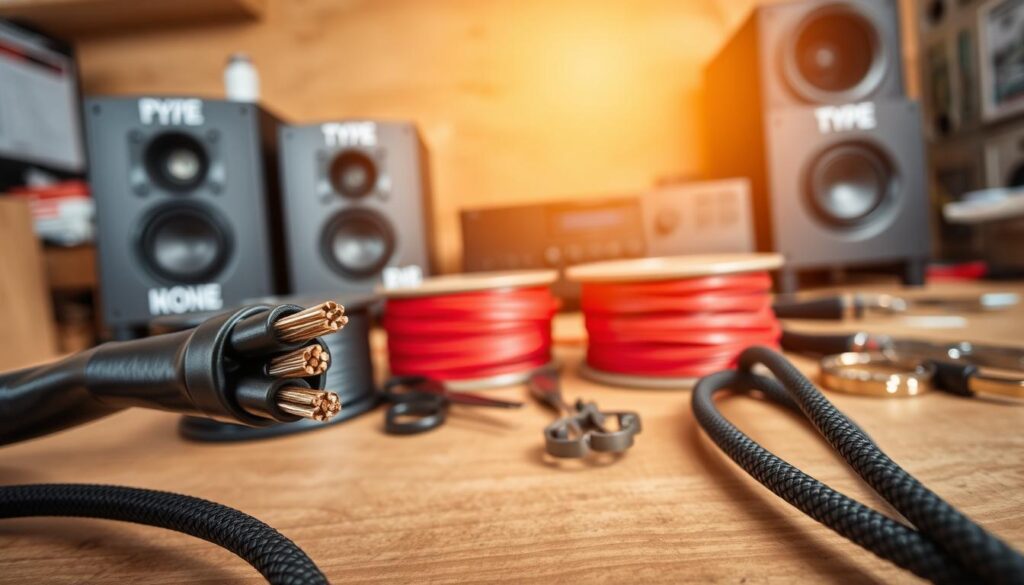
The outer layer of your cables is key to their long life. While we focus on oxygen-free copper wire, the jacket protects against outside interference. Good insulation keeps your home audio wiring safe from damage and the environment.
Understanding Insulation Material
Many polymers coat the conductors in cables, each with its own benefits. PVC is the most used because it’s flexible and affordable. It’s great for indoor use where things are not too harsh.
For tougher jobs, PE or Teflon is better. They keep the signal clean. The right material makes sure your oxygen-free copper wire works well without losing signal.
Choosing the Right Jacket for Your Environment
The place you put your cables matters. High humidity can cause corrosion if the jacket isn’t sealed. For cables in walls or outside, look for moisture-resistant ratings.
Heat can also damage insulation. Near heaters or in hot places, a heat-resistant jacket is needed. The right home audio wiring protection keeps your system running well for a long time.
| Material | Flexibility | Heat Resistance | Best Use Case |
|---|---|---|---|
| PVC | High | Moderate | General Indoor |
| Polyethylene | Medium | High | High-End Audio |
| Teflon | Low | Very High | Extreme Environments |
Budgeting for Speaker Wire
Finding the right mix of cost and quality is key for any home audio setup. Audio fans often struggle to split their budget among different parts. It’s tempting to spend a lot on cables, but smart shopping can lead to better results than just buying the most expensive ones.
Price Ranges for Quality Speaker Wire
The market has many options, from basic spools to high-end, pre-terminated cables. Knowing the different levels helps you spend wisely and avoid wasting money on features that don’t enhance your sound.
- Entry-Level: Affordable bulk wire for simple setups and short distances.
- Mid-Range: High-quality copper with better shielding and durable jackets.
- Premium: Advanced designs with special geometry or finishes.
| Category | Typical Use Case | Price Expectation |
|---|---|---|
| Budget | Standard home audio | Low |
| Performance | High-fidelity systems | Moderate |
| Audiophile | Professional setups | High |
How to Balance Cost and Quality
When buying speaker wire, remember that the cable’s properties are more important than the brand. Choosing the right gauge ensures your signal travels well without losing quality. Focus your budget on the correct thickness for your needs.
Don’t get swayed by claims of huge improvements from expensive materials. A good sound system wire made of quality copper works great in most homes. By focusing on technical specs over fancy packaging, you can get top-notch sound without breaking the bank.
Recommendations for Popular Brands
Choosing the right speaker cable is more than just the brand name. What really counts is the cable’s internal design and materials. By focusing on technical details, you can get top-notch sound without spending too much on fancy packaging.
Top Speaker Wire Brands in the Market
Some brands are known for their quality and performance. AudioQuest is famous for its high-end engineering and advanced materials. It’s a top choice for those who want the best sound.
Monoprice is great for those looking for value. They offer reliable cables that work well for home theaters without breaking the bank.
Blue Jeans Cable stands out for its honest approach. They use high-quality copper wire and durable shielding. This ensures your sound stays clear from start to finish.
What to Look for in a Brand
When buying, look for cables made from pure copper. Oxygen-free copper is best because it doesn’t corrode and keeps signals strong. Also, make sure the cable is durable and has a thick, flexible jacket to protect it.
Check the termination quality and gauge consistency too. A good brand will clearly state the AWG rating and insulation type. Use the table below to compare features when looking for your next upgrade.
| Brand | Primary Material | Best Use Case | Build Quality |
|---|---|---|---|
| AudioQuest | Solid Core Copper | Audiophile Systems | Excellent |
| Monoprice | Oxygen-Free Copper | Home Theater | Good |
| Blue Jeans | High-Purity Copper | General Purpose | Very Good |
Installation Tips for Speaker Wire
Connecting your hardware right is as key as the quality of your components. For a top-notch audio experience, you need patience and detail in setup. By following some best practices, your surround sound cable system will shine.
How to Properly Connect Your Speaker Wire
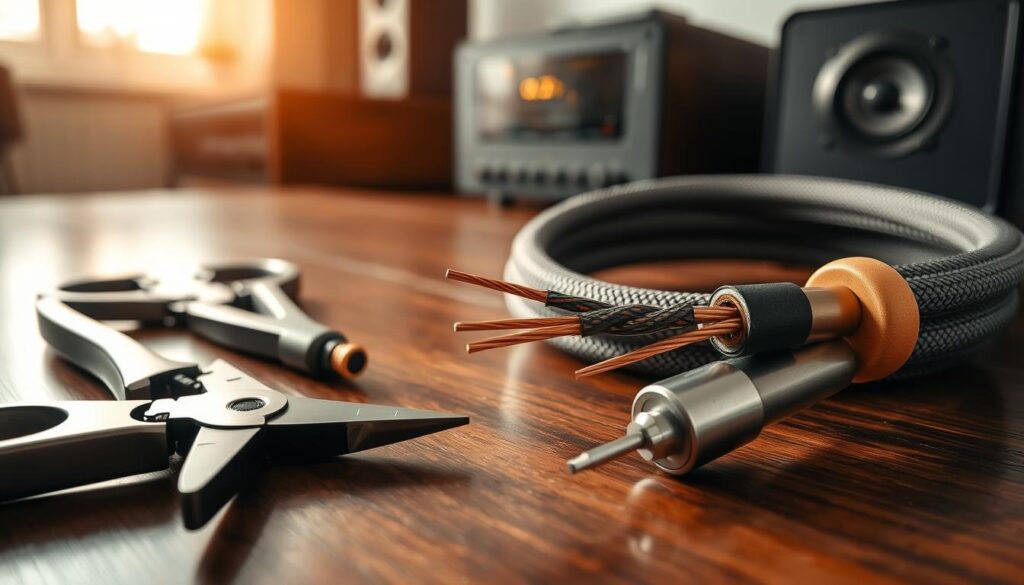
When connecting your parts, choose high-quality connectors over bare wire. Bare wire is okay for still setups but not for moving parts. Connectors like banana plugs or spade connectors offer a secure, long-lasting contact that keeps the signal strong.
To connect your copper wire, strip half an inch of insulation from the ends. Then, twist the exposed strands tightly to prevent fraying before putting them into your connector. This step keeps your speaker cable ready for the electrical signal.
Avoiding Common Installation Mistakes
One big mistake is using the wrong wire gauge for the distance. Make sure your wire thickness fits your speakers’ power needs to avoid signal loss. Also, ensure your connections are tight; a loose one can cause sound issues or harm your amplifier.
Another mistake is not keeping the same polarity across all channels. Always match the positive and negative terminals on your receiver with your speakers’. Keeping your copper wire organized and labeled helps avoid these mistakes and keeps your surround sound cable setup working well.
| Connector Type | Best Use Case | Ease of Install | Durability |
|---|---|---|---|
| Banana Plugs | Home Theater | High | Excellent |
| Spade Connectors | Fixed Terminals | Medium | High |
| Bare Wire | Budget Setups | Low | Low |
Future-Proofing Your Setup
Planning for the future of your home audio wiring is key. It ensures your system performs well as your collection grows. We often focus on sound quality now, but the right foundation today prevents costly upgrades later. This way, you protect your investment and keep your audio quality high.
Considering Upgrade Paths
When setting up your system, choose a versatile wire gauge for future expansions. If you plan to add more powerful amplifiers or high-end speakers, a thicker cable is safer. This choice lets your system handle more power without needing a full upgrade.
Strategic planning is crucial for smooth upgrades. Using a slightly heavier cable than needed now protects your audio quality. It keeps your signal path clean and efficient, even as your power needs increase.
Why You Might Need to Revisit Your Wire Choices
Checking your home audio wiring regularly is wise. Over time, oxidation or wear can harm your connections. Also, upgrading to more sensitive speakers might show your wiring is no longer up to par.
Inspect your connections yearly to keep them tight and corrosion-free. If sound quality drops, it might be time to update. Staying ahead of these issues ensures your listening experience remains top-notch.
| System Power Level | Recommended Wire Gauge | Future-Proofing Benefit |
|---|---|---|
| Low Power (Entry) | 16 AWG | Standard performance for basic setups |
| Medium Power (Mid-Fi) | 14 AWG | Better headroom for future upgrades |
| High Power (Audiophile) | 12 AWG | Maximum signal integrity for long-term use |
Troubleshooting Common Issues
When your music sounds thin or distorted, the problem is often simple. Even the best audio setups can face frustrating issues. Usually, the problem is a connection error, not a hardware failure.
Identifying Sound Quality Problems
If your music sounds unclear or lacks bass, check your high-fidelity audio cable. Look for static, crackling, or one channel cutting out. These signs mean a loose or dirty connection.
Also, watch for phase issues. This happens when wires are connected wrong. It makes music sound distant or unfocused. A good high-fidelity audio cable should keep the sound clear. Any drop in quality means it’s time to check your setup.
Fixing Poor Connections
After spotting a problem, check your sound system wire for damage. Turn off your amplifier to avoid electrical issues. Look for any copper strands touching other terminals.
If connections are loose, tighten them. Dust or oxidation can also affect performance. Clean your sound system wire contacts with a special cleaner. This can quickly improve your system’s sound quality.
Resources for Further Learning
Mastering your home theater setup is a journey that never ends. We suggest diving into books and online resources to learn more about signal transmission.
For expert advice on picking the best audio cable, check out top websites. They share detailed info on how different materials affect sound quality.
Educational Literature and Digital Portals
Books by Robert Harley are great for learning about high-end audio systems. Sites like Audioholics offer detailed tests to separate real performance from marketing hype.
Engaging with Expert Communities
Joining forums like AVS Forum is a great way to share ideas with experts. You’ll learn how professionals use oxygen-free copper wire for clear signals over long distances. Being part of these communities keeps you up-to-date with the latest in sound technology.