
 Zoe Nora
Did you know over 150 million households in the United States use automated tech daily? This shows how fast we’ve adopted the voice-controlled speaker as a key part of our lives. These devices have grown from simple gadgets to essential tools. They help us manage our schedules, control lights, and access music easily.
Finding the right home assistant speaker is crucial for a connected home. These devices often decide your ecosystem for years, so choose wisely. Whether you want top-notch sound or deep calendar integration, checking out the best smart speakers is key. We think the right choice simplifies your life and boosts your home’s value.
Key Takeaways
- Modern devices act as the central command center for your entire smart home ecosystem.
- Choosing the right hardware often depends on your existing smartphone and preferred digital services.
- These tools have evolved to handle complex tasks, from managing schedules to streaming high-quality audio.
- Selecting a compatible platform ensures a seamless experience across all your connected devices.
- Investing in the right technology is a critical step toward creating a more efficient and responsive living space.
What is a Voice-controlled Speaker?
Learning about a voice-controlled speaker opens up your smart home’s potential. These devices look like regular speakers but are smarter. They can understand and act on complex voice commands, unlike regular Bluetooth speakers.
Overview of Voice-controlled Technology
At the core of a voice-controlled speaker are advanced microphones. They pick up sound from all around, ignoring background noise. When they hear a specific word, they start listening for your next command.
The brain of the home assistant speaker is cloud-based AI. It understands your voice, turns it into digital commands, and acts on them. Whether it’s setting a timer or checking the weather, it does it fast and smoothly.
How it Works
When you talk to your device, it records and sends your voice to a server. The AI there figures out what you want and gets the info or controls the smart devices. This happens quickly, making your home assistant speaker feel like a real helper.
| Feature | Standard Bluetooth Speaker | Voice-controlled Speaker |
|---|---|---|
| Primary Function | Audio Playback | Smart Home Control |
| Connectivity | Bluetooth Only | Wi-Fi and Bluetooth |
| Interaction | Manual Buttons | Voice Commands |
| Intelligence | None | AI Assistant |
Knowing how a voice-controlled speaker works helps you see its value. It connects your voice to your digital world, making life easier.
Benefits of Using a Voice-controlled Speaker
The real value of a voice-controlled speaker is how it makes your life easier. These devices are like smart helpers that listen to what you say. They make simple tasks feel like a breeze.
By using this tech, you get a trusted friend to help with your daily plans and surroundings. Just talk to it, and it will take care of the rest.
Hands-Free Convenience
The main perk of a wireless speaker is the freedom it offers. You can do many things without touching it. Like setting timers, checking the weather, or playing music.
This is great for when you’re busy with things like cooking or getting ready for work. It makes your morning routine smoother.
Smart Home Integration
A voice-controlled speaker is key to a smart home. It connects to your lights, thermostats, and security systems. This lets you control everything with just your voice.
Want to change the temperature or lock your doors? Just say it. This makes managing your home much easier.
Accessibility for All Users
For many, this tech is more than useful; it’s essential for living independently. It helps those with mobility or vision issues control their space with voice commands. This wireless speaker tech breaks down barriers.
It lets everyone manage their home with confidence and ease. It’s a game-changer for accessibility.
| Benefit Category | Primary Advantage | User Impact |
|---|---|---|
| Convenience | Hands-free operation | Saves time during daily tasks |
| Integration | Centralized device control | Simplifies smart home management |
| Accessibility | Assistive voice interaction | Promotes independence for all |
Popular Voice-controlled Speaker Brands
Exploring the world of smart home audio means looking at top brands. Each major brand has its own way of making a voice-controlled speaker fit your home. Knowing these differences helps you pick the right fit for your digital life.
Amazon Echo Series
Amazon leads with the widest range of options. They offer four speaker models and five smart displays. This means you can find the perfect fit for every room, from small bedside units to top-notch audio systems.
Google Nest Devices
Google aims to integrate deeply with its search and productivity services. Their wireless speaker lineup serves as a central hub for your calendar, email, and smart home controls. Many love it for its ability to answer complex questions accurately.
- Seamless connectivity with Android devices.
- Advanced natural language processing capabilities.
- Strong support for third-party smart home hardware.
Apple HomePod Offerings
Apple caters to iOS users who value premium sound and design. Their devices are known for premium sound quality and sleek design. If you want top-notch audio and privacy, Apple is often the best choice for your wireless speaker setup.
The best voice-controlled speaker depends on your preferences. Whether you go for Amazon’s variety, Google’s smarts, or Apple’s sound, each brand leads to a smarter home.
Key Features to Look For
Knowing which technical specs are most important can help you make a smart choice. When searching for the perfect smart speaker, the market offers many options. Focus on key performance metrics to find the right device for your needs.
Sound Quality and Performance
Good sound quality is crucial for enjoying music, podcasts, or audiobooks at home. A top-notch smart home device should have clear highs and deep bass. The Amazon Echo Dot Max is known for its room-filling sound, great for bigger spaces.
For expert advice on audio quality, check out the best smart speakers. They compare models in real-world tests. Good audio is key for an immersive experience in any room.
Voice Recognition Capabilities
Voice commands are how you interact with your tech. So, microphone sensitivity is very important. You want a device that can hear you clearly, even with background noise.
- Microphone Array: Devices with multiple microphones are better at spatial awareness.
- Noise Cancellation: This feature helps filter out ambient sounds for better command recognition.
- Processing Speed: Faster chips mean quicker responses to your voice prompts.
Multi-Device Compatibility
A good smart home device should connect all your devices. Many users like models that support various protocols. This lets you control lights, thermostats, and security systems easily. The Amazon Echo Dot Max is great because it has a built-in smart home hub.
Compatibility means your tech works together smoothly. Check that the device supports your home’s platforms before buying. This avoids future problems and creates a more unified environment.
Setting Up Your Voice-controlled Speaker
Setting up your smart home device right is key to a smooth, hands-free life. We suggest a step-by-step approach. This ensures your device works well and keeps your home safe.
Step-by-Step Installation Process
Most devices need a similar setup to start. First, pick a spot for your smart speaker for the best sound. Plug it in and wait for the light to show it’s ready.
Some brands, like Amazon, use Frustration-Free Setup (FFS). This makes connecting to your network and other devices easy, right from the start.
Connecting to Wi-Fi
A strong internet connection is crucial. Make sure your router’s signal is strong where you put the device. If you have connection issues, try moving it closer to your router.
Downloading the Companion App
To get the most out of your device, download the official app. This app is your main control for your smart home device. It will help you finish the setup and let you set your preferences.
| Brand | Primary App | Setup Method |
|---|---|---|
| Amazon | Alexa App | Frustration-Free Setup |
| Google Home | Bluetooth/Wi-Fi Pairing | |
| Apple | Apple Home | Proximity/NFC Pairing |
By following these steps, your smart speaker will be ready for everyday use. Double-checking your settings now can save you from future problems.
Customizing Your Voice-controlled Speaker Experience
Turning your smart speaker into a personal assistant is more than just setting it up. Adjusting settings to fit your lifestyle makes it a central part of your day. Customizing your smart home device makes it feel like a natural part of your home.
Personalizing Voice Assistants
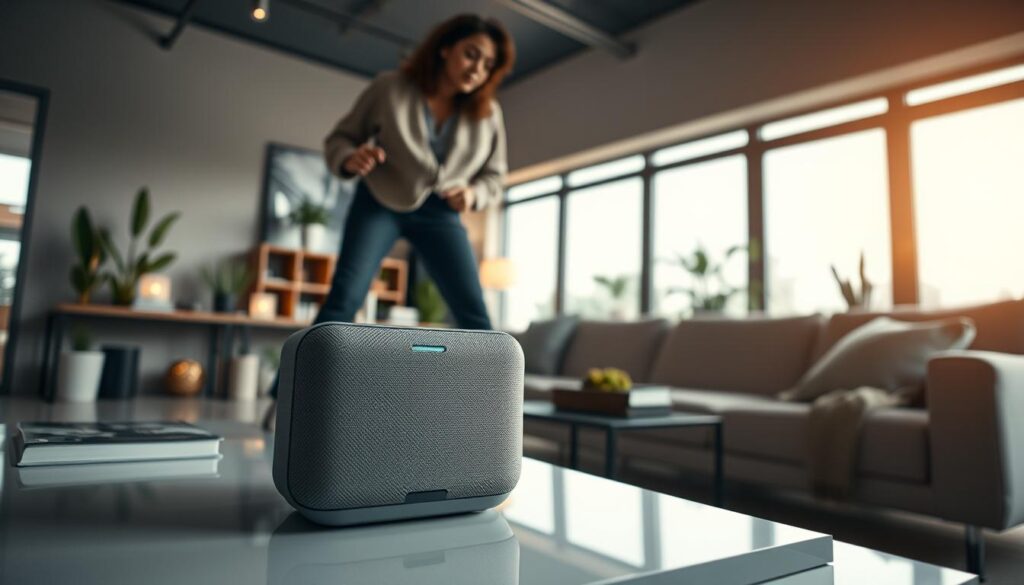
Today’s tech lets you interact in new ways. For example, the new Alexa+ uses generative AI to remember your likes. This means your assistant can give you better, more relevant answers over time.
Teaching your device your name and how you like to talk makes it even better. When it knows your habits, it can help you more. This makes your smart home device more helpful and easy to use.
Creating Routines and Schedules
Automation is a big deal for your smart speaker. You can set up routines that do lots of things with just one command. For example, saying “Good Morning” could turn on your thermostat, check your calendar, and start your coffee.
These schedules save you time in the morning. You can set your device to do these tasks at the same time every day. This keeps your home ready for you whenever you need it.
Setting Up Preferences for Music and News
Your music and news should match your tastes. Most platforms let you pick your default music service. This way, your favorite songs are just a voice command away. You can also choose the news you want to hear.
Organizing these preferences means you only hear what interests you. Whether it’s jazz in the morning or world news, your smart speaker can deliver. These small changes can make a big difference in your smart home device experience.
Smart Home Compatibility
Turning your home into a smart hub starts with connecting devices. A smart speaker acts as the main controller. It lets you manage many devices with just your voice. This creates a space that meets your needs quickly.
Integrating with Smart Lights and Thermostats
Most people start by linking lights and thermostats. You can dim lights for a movie or adjust the temperature without getting out of bed. Google Home supports over 50,000 smart home device options, but Amazon Alexa has more for power users.
First, make sure your devices are on and connected to the same Wi-Fi as your speaker. Use the app to find new devices and assign them to rooms. This makes it easy to say, “Turn off the kitchen lights,” without any mix-ups.
Controlling Security Systems
Your speaker is key to home safety too. It works with many security cameras, smart locks, and alarm systems. You can check your front door lock or see your porch camera feed with a compatible display.
It’s a good idea to set a secure PIN for actions like unlocking doors. This keeps your home safe from unauthorized access. The table below shows how different systems compare in device support and ease of use.
| Ecosystem | Device Compatibility | Setup Difficulty | Voice Response |
|---|---|---|---|
| Amazon Alexa | Extensive | Low | Fast |
| Google Home | High | Low | Natural |
| Apple HomeKit | Selective | Medium | Secure |
Troubleshooting Common Issues
Owning a smart home device can sometimes lead to unexpected problems. These gadgets aim to simplify our lives but sometimes face technical issues. Knowing how to quickly solve these problems keeps your home connected and responsive.
Connectivity Problems
Most issues stem from network problems. If your device loses connection, first check your router. Make sure your Wi-Fi signal is strong in that room. Restarting your router often fixes temporary IP conflicts that stop your speaker from talking to the cloud.
If the problem doesn’t go away, try unplugging your virtual assistant device for thirty seconds. This forces it to reconnect with your network. Always keep your firmware updated to avoid bugs.
Voice Recognition Errors
At times, your speaker might not understand you or trigger unexpectedly. Google Nest speakers using Gemini for Home might have early access issues. These early-stage glitches usually get better with updates.
To improve recognition, retrain your voice model in the app. Background noise can mess with microphones. Move your device away from loud appliances or fans. If it still doesn’t get you right, a factory reset might be needed.
| Issue Type | Common Cause | Quick Fix |
|---|---|---|
| Connection Drop | Weak Wi-Fi Signal | Restart Router |
| Voice Misunderstanding | Background Noise | Retrain Voice Model |
| System Unresponsive | Firmware Glitch | Power Cycle Device |
| Early Access Errors | Beta Software | Check for Updates |
Comparing Voice-controlled Speakers
Choosing a smart home device can be tough with so many options. Each model promises to make your life easier and your home better. It’s key to know what each offers.
Looking at what each product does best helps you pick the right one. Whether you want great sound or just simple voice commands, comparing them is crucial.
Price Range Overview
The price of a virtual assistant device changes a lot. It depends on the brand and what’s inside. You can find cheap ones for beginners or spend more on high-end models.
- Budget-friendly options: Great for simple tasks like setting timers or checking the weather.
- Mid-range speakers: They balance sound quality and smart features well.
- Premium devices: Perfect for those who love great sound and advanced features.
Feature Comparisons
When looking at features, think about how well it works with your stuff. For example, the Apple HomePod Mini is great for Apple users. It’s easy to use with the Apple Home app and Siri.
It might cost more, but it’s worth it for Apple fans. Check out our voice-controlled speaker guide to see how different models stack up.
| Device Model | Primary Strength | Best For |
|---|---|---|
| Apple HomePod Mini | Ecosystem Integration | Apple Users |
| Amazon Echo | Smart Home Compatibility | General Automation |
| Google Nest | Search Capabilities | Information Access |
The best smart home device is one that fits your budget and needs. By comparing prices and features, you’ll make a choice that brings you joy and usefulness for a long time.
User Reviews and Testimonials
We think the best way to learn about smart home devices is from real users. While specs are important, it’s the daily use that shows how well these tools work in a home.
Real Experiences from Buyers
Many people say data security is key when picking a voice-activated speaker. They like brands that keep their privacy safe.
Apple gets a lot of praise for its privacy. Users like that Apple says it only uses data to make the platform better, not for tracking. This makes many people choose Apple for their digital safety.
Ratings on Major Retail Platforms
Looking at ratings on big retail sites shows us what matters most. Top-rated devices are easy to set up and work well with voice commands.
But, some devices get low ratings because of connection problems or trouble with certain accents. These reviews give us a clear picture of how well each smart home device works in different homes.
| Brand | Primary Strength | User Sentiment | Privacy Rating |
|---|---|---|---|
| Apple | Privacy & Security | Excellent | High |
| Amazon | Ecosystem Depth | Good | Moderate |
| Voice Accuracy | Very Good | Moderate |
In the end, no voice-activated speaker is perfect for everyone. By looking at these reviews, you can pick the best one for you and your home.
Future of Voice-controlled Speakers
We are on the edge of a big change in how we use our homes. The voice-activated speaker is becoming more than just a timer or music player. It’s turning into a key spot for smart help.
Innovations on the Horizon
One big change is the use of advanced generative AI. For example, Google is moving from Google Assistant to Gemini. This new model lets your smart home device talk like a real person.
It can understand complex requests and follow conversations. This makes your smart home device more than just a tool.
Trends in Voice Recognition Technology
Future devices will be more proactive than reactive. They won’t just wait for a wake word. Instead, they’ll guess what you need based on your daily habits and surroundings.
This change makes your smart home device even more important. Keeping up with these trends helps you choose the best tech for your home.
| Feature | Current Capability | Future Potential |
|---|---|---|
| Interaction Style | Command-based | Conversational AI |
| Request Handling | Simple tasks | Complex, multi-step logic |
| Proactivity | Reactive | Predictive assistance |
| Voice-activated speaker | Standard hardware | Advanced neural processing |
Conclusion: Choosing the Right Voice-controlled Speaker
Finding the right tech for your home means looking at your daily habits. We think matching a device to your current digital setup is key for a smooth experience.
Essential Factors for Your Purchase
Your choice of AI speaker depends on your mobile platform. Apple users might like the HomePod for its seamless integration. On the other hand, those with a big smart home setup might prefer Amazon Echo or Google Nest for their wide compatibility.
Tailored Recommendations for Every User
Privacy is crucial for many today. Always check the data settings on a new device to feel comfortable. For simple music, a small model is great. But, if you want full automation, choose a larger hub that controls all your smart devices.
Choosing the right AI speaker changes how you live with your tech. We hope this guide helps you pick wisely, enhancing your home’s value.