
 Zoe Nora
Smart soundbars are not just a fancy addition to home audio systems; they are transforming how we experience sound at home. With advancements in technology, these devices provide superior sound quality and seamless integration with smart home systems, making them an essential component for any entertainment setup.
From immersive soundscapes for movies and shows to enhanced audio fidelity for gaming, smart soundbars deliver a versatile audio experience that traditional systems struggle to match. Popular brands are pushing the envelope with unique features that cater to different user needs, making smart soundbars a staple in modern households.
Smart soundbars are changing the audio landscape in home entertainment systems.
Smart soundbars are revolutionizing the way we experience audio in our homes, moving beyond the traditional sound systems that often require complex setups and extensive speaker arrangements. With their sleek design, advanced technology, and user-friendly features, smart soundbars are becoming the go-to choice for those looking to enhance their home entertainment systems. These devices not only deliver superior sound quality but also integrate seamlessly with other smart home technologies, providing an immersive audio experience like never before.
The audio experience offered by smart soundbars is markedly enhanced compared to traditional sound systems. Unlike conventional setups that can involve multiple speakers and complicated wiring, smart soundbars consolidate all the necessary components into one sleek unit. This design not only saves space but also simplifies installation, making it accessible for everyone. The sound quality is further improved by features such as Dolby Atmos and DTS:X, which create a three-dimensional soundscape that envelops the listener. These technologies enable the soundbars to produce audio that feels rich and full, allowing users to enjoy movies, music, and games with remarkable clarity and depth.
Technological advancements enabling superior sound quality
Several key technological advancements contribute to the exceptional sound quality of smart soundbars. These innovations include:
– Digital Signal Processing (DSP): This technology analyzes audio signals and optimizes sound output, ensuring clarity and balance across all frequencies. DSP enhances dialogue intelligibility in movies and improves the overall listening experience.
– Wireless Connectivity: Smart soundbars often support Bluetooth and Wi-Fi connections, allowing users to stream audio from various devices without the clutter of cables. This wireless capability brings convenience and flexibility to the listening experience.
– Voice Control Integration: Built-in voice assistants, such as Amazon Alexa or Google Assistant, enable hands-free operation, allowing users to adjust settings or control playback with simple voice commands. This integration enhances usability, making the soundbar a central hub for smart home entertainment.
– Multi-room Audio: Many smart soundbars can connect with other smart speakers around the home, creating a synchronized audio experience. This feature allows users to enjoy their favorite tunes throughout the house without missing a beat.
Some popular brands leading the charge in smart soundbar technology include:
– Sonos: Known for its high-quality audio performance and multi-room capabilities, Sonos offers soundbars that can be integrated easily into existing Sonos systems.
– Bose: With a reputation for superior sound quality, Bose smart soundbars feature adaptive audio technology that automatically adjusts sound settings based on room acoustics.
– Samsung: Samsung’s soundbars often come equipped with Q-Symphony technology, which allows them to harmonize with compatible Samsung TVs for an enhanced audio-visual experience.
– LG: Featuring AI Sound Pro, LG soundbars intelligently analyze the content being played, optimizing the audio output for movies, music, or games.
Each of these brands showcases unique features and advancements that cater to various user preferences, solidifying the position of smart soundbars as a game-changer in home audio systems.
The integration of smart soundbars with other smart home devices.
Smart soundbars have rapidly evolved from being mere audio amplifiers to central hubs of smart home technology. Their ability to integrate with various smart devices enhances the home entertainment experience while also promoting convenience and efficiency. By serving as a bridge between audio systems and smart home ecosystems, soundbars can significantly transform how users interact with their environment.
The interaction of smart soundbars with voice assistants and other smart technologies allows users to command their devices hands-free, resulting in a seamless user experience. Major platforms like Amazon Alexa, Google Assistant, and Apple HomeKit have made it possible for soundbars to connect easily with various smart home gadgets. This integration means that users can control their playback systems, manage other smart devices, and even access information through simple voice commands. For example, a user can ask their soundbar to play music, adjust the lighting, or even check the weather, all without needing to switch devices or interrupt their current activity.
Multi-device synchronization in a smart home environment
In a smart home setting, the synchronization of multiple devices through a smart soundbar presents numerous benefits. This interconnectedness allows for a streamlined and cohesive experience where devices work together harmoniously. Here are several advantages of this setup:
- Enhanced Control: With multi-device synchronization, users can control various smart devices from a single point, minimizing the need for multiple apps or remotes. Imagine sitting on your couch and using your voice to dim the lights, unlock the door, and start a movie—all through your soundbar.
- Time-Saving: Integrated devices save time by providing a unified command center. For instance, when hosting a movie night, a single command can prepare your living room by adjusting the sound settings, lowering the blinds, and setting the temperature, creating the perfect ambiance for relaxation.
- Improved Functionality: Smart soundbars can enhance the functionality of other devices in your home. For example, while watching a show, the soundbar can automatically pause playback when someone rings the doorbell, ensuring you never miss a visitor.
- Increased Customization: Users can create specific scenes or routines tailored to their preferences. Imagine a “Goodnight” routine where saying this phrase turns off all lights, locks the doors, and plays calming sounds through the soundbar to help you unwind.
Several scenarios illustrate the seamless use of smart soundbars with other devices. For instance, consider a scenario where a user arrives home and the soundbar recognizes their presence through a connected smart doorbell. Upon entry, the soundbar could automatically start playing their favorite playlist, while lights adjust to a welcoming brightness. In another scenario, during a family gathering, guests might request songs. The host can simply ask the soundbar to queue their selections while the smart fridge adjusts temperatures and reminds them of food items needing attention.
With the integration of smart soundbars into the home automation landscape, the potential for convenience and entertainment is limitless. This technology not only enhances audio experiences but also elevates the overall smart home functionality, making daily life more enjoyable and efficient.
Understanding the different types of smart soundbars available on the market.
Smart soundbars have become an essential component of home audio systems, offering a sleek design and advanced technology to enhance the listening experience. As more consumers seek to improve their audio quality without the clutter of traditional surround sound systems, understanding the various types of smart soundbars available is crucial. This overview will explore the distinct types of smart soundbars based on their design, functionality, and sound quality.
Types of Smart Soundbars
In the market today, various types of smart soundbars cater to different needs and preferences. The following breakdown highlights four distinct categories, comparing their specifications and features, along with the ideal audience for each type.
| Type | Design | Functionality | Sound Quality | Target Audience |
|---|---|---|---|---|
| Standard Soundbar | Long, slim profile | Basic connectivity (Bluetooth, HDMI ARC) | Decent sound quality for TV shows and movies | Casual viewers and small spaces |
| Soundbar with Subwoofer | Long soundbar with a separate subwoofer | Enhanced bass and surround sound simulation | High-quality audio with deep bass | Home theater enthusiasts and gamers |
| Smart Soundbar with Voice Assistant | Modern design with built-in voice assistant | Hands-free control, smart home integration | Balanced sound with customizable settings | Tech-savvy users and smart home owners |
| Multi-Room Soundbar | Compact and modular design | Connects with other speakers for multi-room audio | Rich and immersive sound quality | Music lovers and families |
The above categories illustrate how different designs and functionalities serve specific user needs. For instance, standard soundbars are perfect for casual viewers looking for straightforward audio enhancement, while those who prioritize bass and surround sound may prefer a soundbar with a subwoofer. Smart soundbars with voice assistants appeal to tech enthusiasts who appreciate hands-free control and smart integrations. Finally, multi-room soundbars cater to music lovers who desire seamless audio across multiple rooms in their homes.
Understanding the unique features and target audiences of each smart soundbar type allows consumers to make informed choices tailored to their preferences and living spaces.
Smart soundbar installation and setup tips for optimal performance.
Installing a smart soundbar can significantly enhance your home audio experience, making movies and music much more enjoyable. However, proper installation and setup are crucial to achieving optimal sound quality. Below are essential steps, common mistakes to avoid, and a checklist of tools and materials required for a seamless installation process.
Essential steps for installation and configuration
To ensure that your smart soundbar performs at its best, follow these steps during installation and configuration:
1. Choose the right location: Position your soundbar centrally beneath your TV for balanced audio. Avoid placing it inside a cabinet as it can obstruct sound projection and degrade quality.
2. Mounting options: Decide whether to wall-mount the soundbar or place it on a stand. Wall-mounting can provide a cleaner look, while a stand might be easier to manage. Use the appropriate brackets if you choose to mount it.
3. Connect to power: Plug your soundbar into a power outlet. Use a surge protector to safeguard against power spikes that could damage your device.
4. Audio connections: Use HDMI ARC for the best audio quality. Connect the soundbar to the TV using an HDMI cable. If HDMI isn’t available, optical cables are a good alternative.
5. Wi-Fi setup: For smart features, connect the soundbar to your home Wi-Fi. Use the manufacturer’s app to guide you through the Wi-Fi setup process.
6. Calibration: Many soundbars offer automatic calibration to optimize sound based on your room’s acoustics. Follow the instructions for your specific model to utilize this feature effectively.
Common mistakes to avoid during installation
Avoid these common pitfalls to ensure that your smart soundbar delivers exceptional sound quality:
– Ignoring the room layout: Soundbars are designed to project sound in a specific direction. Positioning them in a corner or against a wall can lead to muffled audio.
– Using the wrong cables: Utilizing outdated or lower-quality cables can impair sound quality. Make sure to use HDMI ARC or other high-quality connections.
– Neglecting software updates: Manufacturers often release updates that improve performance. Regularly check for and install updates via the app.
Checklist of tools and materials needed for installation
Having the right tools and materials can simplify the installation process. Here’s a checklist to ensure you are prepared:
– Soundbar unit
– HDMI cable (preferably HDMI ARC)
– Optical audio cable (if necessary)
– Power cable
– Wall-mounting kit (if applicable)
– Level tool (for precise mounting)
– Screwdriver
– Surge protector (for power connection)
– Smartphone or tablet (for app setup)
By carefully following these installation tips, you can maximize the performance of your smart soundbar and enhance your audio experience.
The role of smart soundbars in enhancing gaming experiences.
Smart soundbars have emerged as essential devices for gamers seeking to elevate their audio experience. As gaming becomes increasingly immersive, the importance of high-quality sound cannot be overstated. Smart soundbars enhance audio fidelity, providing gamers with a rich, detailed soundscape that complements the visual elements of their favorite titles. The integration of advanced audio technologies, such as Dolby Atmos and DTS:X, allows for a cinematic experience that draws players deeper into the game world, making each session feel more engaging and dynamic.
Audio fidelity is crucial for gamers, as it directly impacts their ability to immerse themselves in the gameplay. Smart soundbars are designed to deliver high-definition sound, which significantly improves the clarity and detail of in-game audio. Unlike standard television speakers, which often lack depth and richness, smart soundbars are equipped with multiple drivers that create a fuller sound spectrum. This means that gamers can experience subtle audio cues, such as the rustle of leaves or the distant footsteps of an approaching enemy, with remarkable precision.
Importance of sound localization in gaming
Sound localization is the ability to identify the origin of sound in a three-dimensional space, a skill that is vital in gaming. In competitive and immersive gaming environments, such as first-person shooters or role-playing games, players rely on audio cues to make split-second decisions. Smart soundbars enhance this aspect of gaming through advanced technologies that create a surround sound experience.
The role of sound localization includes the following key features:
- Spatial Audio Technology: Many smart soundbars utilize spatial audio technology to provide a 360-degree sound experience. This allows players to pinpoint the direction of sounds, such as gunfire or footsteps, which is critical for gameplay strategy.
- Enhanced Dialogue Clarity: Smart soundbars improve the clarity of dialogue, ensuring that important instructions or plot points are heard clearly amid action-packed scenes. This clarity can be the difference between success and failure in a game.
- Custom Sound Modes: Gamers can often select sound modes specifically designed for various genres, such as RPG or FPS. These modes optimize audio settings to enhance specific sound profiles, improving overall performance.
- Subwoofer Integration: Many smart soundbars come with built-in or compatible subwoofers that provide deep bass, adding an emotional depth to the gaming experience. The booming sounds of explosions or the rumbling of engines create a more impactful atmosphere.
Numerous gamers have shared their experiences after upgrading to smart soundbars, often expressing how the enhanced audio quality transformed their gaming sessions. For instance, one avid gamer noted, “I never realized how much I was missing until I switched to a smart soundbar. The clarity and detail in sound have made it easier to detect enemies, not to mention the overall immersion when playing story-driven games.”
Another gamer mentioned the fun of using spatial audio for co-op games, stating, “Being able to hear my teammates’ positions in relation to the enemies made coordination feel so much more natural.” Testimonials like these highlight the significant impact that smart soundbars have on gaming experiences, proving that investing in better audio technology can elevate gameplay to new heights.
Maintenance and troubleshooting for smart soundbars.
Routine maintenance of a smart soundbar is crucial for ensuring optimal performance and longevity. By adopting a few simple practices, users can prevent common issues and enhance the overall listening experience. Regular upkeep not only keeps the soundbar functioning efficiently but also enhances its lifespan, ensuring that you can enjoy high-quality audio for years to come.
Routine Maintenance Tasks
Regular maintenance tasks for smart soundbars are straightforward yet essential for optimal functionality. Consider the following practices:
- Dusting and Cleaning: Regularly dust the soundbar using a soft, dry cloth. Avoid using any cleaning agents that may damage the electronics. Pay special attention to the speaker grilles, as dust accumulation can affect sound quality.
- Firmware Updates: Check for firmware updates periodically. Keeping your soundbar’s software up-to-date ensures that it has the latest features and security enhancements, which can improve overall performance.
- Connection Checks: Regularly inspect all connections, including HDMI, optical, and power cables. Ensure they are secure and free from damage to maintain a stable audio signal.
- Ventilation: Ensure that the soundbar has proper ventilation. Avoid placing it in enclosed spaces that may trap heat, as excessive heat can lead to performance issues over time.
Troubleshooting Common Issues
Being aware of common troubleshooting techniques can help resolve minor issues quickly. Below is a guide to some frequent problems encountered with smart soundbars and possible solutions:
- No Sound: Check if the soundbar is powered on and not muted. Verify the audio source and ensure the correct input is selected. Also, ensure that the cables are securely connected.
- Audio Sync Issues: If the audio does not match the video, try adjusting the audio delay settings in the soundbar or the connected device. Some devices have a settings option for audio delay adjustment.
- Connection Drops: If using a wireless connection, ensure that the soundbar is within range of the Wi-Fi router. Restart both the soundbar and the router to reset the connection.
- Sound Distortion: Check for any loose cables and ensure they’re tightly connected. Also, review the audio settings on the connected device to prevent any mismatched configurations.
Recommended Practices to Extend Lifespan
To maximize the lifespan of your smart soundbar, consider these recommended practices that can help maintain its performance and durability:
- Keep the soundbar away from direct sunlight and heat sources.
- Avoid exposing the device to moisture; don’t place it near water sources.
- Utilize a surge protector to safeguard against electrical surges and voltage fluctuations.
- Store the soundbar in a dust-free environment when not in use, possibly using a protective cover.
- Regularly check the warranty and service terms for any recommended maintenance by the manufacturer.
“Routine maintenance and timely troubleshooting can significantly enhance the performance and longevity of your smart soundbar.”
Future trends in smart soundbar technology.
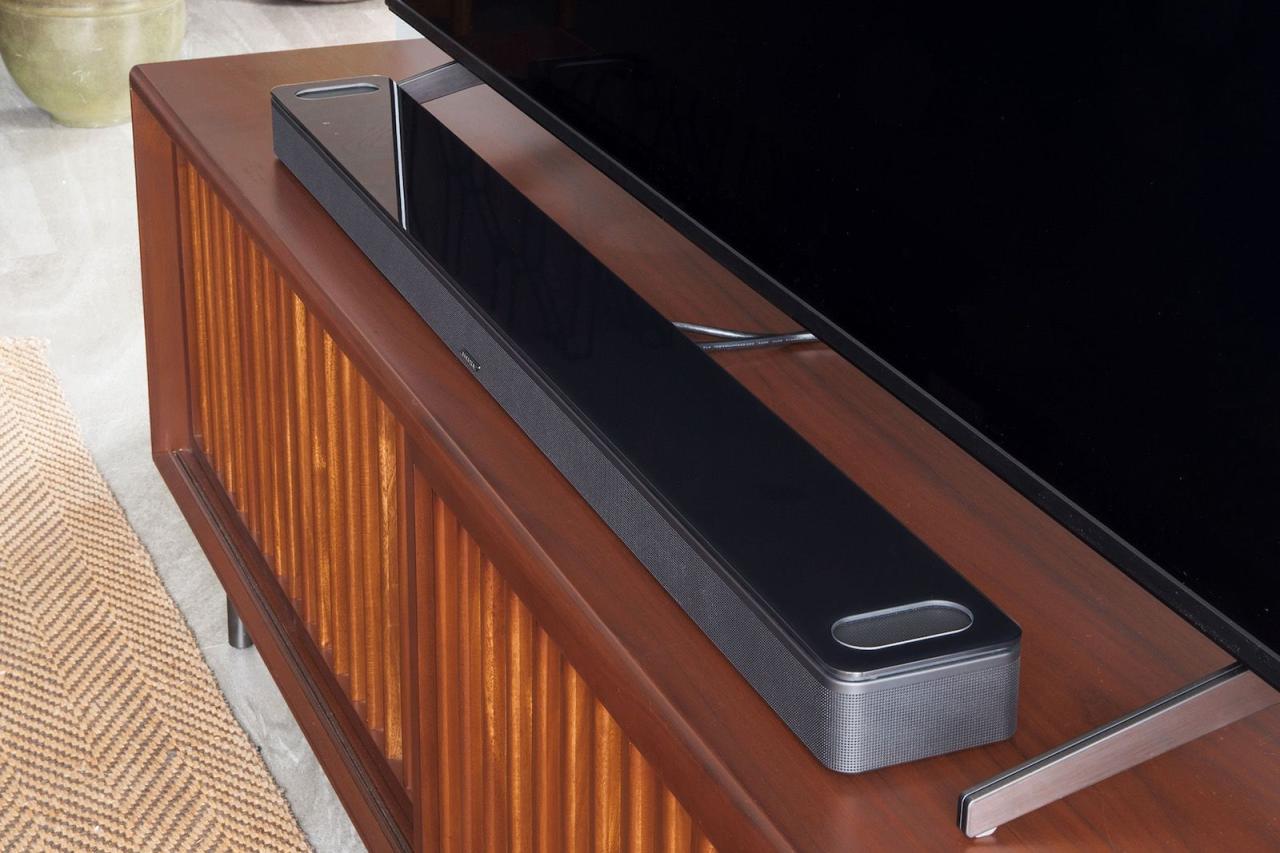
As technology continues to evolve at a rapid pace, smart soundbars are becoming a central fixture in modern audio experiences. Over the next few years, we can anticipate significant advancements that will redefine how we interact with audio devices in our homes. These innovations will not only enhance sound quality but will also integrate seamlessly with other smart home technologies, making soundbars an essential part of the connected ecosystem.
Several key developments are expected to shape the future of smart soundbars. Firstly, the integration of advanced spatial audio technology will provide users with an immersive sound experience. This means soundbars will be able to create a 3D audio environment, allowing users to feel as though they are in the middle of the action, whether they are watching a movie or playing video games. The Dolby Atmos technology is already paving the way for this experience, and future soundbars will build upon these foundations to deliver even more remarkable audio experiences.
Impact of Artificial Intelligence on Soundbar Functionality
Advancements in artificial intelligence (AI) are likely to play a pivotal role in enhancing soundbar functionalities. AI can enable soundbars to adapt to their environments, optimizing sound based on room acoustics and user preferences. For instance, machine learning algorithms could analyze audio patterns and adjust equalizer settings automatically, ensuring that users always experience the best possible sound quality.
Another significant impact of AI will be in voice control capabilities. As smart soundbars become more integrated with home automation systems, users will increasingly rely on voice commands to control their audio environments. This convenience will extend beyond basic functions, allowing users to ask their soundbars to play specific genres, recommend playlists, or even manage connected devices around the home.
Industry experts predict that the future of audio technology will see soundbars becoming multi-functional devices. With the rise of smart home ecosystems, soundbars could evolve to include features like home security integration, serving as a hub for controlling lights and cameras. This convergence of functionalities will streamline user experiences and provide added value for consumers.
“The next generation of soundbars will not just be about sound; they will be about creating an immersive lifestyle experience.”
As smart soundbars evolve, we can expect them to incorporate more advanced connectivity options, such as seamless integration with streaming services and improved Bluetooth capabilities. This will allow for easier content sharing and access, making it simpler for users to enjoy their favorite media without any hassle.
In conclusion, the future of smart soundbar technology is bright, with advancements in spatial audio, AI-driven functionalities, and multi-device integration promising to enhance how we listen to and interact with sound. As these trends continue to develop, the smart soundbar will undoubtedly become an integral part of every modern home entertainment setup.
Final Thoughts
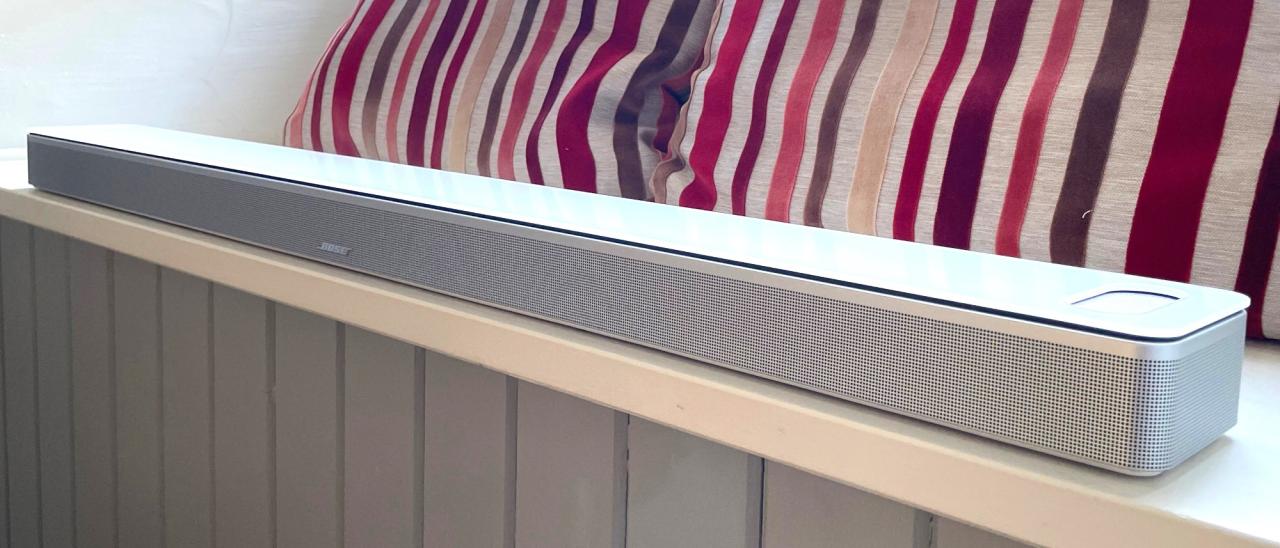
In summary, smart soundbars represent a significant leap in audio technology, offering an unparalleled experience for both casual listeners and audiophiles alike. As these devices continue to evolve, they will undoubtedly play a crucial role in shaping the future of home entertainment.
FAQ Corner
What is a smart soundbar?
A smart soundbar is an audio device that enhances sound quality while offering features like voice control and connectivity with other smart home devices.
Do I need a separate receiver with a smart soundbar?
No, smart soundbars typically have built-in amplification, eliminating the need for a separate receiver.
How do I connect a smart soundbar to my TV?
You can connect a smart soundbar to your TV using HDMI ARC, optical cable, or Bluetooth, depending on the models of your devices.
Can I use a smart soundbar for music streaming?
Yes, most smart soundbars support music streaming through various services such as Spotify, Apple Music, and more.
How do I troubleshoot connectivity issues with my smart soundbar?
Check your network connection, ensure Bluetooth is enabled on your devices, and restart both the soundbar and the connecting device.
What enhancements do smart soundbars offer for gaming?
Smart soundbars deliver spatial audio and improve sound localization, providing gamers with a more immersive experience.
How do I update the firmware of my smart soundbar?
You can update the firmware through the manufacturer’s app or website, ensuring your soundbar has the latest features and fixes.
What should I consider when choosing a smart soundbar?
Consider factors such as sound quality, compatibility with other devices, design, and the specific features that suit your audio needs.