
 Zoe Nora
Over 70% of home theater enthusiasts miss true cinematic impact because their low-frequency hardware does not fit their room size. Achieving perfect, room-shaking rumble requires more than turning up the volume.
We evaluate every subwoofer speaker by analyzing transient response and total harmonic distortion in typical American living spaces. Our team tests models from compact powered units to massive designs for dedicated media rooms.
Finding the best subwoofer for your needs depends on several critical factors. We consider room dimensions, listening preferences, and system compatibility to help you get the most value for your budget. Our guide covers vehicle audio upgrades and high-end home theaters, with technical specifications for 39 top-rated units.
Key Takeaways
- Room size dictates the necessary driver diameter and power output for optimal performance.
- Powered models offer easier integration for most home audio setups compared to passive designs.
- System compatibility remains the most important factor when matching hardware to your receiver.
- Budget should be balanced between raw power and the accuracy of the low-frequency reproduction.
- Proper placement within your listening environment significantly improves bass clarity and impact.
Understanding Subwoofers: What They Are and How They Work
If you have wondered how a compact box creates earth-shaking bass, you can learn the engineering secrets behind the subwoofer. These devices reproduce low-frequency sounds that standard speakers often struggle to handle. Whether you upgrade a home theater or install a car subwoofer, knowing the core mechanics helps achieve better sound quality.
The Basics of Subwoofer Technology
At its core, a subwoofer speaker uses a large driver, or cone, to move much air. This movement creates low-frequency pressure waves that we hear as deep, thumping bass. The enclosure controls air pressure behind the driver, helping the sound stay tight and accurate.
Amplifier integration also plays a vital role in unit performance. Without enough power, the driver cannot move precisely enough for clean audio. Engineers balance the driver’s electrical needs with enclosure volume to maximize output efficiency.
Types of Subwoofers: Active vs. Passive
When shopping for a new system, you will find two main categories: active and passive units. A powered subwoofer has a built-in amplifier, making it a convenient “all-in-one” solution for most home setups. You simply plug it into a power outlet and connect your audio source.
By contrast, a passive unit needs an external amplifier to work. This setup offers more flexibility for custom installations but requires technical knowledge to match power output correctly. Many enthusiasts choose it for high-end systems where specific power matching is crucial for performance.
Key Features to Look For
When comparing models, look beyond driver size. Wattage is common, but consider it with sensitivity and impedance to judge the device’s true potential. A subwoofer with high sensitivity often produces more volume with less power, making it efficient for many users.
The following table shows how different power ranges affect your overall audio experience:
| Power Category | Best Use Case | Performance Level |
|---|---|---|
| 100–299 Watts | Small rooms or basic setups | Entry-level clarity |
| 300–799 Watts | Standard home theaters | Balanced, impactful bass |
| 800–1999 Watts | Large rooms or car audio | High-output, deep resonance |
| 2000+ Watts | Professional or competition | Extreme, earth-shaking power |
Ultimately, the right equipment depends on your space and listening habits. You may need a compact powered subwoofer for a bedroom. You may prefer a high-wattage car subwoofer for your vehicle; compare these specifications.
Why Deep Bass Matters in Audio Systems
Deep bass gives an immersive audio system its heartbeat and changes how we experience sound. Standard speakers handle mid and high frequencies well, but they often miss the lowest octaves. A high-quality subwoofer fills this gap and creates a balanced soundstage.
Enhancing Movie and Music Experiences
Film soundtracks use low frequencies to build tension during action scenes and suspenseful moments. Without a dedicated unit, cinematic rumbles can sound thin or distorted. Music uses these frequencies to carry energy from a kick drum’s punch to a bass guitar’s resonance.
Gamers also gain greater depth from a capable subwoofer. Explosions and engine roars sound more realistic when the subwoofer reproduces them. This detail draws you deeper into virtual worlds and makes each session more intense and engaging.
The Science Behind Bass Frequencies
Bass reproduction depends on driver movement and the physical environment. A moving driver creates acoustic pressure that travels through the room. Untreated rooms can reflect these waves, creating “room modes” with muddy or uneven sound.
A subwoofer for home theater setups must manage these waves effectively. Manufacturers control driver excursion so bass stays tight and clear instead of boomy. This precision separates a standard audio setup from a professional-grade experience.
The Role of Subwoofers in Home Theaters
Adding a subwoofer to your existing system takes careful planning, so connect your gear properly for the best results. Learn more in our subwoofer connectivity guide for perfect sound. A well-integrated unit should disappear into the soundstage, leaving a cohesive audio image.
Size strongly affects how a subwoofer for home theater performs in different spaces. Larger drivers move more air for big rooms, while smaller units offer tighter response in compact spaces. Choose the right size so your high-quality subwoofer delivers clean extension without overwhelming your living space.
| Driver Size | Best Room Size | Primary Use Case |
|---|---|---|
| 8-inch | Small (Under 150 sq ft) | Music and light gaming |
| 10-12 inch | Medium (150-300 sq ft) | General home theater |
| 15-18 inch | Large (300+ sq ft) | Dedicated cinema rooms |
Top Brands for Subwoofers in the U.S.
When we seek the perfect low-frequency experience, finding a reliable top subwoofer brand becomes our main goal. We judge manufacturers by measurable factors, including frequency extension, maximum output, and warranty support, not reputation alone.
Knowing how a company organizes its product range helps us make informed choices. You may need a powered subwoofer for a cinema room or a wireless subwoofer for flexible living space. Understanding the brand’s engineering philosophy remains essential.
SVS: Performance and Innovation
SVS has built a reputation for advancing bass technology. They focus on deep extension and high-output drivers that stay clear at extreme volumes.
Their lineup often includes advanced digital signal processing for precise sound-profile control. Rigorous testing helps each unit deliver consistent, room-shaking performance.
Klipsch: Quality Sound Engineering
Klipsch is known for signature horn-loaded technology and efficient design. Its engineers value dynamic impact, making these products popular with fans of high-energy movie soundtracks.
The brand offers series for different room sizes and acoustic needs. High-sensitivity drivers create a powerful subwoofer experience without massive external amplification.
Polk Audio: Value and Performance
Polk Audio delivers high-quality audio solutions for a wide range of budgets. It emphasizes balanced sound signatures, helping bass units blend with existing speaker systems.
For many users, a Polk powered subwoofer balances cost and capability. Durable construction and user-friendly connections make it practical for home theater fans seeking long-term reliability.
Budget-Friendly Subwoofers
You do not need to spend a fortune for deep, resonant bass at home or in your vehicle. High-end models offer extreme output, but many entry-level units provide impressive clarity and impact for less money. Finding the best subwoofer requires balancing your budget with realistic performance expectations.
Best Picks Under $200
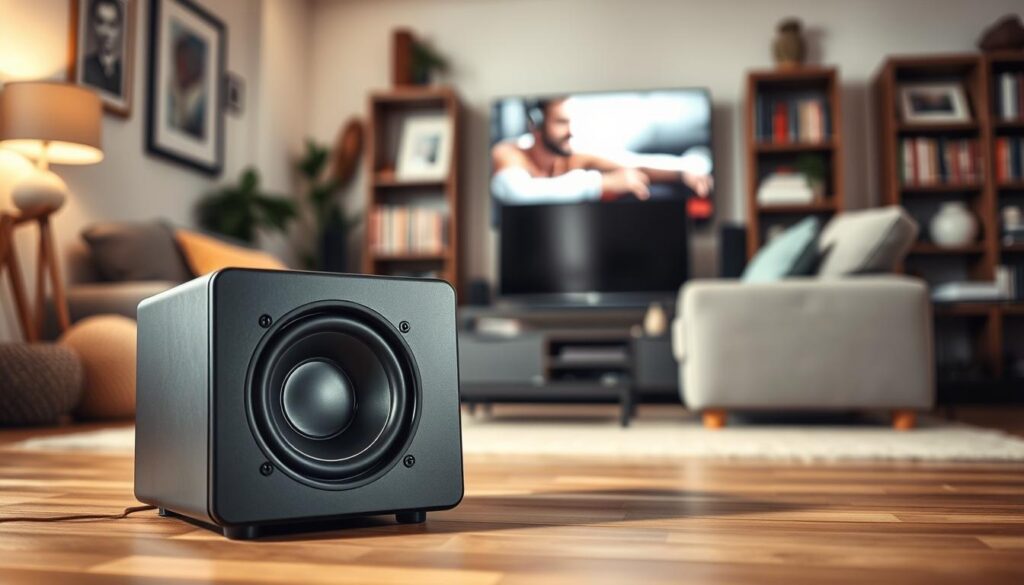
Several manufacturers specialize in audio gear that performs well beyond its price tag. When shopping for a subwoofer, choose established brands with consistent quality control. Whether upgrading a home theater or installing a car subwoofer, prioritize solid frequency response over raw power.
Always verify current pricing and stock availability before buying. Some popular models change price, and retailers may offer different return policies. Checking these details helps you get the most value from your investment.
Key Features at Lower Prices
When shopping on a budget, focus on components that shape sound quality. A sturdy enclosure helps minimize unwanted vibrations and distortion. Also examine the usable power ratings, because peak power claims may mislead compared with continuous RMS power.
Warranty coverage can indicate build quality. Manufacturers that support their products with solid warranties are usually more reliable. Consider these factors when comparing different units:
| Feature | Entry-Level Expectation | Why It Matters |
|---|---|---|
| Enclosure Type | Sealed or Ported | Affects bass tightness |
| RMS Power | 100W – 250W | Determines sustained output |
| Warranty | 1 to 2 Years | Protects your investment |
| Build Quality | MDF Construction | Reduces cabinet resonance |
User Reviews and Recommendations
Verified customer feedback is one of your most valuable tools when selecting a best subwoofer. Look for reviews mentioning long-term reliability and easy installation. If choosing a car subwoofer, check comments about how the unit fits specific vehicle types.
Community forums and expert reviews often reveal hidden gems with excellent performance. Combine this research with your needs to choose a product that improves your audio experience without exceeding your budget.
High-End Subwoofers for Audiophiles
For dedicated audiophiles, the path to perfect sound often leads to premium Subwoofer systems for low-frequency reproduction. Beyond entry-level gear, you enter a space where engineering precision meets raw acoustic power. A high-quality subwoofer can vanish into your room while giving music a foundation you feel and hear.
What to Expect in Performance
A top-tier unit should deliver much deeper bass. It offers more headroom, so it handles complex transients without strain. You will hear reduced distortion at high volumes, keeping bass tight and clear.
Advanced digital signal processing also defines these units. It supports consistent room integration and helps solve acoustic problems in your listening space. The best subwoofer here works as a precision instrument, not merely a noise maker.
Premium Brands to Consider
Choosing a top subwoofer brand requires more than reading box specifications. Prioritize companies known for engineering, customer support, and strong build quality. Premium makers often use proprietary driver materials and heavy-duty cabinets for lasting reliability.
Connectivity options also improve in this tier. You may find balanced XLR inputs and advanced app controls for precise adjustments. These features help your subwoofer connect smoothly with high-end amplifiers and pre-processors.
Comparing Price versus Value
An expensive model is not always the best subwoofer for your needs. Some systems use massive 15-inch drivers or 2000+ watt amplifiers. Real value depends on power management, so compare cost with genuine gains in output and control.
Consider these factors when evaluating your next purchase:
- Build Quality: Does the cabinet minimize resonance?
- Support: Does the top subwoofer brand offer a comprehensive warranty?
- Performance: Does the output match your room size and listening habits?
Ultimately, seek a balance between raw performance and your home theater’s specific needs. These measures can help your investment provide years of listening enjoyment.
Best Subwoofers for Home Theatre Systems
Great home theater sound starts with a strong low-frequency foundation. A well-chosen subwoofer adds physical impact, making action scenes feel real.
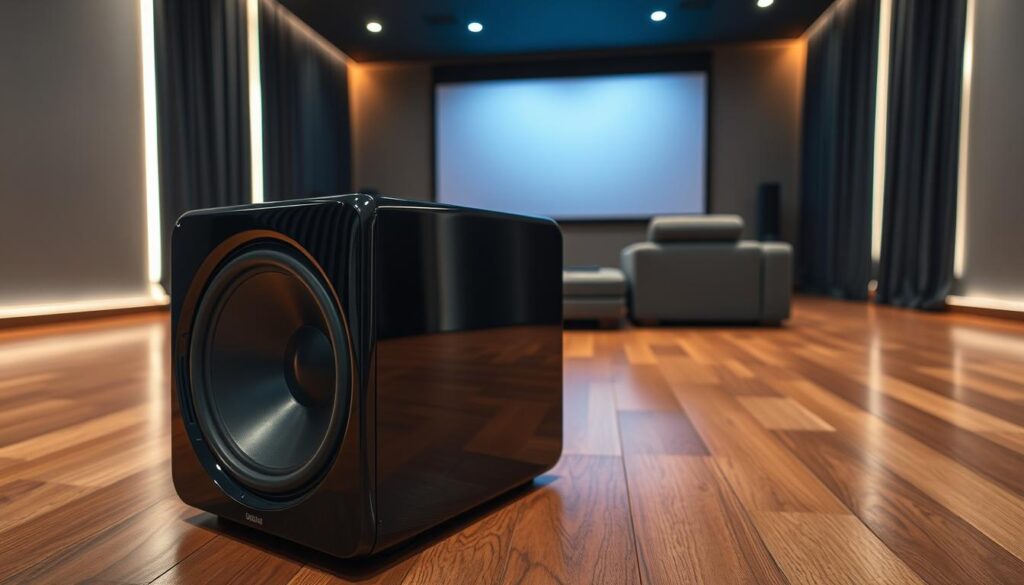
When choosing a subwoofer for home theater, consider your driver size and room dimensions. Smaller rooms often suit 8-inch or 10-inch drivers, while larger spaces need 12-inch to 18-inch units for deep, clean bass.
Recommended Models for Immersive Sound
Most enthusiasts find that a 12-inch driver balances speed and output well. We often recommend a powered subwoofer because its built-in amplifier makes system integration much easier.
A self-powered unit removes the need for external amplification and complex wiring. These models handle specific frequency ranges, allowing your main speakers to focus on clear mid and high frequencies.
Setup Tips for Optimal Performance
Placement is the most important factor for tight, accurate bass. Try the “subwoofer crawl” method to find the room spot with the most balanced bass response.
After positioning it, calibrate your subwoofer with your receiver’s built-in room correction software. Adjust the phase and crossover settings so bass blends smoothly with your main speakers. This prevents a muddy or disconnected soundstage.
Common Challenges and Solutions
Many users struggle with “boomy” bass, often caused by placing the unit too close to a corner. If this happens, move the powered subwoofer a few inches from the wall to tighten its response.
If you hear a persistent hum, check your cables for proper shielding or ground loops. If bass feels weak at your main listening position, a room mode may be the cause. Shifting your seating or the unit’s location can often solve the problem.
Consistency is key when fine-tuning your audio system. Adjust your gain levels and crossover points so your subwoofer for home theater delivers the cinematic impact you want.
Compact and Portable Subwoofers
Modern engineering now delivers impressive low-end performance from surprisingly small enclosures. Traditional systems often use massive cabinets, but many users prefer space-saving designs that suit modern lifestyles.
Benefits of Smaller Models
The main benefit of a compact subwoofer is flexible placement. Small units fit into corners, hide behind furniture, or blend with minimalist home decor without dominating the room.
People in apartments or small studios can enjoy the needed impact without using much floor space. These units provide full-range sound even when walls or furniture limit the living area.
Best Picks for Limited Spaces
When choosing a subwoofer speaker for a desk or bedroom, seek high-excursion drivers. They offset smaller cabinet volume and deliver tight, accurate bass for near-field listening.
When choosing a car subwoofer, focus on installation flexibility and enclosure size. Many compact car audio systems fit under seats or in tight trunk corners. They provide deep bass without sacrificing cargo space.
Comparing Performance with Larger Units
Consider the physical trade-offs between different sizes. A larger cabinet usually supports a bigger driver, often 12 to 18 inches. It moves more air and produces deeper low-frequency extension with less effort.
In contrast, a compact subwoofer speaker usually has drivers between 6.5 and 10 inches. These units may not reach the lowest sub-bass frequencies of a massive home theater model. However, they often deliver faster, punchier bass, which suits music.
Your choice ultimately depends on your environment. With room gain and careful placement, even a compact car subwoofer or home unit can perform well. Manage expectations about maximum output and physical limits.
Wireless Subwoofers: Freedom of Placement
Wireless connectivity has changed how we add bass to living spaces by removing traditional wires. Many homeowners dislike long signal cables across floors or through walls. A wireless subwoofer provides a clean, modern solution for easier home theater installation.
Advantages of Going Wireless
The main benefit of this model is unmatched flexibility when choosing its location. You are not limited by RCA cable length, so you can place the unit where it sounds best. This freedom improves bass response without harming your room’s interior design.
Setup is often faster and less intrusive for people who prefer a minimalist look. A dedicated transmitter sends the signal through the air, keeping floors free of tripping hazards. This technology suits open-concept homes, where running cables can be difficult or impossible.
Top Models on the Market
Several trusted brands now sell wireless kits or build wireless features into popular units. We recommend established manufacturers like SVS, Klipsch, and Polk Audio. These companies often make high-quality wireless adapters that maintain signal integrity.
Check each product’s specifications before buying, because not every subwoofer in a brand’s lineup supports wireless use. Also check current inventory, since some high-demand models may be temporarily sold out. Recent user reviews can show how well wireless pairing works in real homes.
Potential Drawbacks to Consider
Wireless convenience still comes with technical concerns. Interference from electronics, including Wi-Fi routers or cordless phones, can sometimes disrupt the connection. Place the transmitter away from heavy wireless traffic to maintain a stable link.
Latency is another concern, but modern technology has reduced it to nearly imperceptible levels. Although the signal is wireless, the unit still needs a power outlet. Make sure a wall socket sits near your chosen location to power the device.
| Feature | Wired Subwoofer | Wireless Subwoofer |
|---|---|---|
| Installation | Requires cable routing | Plug and play |
| Signal Stability | Very high | High (interference possible) |
| Placement | Limited by cable length | Highly flexible |
| Power Needs | Wall outlet required | Wall outlet required |
Subwoofer Setup and Placement Tips
Getting strong bass requires careful room placement and calibration. Your Subwoofer can underperform when placed poorly or configured incorrectly, even if it costs a lot. Take time to test different spots for the deep, clean impact you expect.
Finding the Right Spot in Your Room
Use the subwoofer crawl to find the ideal location. Place your subwoofer at your main listening position, then play music with steady bass. Crawl around the room on your hands and knees to find the most balanced, tight bass.
Move the unit to that exact location after finding the best response. Corners often amplify bass, but they may also create muddy or boomy sound. Test several locations before finalizing your setup to avoid unwanted standing waves.
Important Calibration Techniques
Calibrate your settings after positioning the unit to match your room’s acoustics. Start with the crossover point, usually between 80Hz and 100Hz. This creates a smooth transition between your main speakers and the low-frequency driver. Adjust the phase control so your speakers and the subwoofer arrive at your ears together.
A wireless subwoofer still needs a nearby AC power outlet. Its wireless signal removes long audio cables, but calibration still matches a wired unit. Run your receiver’s automatic room correction software, then manually test the sound to confirm the results.
Avoiding Common Mistakes
Many users set the gain too high, causing distortion and listener fatigue. Keep the gain moderate so it supports your main speakers instead of overpowering them. Also, keep ports clear of furniture and walls because blocked airflow reduces performance.
Verify amplifier compatibility, especially for impedance settings such as 2 Ohm or Dual 1 Ohm. Incorrect wiring can damage equipment or reduce sound quality. Use the following table to learn the key factors for successful installation.
| Setup Factor | Primary Goal | Common Error |
|---|---|---|
| Placement | Smooth frequency response | Ignoring room corners |
| Crossover | Seamless integration | Setting too high or low |
| Gain Control | Balanced output | Excessive volume levels |
| Phase Setting | Time alignment | Leaving at default 0° |
Caring for Your Subwoofer
Careful maintenance helps your audio system produce powerful sound for years. A high-quality subwoofer uses complex engineering and needs proper care in a clean space. Simple habits can prevent early wear and keep bass response tight and accurate.
Maintenance Tips for Longevity
Routine care helps prevent technical failures. Keep dust away from your unit, because it can block ports and reduce airflow. Give your Subwoofer enough ventilation to prevent overheating during long listening sessions.
- Check connections: Periodically inspect your cables to ensure they are secure and free of oxidation.
- Moderate levels: Avoid pushing your system to its absolute limit for extended periods to protect the driver surround.
- Visual inspection: Look for signs of wear on the cabinet or the driver cone to catch potential issues early.
Troubleshooting Common Issues
Even with careful maintenance, minor performance problems can occur. If you hear distortion or rattling, place the unit on a stable surface and tighten every screw. For those using a wired subwoofer, use a properly shielded signal cable to remove unwanted hum.
| Issue | Potential Cause | Quick Fix |
|---|---|---|
| No Output | Power or Signal | Check power cable and source |
| Intermittent Signal | Loose Connection | Reseat all audio cables |
| Overheating | Poor Ventilation | Clear space around the unit |
Knowing When to Upgrade
Repairing or replacing your gear depends on more than its age. Evaluate your Subwoofer by its serviceability and your performance needs. If repairs cost more than its value, or newer technology improves efficiency, an upgrade may be wiser.
Research current market options and read recent user reviews before making your final choice. A newer model may integrate better with your existing home theater setup, making the change worthwhile. Choose a replacement that fits your room size and listening preferences for lasting satisfaction.
Conclusion: Choosing the Best Subwoofer for You
Choosing audio equipment means balancing your room size with driver size and amplifier power. An 18-inch driver might overwhelm a small bedroom, while a compact unit may struggle in a large living area. Match your needs with the model’s impedance and connectivity options.
The best subwoofer for your setup depends on whether you value clear music or cinematic impact. A dedicated subwoofer for home theater often needs different tuning than one designed for desktop listening. SVS, Klipsch, and Polk Audio offer diverse ranges for these different acoustic environments.
Research a top subwoofer brand by reading current user feedback and checking local stock levels. Reputable retailers offer support that can help your investment last for years. Compare these features before making your final purchase decision.
Your ideal sound experience starts with a high-quality Subwoofer that fits your lifestyle and budget perfectly.