
 Zoe Nora
Did you know that 80% of movie enthusiasts believe audio quality matters more than screen size for true immersion? Many people assume they need a complex, multi-speaker setup for theater-like sound at home. Modern technology has changed the game.
A high-quality Dolby Atmos soundbar can now fill your living room with rich, multidimensional audio without the clutter of wires. These sleek devices bounce sound off your walls and ceiling to create a truly cinematic experience.
Your room layout affects your choice. You may consider the Sonos Arc Ultra, Samsung HW-Q990H, or KEF XIO when choosing the best Dolby Atmos soundbar. We will help you find a Dolby Atmos soundbar for home theater that suits your lifestyle.
Key Takeaways
- Advanced audio tech creates immersive sound without extra speakers.
- Room size and shape significantly impact your audio performance.
- Connectivity options like HDMI eARC ensure high-quality signal transmission.
- Leading models offer unique features tailored to different user needs.
- Choosing the right system requires balancing budget and acoustic goals.
What is Dolby Atmos Technology?
If you have ever wondered how a slim device fills a room with cinematic audio, you are seeing Dolby Atmos magic. This technology changed how we hear sound at home by replacing fixed channels with a more dynamic approach.
Understanding the Basics of Dolby Atmos
Traditional surround sound systems rely on fixed channels, such as 5.1 or 7.1, to send audio to specific speakers. In contrast, Dolby Atmos uses object-based audio, which treats individual sounds as independent objects that move freely through three-dimensional space.
Instead of being locked into a specific speaker, a sound—like a helicopter flying overhead—is assigned a spatial coordinate. Your Dolby Atmos soundbar then calculates exactly how to render that sound, creating a realistic, immersive environment.
How Dolby Atmos Enhances Sound Quality
The secret to this immersive experience lies in how different Dolby Atmos soundbar brands approach hardware design. Many high-end models include upward-firing drivers that bounce sound waves off your ceiling, creating the illusion of sound from above.
For instance, the 11.1.4-channel Samsung HW-Q990H uses a complex driver array to map sound precisely around the listener. Meanwhile, a 5.1.2-channel system like the KEF XIO uses high-fidelity processing to create similar verticality and depth in smaller spaces.
Key Features of Dolby Atmos
The main advantage of this technology is its truly three-dimensional soundstage. By combining dedicated height channels with advanced digital signal processing, these systems place every detail where the director intended.
- Spatial Accuracy: Sounds move fluidly around the room rather than jumping between speakers.
- Height Perception: Upward-firing drivers create a sense of overhead sound without requiring ceiling-mounted speakers.
- Scalability: Whether you choose a compact unit or a massive system, the format adapts to your specific hardware configuration.
Choosing the right Dolby Atmos soundbar ensures your home theater setup delivers a theater-like experience. By understanding these core features, you can better evaluate which Dolby Atmos soundbar brands align with your personal audio preferences.
Benefits of Using a Dolby Atmos Soundbar
Movie lovers often struggle to balance high-end audio quality with limited living room space. Modern audio technology solves this problem with a cinematic soundstage that fits almost any home.
Immersive Audio Experience
These devices create a truly three-dimensional soundscape. They bounce sound waves off ceilings and walls, while a high-quality Dolby Atmos soundbar creates theater-like overhead audio.
The Samsung HW-Q990H adds dedicated rear speakers and a wireless subwoofer. Together, they deliver every whisper and explosion with pinpoint accuracy, surrounding you with rich, detailed sound.
Space-Saving Design
Traditional home theaters often need bulky receivers and wires across the floor. A soundbar instead offers a streamlined aesthetic that keeps your living area clean and organized.
Even robust systems with extra components take far less space than full-sized speaker arrays. You get multi-channel power without giving up floor space or your interior design.
Easy Setup and Connectivity
Modern Dolby Atmos soundbar features can make setup easier. Most models support wireless streaming, so you can play music from your smartphone or tablet.
HDMI eARC helps keep audio perfectly synced with video. Many units also offer dedicated dialogue modes and voice control integration. These tools let you adjust settings without searching for a remote.
| Feature | All-in-One Soundbar | Modular Atmos System |
|---|---|---|
| Installation | Very Simple | Moderate |
| Sound Depth | Good | Excellent |
| Space Usage | Minimal | Low to Medium |
| Connectivity | Wireless/HDMI | Wireless/HDMI |
Top Dolby Atmos Soundbars of 2023
We reviewed today’s market to identify the top Dolby Atmos soundbars shaping the 2023 audio experience. Options range from compact bars to cinema-grade systems that fill entire rooms with sound.
Comparative Overview of Top Models
Most Dolby Atmos soundbar reviews show that performance depends on your needs. Some models save space, while others create 360-degree surround sound with rear speakers and upward-firing drivers.
We group these devices by use, from casual living rooms to dedicated home theaters. The best Dolby Atmos soundbar for you may depend on power or high-fidelity music playback.
Key Features and Specs of Each Model
We organized the technical specifications of leading models for easy comparison. This data shows differences in channel setup and connectivity options.
| Model | Channel Config | Connectivity | Best For |
|---|---|---|---|
| Samsung HW-Q990C | 11.1.4 | HDMI eARC, Wi-Fi | Full Surround |
| KEF LSX II | 2.0 (Stereo) | Bluetooth, Optical | Audiophile Music |
| Sonos Arc | 5.0.2 | HDMI eARC | Compact Design |
| Sony HT-A7000 | 7.1.2 | HDMI 2.1, USB | Gaming & Movies |
Value for Money Considerations
Knowing the Dolby Atmos soundbar price helps you make a smart final choice. The Samsung HW-Q990C offers strong value because it includes everything needed for a theater-like experience.
In contrast, premium standalone systems like the KEF XIO suit buyers who value refined sound quality over complex surround arrays. These systems may cost more at first, but music lovers may find the long-term satisfaction worthwhile. Compare the complete package with your room needs to find the best Dolby Atmos soundbar for your budget.
How to Choose the Right Dolby Atmos Soundbar
Choosing the right soundbar means matching your audio needs to your living space. Check your room before buying to help the system perform well.
Room Size and Acoustics
Room size affects how sound waves travel and reflect. In small spaces, a compact unit like the Sonos Beam offers clear sound without overpowering the room. Larger living areas need wider soundbars with dedicated subwoofers and rear speakers to fill the space.
Acoustics matter just as much as size. Hard surfaces like wood floors or glass windows make sound bounce and may muddy the audio. Rugs or curtains can soften reflections and improve your system’s immersion.
Compatibility with Other Devices
Modern home theaters need smooth connections. Choose models with HDMI eARC for high-quality, uncompressed audio from your television. Gamers should seek HDMI 2.1 pass-through so their consoles perform at their best.
Checking the Dolby Atmos soundbar features is essential when connecting your existing streaming platforms. Make sure it supports wireless protocols such as AirPlay or Chromecast for easy music streaming.
Budget Considerations
The Dolby Atmos soundbar price varies widely with the included technology. Premium models offer expansive soundstages and advanced drivers, while entry-level options still provide a major upgrade over standard television speakers.
Focus on the features you use most each day. If cinematic depth matters most, a system with discrete rear speakers often deserves the extra cost.
| Category | Best For | Key Feature |
|---|---|---|
| Compact Bars | Small Apartments | Space-saving design |
| Mid-Range Systems | Standard Living Rooms | Balanced audio profile |
| Premium Packages | Dedicated Home Theaters | True surround sound |
Installation Tips for Your Dolby Atmos Soundbar
Create a cinematic soundscape at home by installing your soundbar with care. A high-quality Dolby Atmos soundbar placement affects how sound waves move through your room. Follow a professional soundbar setup guide to capture every detail accurately.
Setting Up for Optimal Sound
For immersive sound, place your soundbar directly beneath your television. It is essential to keep its upward-firing drivers clear of shelves and decor. Blocked paths prevent ceiling reflections and ruin the special height effects.
Place your seats a reasonable distance from the screen. This lets audio surround you instead of projecting only forward. Keep large objects away from the soundbar and your ears for crystal-clear audio fidelity.
Connecting to Your Home Theater System
A successful Dolby Atmos soundbar setup depends on using the correct cables and ports. Connect the soundbar to your television’s HDMI eARC port for high-bandwidth audio. This connection supports the uncompressed data needed for premium listening.
If you have a wireless subwoofer, place it in a corner or near the front for the best bass response. For systems with optional rear speakers, place them slightly behind and beside your main seating area. This creates a seamless sound field that imitates a professional theater.
Adjusting Settings for the Best Experience
Modern systems often include room calibration tools that tailor sound to your environment. Sonos Trueplay and Samsung SpaceFit Sound Pro analyze room acoustics and adjust output automatically. Run these tests immediately after installation.
After calibration, manually fine-tune settings to match your preferences. Raise dialogue enhancement if voices sound muffled during movies. You can also adjust bass and surround levels, so the Dolby Atmos soundbar balances power and clarity in your space.
Enhancing Your Home Theater Experience
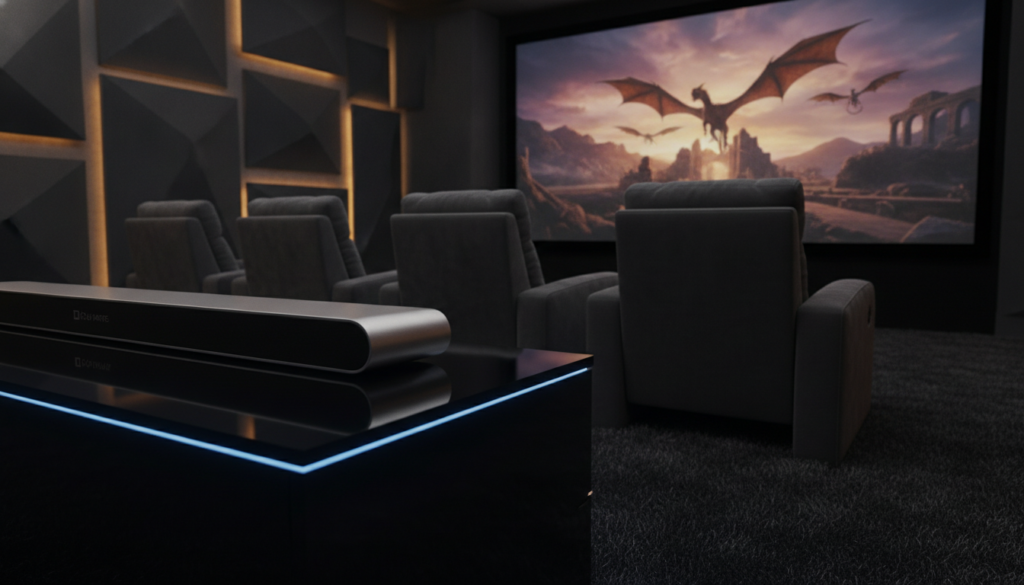
A Dolby Atmos soundbar for home theater creates an immersive foundation for your system. A standalone unit greatly improves television sound, but expanding your setup unlocks more potential. Choose between a gradual upgrade or a complete package with rear speakers and a subwoofer.
Pairing with Other Audio Equipment
Extra components help your system handle complex soundscapes with greater precision. A dedicated subwoofer adds deep, resonant bass for action-packed movies. Wireless surround speakers fill gaps behind your seats and create a more complete 3D audio bubble.
When choosing a Dolby Atmos soundbar for home theater, make sure your streaming devices and television support high-bandwidth connections such as HDMI eARC. This connection sends uncompressed audio to your speakers without quality loss. Upgrading source equipment matters as much as upgrading speakers.
Recommended Accessories for Dolby Atmos
Use high-quality accessories to stabilize and improve your setup. Sturdy wall mounts or adjustable speaker stands can place your soundbar at ideal ear level. Good cable management reduces signal interference and keeps your entertainment area neat.
- High-speed HDMI cables for stable data transfer.
- Acoustic foam panels to reduce unwanted sound reflections.
- Isolation pads to minimize vibrations from your subwoofer.
Creating the Perfect Viewing Environment
Your viewing space strongly affects audio performance. Center your seats so you stay in the sweet spot of the sound field. Reducing noise from appliances or traffic helps you hear soundtrack details clearly.
Consider your ceiling height and furniture placement. Hard surfaces, such as glass or tile, can create echoes, while rugs or curtains soften sound. Fine-tuning the room helps your Dolby Atmos soundbar for home theater deliver the high-fidelity performance you expect.
Frequently Asked Questions About Dolby Atmos Soundbars
We often receive questions about modern audio equipment and how it works with a home setup. A successful Dolby Atmos soundbar setup requires understanding how these devices connect with your television and streaming sources.
What Makes Dolby Atmos Different from Other Formats?
Unlike traditional surround sound, which uses fixed channels, Dolby Atmos uses object-based audio. This technology lets sound engineers place specific sounds in three-dimensional space, creating a more realistic environment.
Older formats like Dolby Digital limit sounds to specific speaker locations. Atmos treats sounds as independent objects, so audio can move around you, including overhead.
How Do I Know if My TV Supports Dolby Atmos?
To check compatibility, look for HDMI eARC (Enhanced Audio Return Channel) support. Standard ARC handles some compressed audio, but eARC carries the high-bandwidth data needed for full Atmos quality.
Your television’s support depends on its connections and streaming source. Even if your TV supports Atmos, the content must also use Dolby Atmos encoding.
Can I Use a Dolby Atmos Soundbar with a Standard TV?
You can connect a soundbar to an older display, but audio quality and format options may be limited. For instance, the Sony BRAVIA Theatre Bar 9 supports Dolby Atmos and DTS:X.
However, it has one HDMI input, which may limit your device options. Similarly, the Sonos Arc Ultra is a powerful choice, though it lacks HDMI passthrough.
When planning your Dolby Atmos soundbar setup, verify that your TV passes audio correctly through optical or HDMI ports.
| Feature | Standard TV | Modern Smart TV |
|---|---|---|
| HDMI eARC | Rarely Available | Standard Feature |
| Audio Format | Stereo/Dolby Digital | Dolby Atmos/DTS:X |
| Setup Complexity | High (Requires Adapters) | Low (Plug and Play) |
Real User Experiences and Reviews
Daily use shows a soundbar’s true value beyond marketing specifications. We combined feedback from thousands of Dolby Atmos soundbar reviews to show what listeners can expect at home. Technical data helps, but listeners reveal details that spec sheets often miss.
Testimonials on Sound Quality
Many users say the biggest improvement is dialogue clarity. During complex action scenes, voices can hide behind loud effects. Owners of top Dolby Atmos soundbars say these systems separate speech, keeping it crisp and easy to follow. They can reduce the need for constant volume changes.
“The immersion is startling. It feels like the sound is moving around the room rather than just coming from the front, which completely changes how I watch movies.”
Performance, however, is not universal. We found that room acoustics greatly affect how well height channels work. Users with vaulted ceilings or open floor plans often report less “overhead” effect than users in smaller, enclosed spaces.
User Feedback on Ease of Use
Convenience matters to most buyers. Feedback shows modern systems are simple to install, often needing only one HDMI eARC connection. Users value the plug-and-play design, which delivers high-quality audio within minutes of unboxing.
- Automatic Calibration: Most users love how systems like the Sonos Arc Ultra adjust to the room automatically.
- Connectivity: Bluetooth and Wi-Fi integration are cited as essential for everyday music streaming.
- Remote Control: Integration with existing TV remotes is a top-requested feature that most premium models now handle well.
How It Compares to Traditional Soundbars
Compared with traditional two-channel bars, these advanced systems show a clear performance gap. Standard bars boost volume, while newer models create a three-dimensional soundstage that traditional hardware cannot match.
| Feature | Traditional Soundbar | Dolby Atmos Soundbar |
|---|---|---|
| Soundstage | Front-facing only | Immersive/Surround |
| Dialogue | Often muffled | Crystal clear |
| Setup | Basic | Advanced/Automated |
Many owners call moving from a standard bar to a premium unit a transformative upgrade. The price is higher, but owners say added depth and clarity justify it for serious movie enthusiasts.
Future of Dolby Atmos Technology
Home audio keeps evolving as manufacturers expand what compact hardware can do. Smarter calibration tools and broader streaming support can keep your system current for years.
Emerging Trends in Home Audio
Leading Dolby Atmos soundbar brands now favor wireless systems that support easy expansion. Start with a basic setup, then add components as your needs grow. This modular design helps your investment stay useful as new audio formats emerge.
Potential Upgrades and Innovations
Hardware longevity is a major focus for modern engineers. For example, the KEF XIO will soon support rear-channel integration through a simple firmware update. This upgrade shows how Dolby Atmos soundbar features can improve long after you bring the device home.
How Dolby Atmos is Evolving in Entertainment
Choosing the right equipment means looking beyond current specs and considering future compatibility. We suggest systems with flexible upgrade paths and strong software support. By choosing high-quality Dolby Atmos soundbar brands today, you secure adaptable cinematic sound for the next generation of home entertainment.