
 Zoe Nora
Our brains process sound location in less than a millisecond. Traditional stereo traps music between two fixed points. New technology lets sound move freely around us.
Spatial audio transforms standard playback into an immersive journey. Notes can appear above, below, or behind you instead of sounding flat. It creates a realistic 3D audio experience that matches real-world hearing.
We will explain this technology’s essentials. You will learn to choose compatible hardware and improve your home setup. By the end, you will understand how to create richer sound for favorite media.
Key Takeaways
- Understand how sound moves beyond traditional left and right channels.
- Learn the core mechanics behind a high-quality 3D audio experience.
- Discover how to identify devices that support modern surround sound formats.
- Follow practical steps to configure your home theater for maximum immersion.
- Explore the benefits of upgrading your current listening habits.
What is Spatial Audio?
If recordings feel like they happen inside your head, you may already be curious about spatial audio. This technology changes how we consume media by moving beyond flat, two-dimensional soundscapes.
This innovation recreates directional depth and natural listening cues, so sound seems to move around us in physical space. It turns a standard listening session into a truly immersive experience.
Definition of Spatial Audio
At its core, this technology uses object-based audio to build a three-dimensional environment. Instead of fixing sounds to channels, engineers treat vocals, instruments, and sound effects as separate objects.
The system places these objects at exact points within a virtual sphere. It renders sound dynamically, so audio seems tied to one location wherever you sit.
How It Differs from Traditional Audio
Traditional stereo systems focus on simple left and right separation. This creates width but often misses the vertical and depth cues needed for a realistic soundstage.
In contrast, binaural audio uses special processing to place sound in three dimensions for headphones. By copying how our ears receive sound waves, it creates a convincing illusion of space.
The shift toward object-based audio creates a more natural listening experience. It connects static recordings with the changing, unpredictable nature of real-world sound.
The Technology Behind Spatial Audio
Modern listening blends physics with digital signal processing. We use immersive sound technology to turn flat, two-dimensional audio into rich, three-dimensional sound that matches real-world hearing.
Key Components of Spatial Audio Systems
High-quality sound spatialization needs several advanced parts working together. A rendering engine places each sound object in virtual space.
The Head-Related Transfer Function (HRTF) models how ears, head, and torso filter sound before it reaches the eardrums. With these filters, spatial audio processing helps the brain sense depth, height, and distance.
How It Works in Headphones and Speakers
With headphones, the system builds a virtual environment by changing timing and frequency differences between left and right channels. This copies the natural delay when sound reaches one ear slightly before the other. Through this precise calibration, standard hardware can still create a sense of space.
Speaker arrays and soundbars use physical drivers to reflect sound from walls and ceilings. This method uses room acoustics to create a wider soundstage. Whether using earbuds or home theater setups, the goal is a realistic, immersive sound technology experience.
| Technology Feature | Headphones | Speaker Arrays |
|---|---|---|
| Primary Method | HRTF Filtering | Acoustic Reflection |
| Spatialization | Virtual Binaural | Physical Multi-channel |
| Room Dependency | Low | High |
| Processing Focus | Timing/Frequency | Waveform Direction |
The effectiveness of sound spatialization depends on source quality and hardware that can render it. As spatial audio processing evolves, we expect even more seamless integration across all our favorite devices.
Benefits of Spatial Audio
When we listen to music or watch films, moving sound around us shapes our emotional connection to the content. Beyond traditional stereo, spatial audio builds a rich, three-dimensional space that copies real-world hearing.
This technology gives sound greater clarity and depth. To explore these advanced setups, learn more about immersive audio and its effect on daily listening.
Immersive Listening Experience
The main benefit of this format is a stronger feeling of audio immersion. Sound no longer feels trapped inside your head; instead, it seems to fill the space around you.
This added depth creates a stronger sense of presence during movies and live concert recordings. Sophisticated processing places sounds in a virtual sphere, making the experience feel lifelike and engaging.
Enhanced Sound Localization
Another major benefit is audio localization, which helps you pinpoint where a sound begins. In a well-mixed track, instruments can seem to come from your left, right, or even behind you.
This precision matters for film dialogue, because voices should follow characters on screen. Still, final quality depends on several factors. Your hardware, room acoustics, and original production quality affect how clearly you hear directional cues.
Popular Uses of Spatial Audio
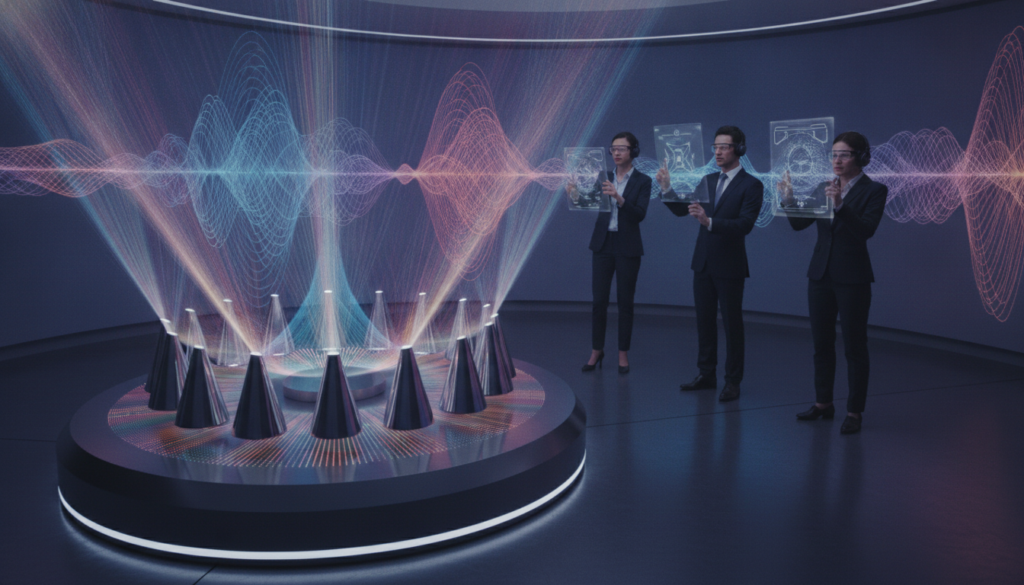
From favorite music tracks to high-stakes gaming, spatial audio is changing how we experience sound. We are seeing a major shift in media use through immersive sound technology. It places sound in three-dimensional space, beyond traditional stereo setups.
Music Streaming Services
Major platforms like Apple Music use this innovation to connect artists and listeners more closely. Their large catalogs include tracks mixed for this format, giving users studio-quality sound on mobile devices. Learn more by exploring what is spatial audio and its technical foundation for streaming.
Use compatible hardware to get the most from these services. Many modern headphones and earbuds have sensors that track head movement and keep sound anchored. This creates a truly lifelike atmosphere, making you feel as if you are sitting in the middle of a live concert.
Film and Gaming Applications
At home, the difference between standard surround sound technology and spatial audio is profound. Traditional systems use fixed speaker placements, but spatial formats treat sounds as objects that move dynamically around the room. This creates environmental realism that was once impossible.
- Gaming: Players can pinpoint the exact location of footsteps or distant gunfire, providing a competitive edge.
- Film: Viewers experience a deeper sense of immersion, where rain sounds like it is falling from above and echoes feel authentic.
- Virtual Reality: The audio shifts in real-time as you turn your head, ensuring the soundscape remains perfectly synced with your visual environment.
We see this technology as more than a luxury; it is a major upgrade for any media enthusiast. Whether navigating a complex virtual world or watching a cinematic masterpiece, added depth transforms each moment into an unforgettable journey.
The Impact on Music Production
The rise of object-based audio gives creators new ways to build lively soundscapes. It changes how music is composed and delivered, moving beyond traditional stereo limits.
New Creative Possibilities for Artists
Modern producers can place sounds anywhere in three-dimensional space. With sound spatialization, artists can rethink each element’s movement, depth, and height.
For instance, producers like FINNEAS use these tools to create intimate, vocal-focused experiences. They place listeners directly in the room with the performer. Likewise, remixing classic catalogs, such as those by Nile Rodgers, can refresh legacy tracks through 3D audio experience techniques.
“Spatial audio allows us to paint with a much larger brush, giving every instrument its own unique place in the air.”
Mixing Techniques in Spatial Audio
To achieve professional results, plan for a 3D audio experience early in the creative process. Simple upmixing of existing stereo files often sounds poor because it misses the format’s full potential.
Instead, work with original multitracks or stems so each object can be placed accurately. Effective sound spatialization needs careful control of panning and depth. This approach keeps the listener’s perspective clear and engaging throughout the song.
With object-based audio workflows, producers can build immersive environments. These environments can reshape the relationship between artist and audience. This technical evolution is more than a trend; it is a new standard for high-fidelity sound.
Spatial Audio vs. Surround Sound
Many listeners confuse spatial audio with traditional surround sound technology, but they work in different ways. Both formats create an immersive experience, but their designs shape how you hear sound in your room.
Read this detailed comparison of spatial vs. surround audio systems. It explains why your hardware choice strongly affects the final sound.
Key Differences Explained
Traditional systems use fixed speaker channels, such as 5.1 or 7.1 setups. They send specific signals to assigned speakers, locking sound to a predetermined layout.
Spatial audio uses object-based rendering and Ambisonics to place sounds in 3D space. This enables more precise audio localization because the system calculates each sound’s origin, regardless of speaker count.
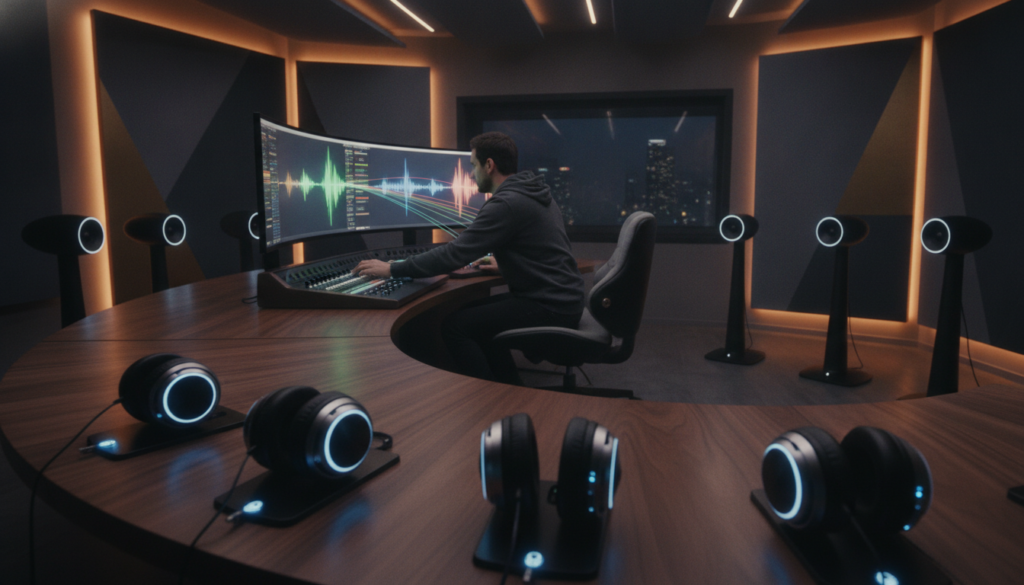
Spatial audio treats sounds as independent objects, so it adapts to many playback environments. Traditional surround sound technology stays rigid because listeners must sit in a specific “sweet spot” to hear the intended mix.
Scenarios Where One Outperforms the Other
For a dedicated, fixed home theater room, traditional surround sound is a highly practical choice. It offers a consistent experience for legacy media and movies mixed for channel-based playback.
Spatial audio shines when you want flexibility and enhanced immersion. It works well for modern streaming services and gaming, where sound reacts to movement or a virtual environment.
| Feature | Surround Sound | Spatial Audio |
|---|---|---|
| Primary Focus | Channel-based | Object-based |
| Flexibility | Low | High |
| Localization | Fixed | Dynamic |
The best format depends on your setup. Traditional systems suit a static, cinematic experience. If you want advanced audio localization and adaptability, spatial audio is the logical next step.
Devices That Support Spatial Audio
Choosing the right device is vital for true audio immersion. Whether you are a casual listener or dedicated audiophile, your hardware shapes complex soundscapes. Modern spatial audio processing lets manufacturers add advanced features to compact earbuds and massive home theater setups.
Leading Brands and Models
The market offers a diverse range of products for multidimensional sound. For personal listening, Apple, Sony, and Bose lead with headphones featuring built-in head tracking and personalized HRTF profiles. Sophisticated sensors keep sound anchored in space when you move your head.
In living rooms, high-end manufacturers offer robust solutions for a cinematic experience. You can explore various Dolby Atmos speakers that use upward-firing drivers to bounce sound off your ceiling. Gaming consoles and VR headsets often include dedicated hardware chips that manage real-time spatial audio processing for more realistic environments.
How to Choose the Right Device for You
Choose gear by matching your listening habits with your physical space. If you prioritize portability, choose wireless earbuds with strong noise isolation and long battery life. If you prefer a stationary setup, consider these factors to improve your audio immersion:
- Room Size: Larger spaces often require discrete speaker systems rather than a single soundbar to maintain sound clarity.
- Budget: Entry-level soundbars provide a great starting point, while modular systems allow for future upgrades.
- Content Compatibility: Ensure your chosen device supports the specific formats you consume, such as those used by major streaming platforms or gaming services.
- Comfort and Ergonomics: If you plan on long listening sessions, prioritize lightweight designs and breathable materials for headphones.
The best device fits smoothly into your daily routine. Focus on your listening habits to choose technology that deepens your connection to the music and media you love.
Setting Up Spatial Audio at Home
Building a high-fidelity soundscape at home takes careful planning and suitable hardware. For an immersive experience, consider how your equipment works within your room. Proper sound spatialization sends audio cues to your ears with precision.
Essential Equipment Needed
Choose a device that supports modern audio formats: a high-end smartphone, dedicated media player, or smart TV. Add High-quality headphones or a multi-speaker system to render complex audio layers.
Keep your playback software updated. Many streaming services need specific settings for sound spatialization features. Finally, use a stable, high-speed internet connection to prevent buffering during high-bitrate playback.
Tips for Optimal Listening Arrangement
Your room strongly affects how you hear height, distance, and direction. Test several seating positions to find the “sweet spot,” where audio feels balanced. Reduce unwanted reflections from hard surfaces, such as glass or bare walls, to improve clarity.
When using headphones, enable head tracking whenever available. This technology adjusts the audio field in real time as you move your head, anchoring sound to your device. Compare results across different playback systems to fine-tune your sound spatialization for the best results in your unique home space.
Common Misconceptions About Spatial Audio
Spatial audio is not a magic switch for better sound. Turning it on does not always improve every recording. The source quality and your hardware shape the final listening experience.
Myths About Sound Quality
A major myth says all spatial tracks sound the same. In truth, the mastering process strongly affects how immersive a track feels. Without spatial mixing, software may struggle to create a convincing soundstage.
We must separate general spatial systems from binaural audio. Binaural audio is recorded to mimic how human ears hear sound in 3D space. Other spatial formats use digital processing, so headphone virtualization can differ from a dedicated multi-speaker setup.
- Source Quality: Low-bitrate files cannot magically gain detail through spatial processing.
- Hardware Limitations: Your headphones or speakers must be capable of handling complex spatial metadata.
- Personal Preference: Some listeners prefer the direct, focused sound of traditional stereo over the expansive nature of spatial audio.
Misunderstandings About Compatibility
Many people assume spatial audio works with every app and streaming service. Yet compatibility often depends on software requirements and content catalogs. A feature may work in one music app but remain unavailable in another.
Operating systems and hardware makers also set limits. Some spatial features activate only with specific proprietary headphones or compatible streaming platforms. Check these points for a seamless experience:
- Verify that your operating system is updated to the latest version.
- Confirm that your chosen streaming service actually offers content in your preferred spatial format.
- Ensure your playback device is officially certified to decode the specific audio codec being used.
Future Trends in Spatial Audio
As technology advances, audio becomes more personal and more closely connected to our daily lives. Today, spatial audio processing goes beyond simple surround sound to create lifelike environments.
Innovations on the Horizon
The next generation of audio technology will focus on hyper-personalization. Engineers are creating algorithms that map each listener’s ear shape to improve sound delivery. This spatial audio processing gives listeners a custom experience, whatever hardware they use.
We also expect better head tracking and smaller hearables. These devices will soon connect smoothly with vehicle systems and virtual reality headsets. Smarter room calibration will let speakers adjust output to each living space’s acoustics.
Predictions for Consumer Adoption
Market growth is speeding up as major platforms reward high-quality content. For instance, potential royalty increases on services like Apple Music may encourage artists to use immersive mixing techniques. This change makes spatial audio processing a standard requirement for modern music production, not a niche feature.
Beyond entertainment, we expect broad use in wellbeing applications, such as guided meditation and focus-enhancing soundscapes. As these tools become easier to access, the barrier to entry for the average consumer will keep falling. The following table highlights the expected evolution of these technologies.
| Technology Area | Current State | Future Outlook |
|---|---|---|
| Personalization | Generic profiles | Biometric ear mapping |
| Integration | Headphones only | Vehicles and VR |
| Accessibility | Premium tier | Mainstream standard |
| Processing | Basic spatial audio processing | AI-driven real-time rendering |
Conclusion: Elevating Your Listening Experience
Modern sound technology changes how we connect with favorite media. Spatial audio adds depth to every note and sound effect. It can turn standard playback into a rich, multidimensional environment.
A high-quality 3D audio experience requires careful attention to detail. Choose hardware from reliable brands like Apple, Sony, or Bose for full compatibility. Place speakers well, or ensure headphones fit comfortably, to improve performance.
True audio immersion depends on the link between your equipment and source material. Explore music streaming platforms and film libraries to test these capabilities. Try different formats to find the setup that matches your preferences.
Listen to favorite tracks or play a game with these settings enabled. You may notice details hidden in traditional stereo mixes. Begin your journey into this advanced soundscape today, and discover the full potential of your media collection.