
 Zoe Nora
Did you know over 80% of cinema fans say deep, rumbling bass is key for a great movie night? We often deal with messy cords ruining our living spaces while trying to get that theater feel.
A wireless home subwoofer fixes this by giving you powerful low-end sounds without long, ugly cables. These units make explosions feel real and add amazing depth to your favorite music.
Finding the best wireless home subwoofer can turn your media room into a pro studio. We’ll look at top models, setup tips, and affordable options to boost your audio setup today. Our guide covers everything from comparing brands to fixing common issues with your new gear.
Key Takeaways
- Eliminate cable clutter with modern signal transmission technology.
- Enhance your audio experience with deeper, more resonant bass.
- Choose the right unit based on your specific room size and budget.
- Follow our expert setup instructions for optimal sound performance.
- Troubleshoot common connectivity issues with ease using our guide.
What is a Wireless Home Subwoofer?
Many people wonder what makes a wireless subwoofer different. It’s a powered low-frequency speaker that handles deep bass notes. It gets audio signals through a transmitter, Wi-Fi, or a special connection, so you don’t need long cables.
Definition and Functionality
A wireless subwoofer system takes on the heavy bass work. This lets your main speakers focus on midrange and treble. This makes your sound clearer and more immersive.
The signal is sent quickly, keeping the bass in sync with your audio. It’s great for soundbars or full surround sound setups, acting as the heart of your entertainment.
Key Benefits of Wireless Subwoofers
The main perk is flexibility in placement. You can place it anywhere, not just near your receiver. This makes it easy to add quality sound to rooms where wires are hard to run.
Here’s a comparison with wired subwoofers:
| Feature | Wired Subwoofer | Wireless Subwoofer System |
|---|---|---|
| Installation | Complex cabling | Simple plug-and-play |
| Placement | Limited by cable length | Highly flexible |
| Signal Integrity | Very high | High (with modern tech) |
| Aesthetics | Visible wires | Clean, minimalist |
Wireless systems reduce clutter, making your space look better. Most systems pair easily, so you get great bass fast after opening the box.
How to Choose the Right Wireless Home Subwoofer?
Choosing the right audio component is more than just size. Finding the best wireless home subwoofer means considering your space and current gear. This ensures your investment brings the deep bass you want.
Consider Room Size and Acoustics
Your room’s size greatly affects a wireless home subwoofer‘s performance. A small room doesn’t need as much power as a big one. Think about the space and how sound waves interact with your room’s surfaces.
Bass feels different to everyone, but physics is the same. Bigger rooms need more power and bigger drivers. Make sure your furniture won’t block or absorb the bass before placing your subwoofer.
Matching with Existing Equipment
Make sure your new subwoofer works with your current setup. Many use special wireless protocols, so you might be stuck with a certain brand. Check if your soundbar or receiver can connect with third-party devices or if it needs to be the same brand.
Look at crossover controls and impedance to ensure a smooth transition with your speakers. The best wireless home subwoofer should have flexible settings for fine-tuning the sound to fit your system.
| Room Size | Recommended Driver | Power Output | Bass Impact |
|---|---|---|---|
| Small (Under 150 sq ft) | 8-inch | 100W – 150W | Tight and Precise |
| Medium (150-300 sq ft) | 10-inch | 200W – 300W | Balanced and Deep |
| Large (Over 300 sq ft) | 12-inch+ | 400W+ | Powerful and Cinematic |
Top Brands for Wireless Home Subwoofers
Looking for the top wireless subwoofers for home? Several top brands offer unique sounds and tech. Your choice depends on your current setup and bass goals.
Knowing how these brands engineer sound helps you choose. Whether you want easy smart home integration or powerful bass, there’s a perfect fit for you.
Sonos
Sonos is known for flawless ecosystem compatibility. If you have Sonos speakers, adding their subwoofer is easy.
Their sleek design fits any living room. Their software ensures balanced bass and audio, for a unified sound experience.
Bose
Bose makes straightforward integration easy with their products. Their subs pair instantly with soundbars, simplifying home theater setups.
Bose subs are compact but deliver deep sound. They’re great for those who want quality audio without clutter.
Klipsch
Klipsch offers energetic and articulate bass. Their horn-loaded tech adds a theater-like feel to your home.
Their wireless subs deliver powerful low-end frequencies. They’re perfect for movies or music that needs to move you.
Polk Audio
Polk Audio is a great choice for those starting to enhance their home audio. They offer top wireless subwoofers for home use at affordable prices.
For beginners, check out this guide on wireless subwoofer connectivity. Polk makes achieving deep bass easy and hassle-free.
Features to Look for in a Wireless Home Subwoofer
Choosing the right wireless subwoofer for TV setups is about finding the right mix of tech and room needs. Look at key specs to make sure you get the deep bass you want.
Connectivity Options
Good audio systems need reliable signal transmission. Look for models with stable subwoofer connectivity. This can be through special transmitters or Wi-Fi.
Latency is key, as any delay can mess up audio and video sync. Choose systems using 5GHz bands to avoid interference. A good wireless subwoofer for TV keeps a strong connection, even across the room.
Sound Quality Factors
For real impact, focus on frequency response and amplifier power. Bigger drivers move more air, creating deeper bass.
Check if the cabinet is sealed or ported. Sealed boxes give tighter, more accurate bass. Ported designs have higher output. Make sure there are phase controls and crossover integration for smooth blending with main speakers.
Build and Design
The size of your wireless subwoofer for TV is as important as its inside. Measure your space well, as sizes differ by brand.
Consider the finish and grille protection, important for high-traffic areas. Look for easy-to-reach controls for volume or settings. The design should fit your home decor, whether under a console or beside your TV.
Installation and Setup Guide for Wireless Subwoofers
Getting the best sound from your audio gear starts with careful installation. When you add a wireless subwoofer for home theater, make sure every connection is secure. Also, set up each setting to fit your room perfectly.
Unboxing and Initial Setup
Start by carefully unboxing your device and checking for all cables and manuals. Place the unit in a spot that allows for proper ventilation. This is because electronic parts get hot when they work.
Avoid putting the subwoofer in a tight, enclosed space. This can block airflow and hurt its performance. Connect the power cable to a reliable wall outlet.
Before pairing, check the manufacturer’s website for firmware updates. Keeping your software current helps your wireless subwoofer for home theater work better.
Pairing with Your Sound System
Pairing your device needs a good understanding of your hardware. Wireless compatibility varies. If you have a soundbar or AV receiver, turn on pairing mode on both the transmitter and subwoofer at the same time. Press a sync button to link them up.
After linking, try different spots to find the best sound. Start near the front of the room and move around to avoid standing waves. Once you find the perfect spot, adjust the crossover, phase, and volume to match your main speakers.
| Setup Step | Action Required | Priority |
|---|---|---|
| Unboxing | Inspect for damage | High |
| Placement | Ensure ventilation | Medium |
| Pairing | Sync transmitter | High |
| Calibration | Adjust crossover | Medium |
Common Issues with Wireless Home Subwoofers
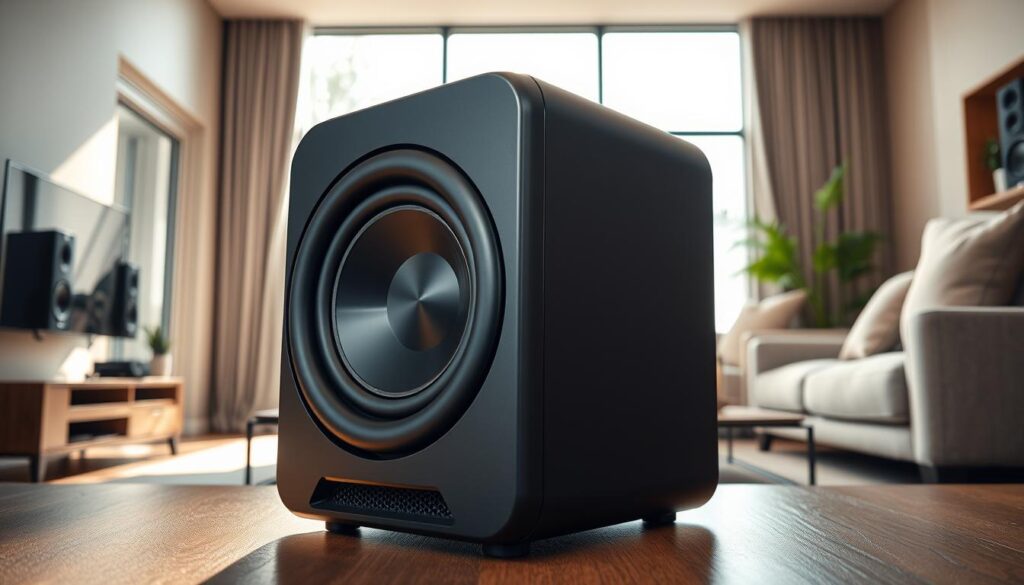
Even the best audio systems can have problems. When you buy a high-quality wireless subwoofer, you want it to work perfectly. But sometimes, things like where you place it or how it’s set up can mess with the sound.
Fixing these issues is easier if you know how. By finding the problem, you can make your sound system work great again.
Connectivity Problems
Wireless signals can get messed up by other devices at home. If your subwoofer keeps dropping the signal or won’t pair, check how far it is from the transmitter. Proximity is key because walls and big furniture can weaken the signal.
Also, make sure your router isn’t using the same frequency as your audio gear. Updating your high-quality wireless subwoofer can fix handshake issues. If it keeps going to standby, check the power cable and signal settings.
Sound Quality Concerns
Bad bass sound can be because of your room’s acoustics, not the subwoofer. Putting it in a corner can make the bass stronger, but it might also cause unwanted resonance. Try moving it around to find the best spot for sound.
Changing the crossover frequency and phase can also improve the sound. A high-quality wireless subwoofer needs to be set up just right to sound good with your main speakers. Use this table to solve common problems:
| Issue | Potential Cause | Recommended Fix |
|---|---|---|
| Weak Bass | Incorrect Crossover | Raise the crossover frequency |
| Boomy Sound | Corner Placement | Move unit away from walls |
| Delayed Audio | Signal Interference | Clear path to transmitter |
| No Sound | Pairing Failure | Reset and re-sync devices |
Lastly, if your system has room-tuning software, use it after making any changes. This helps your high-quality wireless subwoofer fit your room perfectly. Regular upkeep keeps your high-quality wireless subwoofer sounding great.
Best Wireless Home Subwoofers for Deep Bass
Finding the best wireless home subwoofer for deep bass is more than just looking at wattage. Things like driver excursion, cabinet loading, and room gain matter a lot. They help fill your space with low frequencies.
Another key factor is controlling distortion. A top-notch wireless subwoofer with deep bass keeps sound clear, even at loud volumes. This means your audio stays tight and punchy, not muddy.
Sonos Sub
The Sonos Sub is great for those in the Sonos family. Its force-canceling driver design cuts down on cabinet rattle. This makes the sound incredibly clean. Plus, it’s easy to set up with other Sonos speakers for a balanced sound.
Bose Bass Module 700
The Bose Bass Module 700 is perfect for those who want power in a small package. It packs deep, room-filling bass in a tiny body. It looks good with Bose soundbars and fits well in modern homes.
Klipsch R-10SWi
The Klipsch R-10SWi is for those who love a classic sound. It’s a wireless subwoofer with deep bass that uses a copper-spun woofer for strong sound. It’s flexible for adding to a big system, but check the wireless transmitter before buying.
Best Budget Wireless Home Subwoofers
Many listeners find that an affordable wireless home subwoofer is perfect. It offers great value and performance. These entry-level models may not have the extreme power of high-end units. But, they still make a big difference in your TV, gaming, and music.
When looking for these devices, remember some need a separate wireless adapter or transmitter kit. Always check the connectivity needs before buying. This ensures a smooth setup.
Polk Audio PSW10
The Polk Audio PSW10 is a top pick for an affordable wireless home subwoofer. It has a compact design, perfect for small rooms or gaming dens.
Users love the intuitive controls on the back. They make adjusting volume and crossover frequency easy. It’s a budget-friendly option that adds excitement to movies and music.
JBL Stage A100P
The JBL Stage A100P is great for more impact. It’s known for its clean bass output and solid build. This helps reduce unwanted vibrations during loud music.
Adding this affordable wireless home subwoofer to your system is easy, with the right wireless transmitter. It balances clarity and depth well. This makes your home audio setup feel complete without spending a lot.
Wireless Home Subwoofer Maintenance Tips
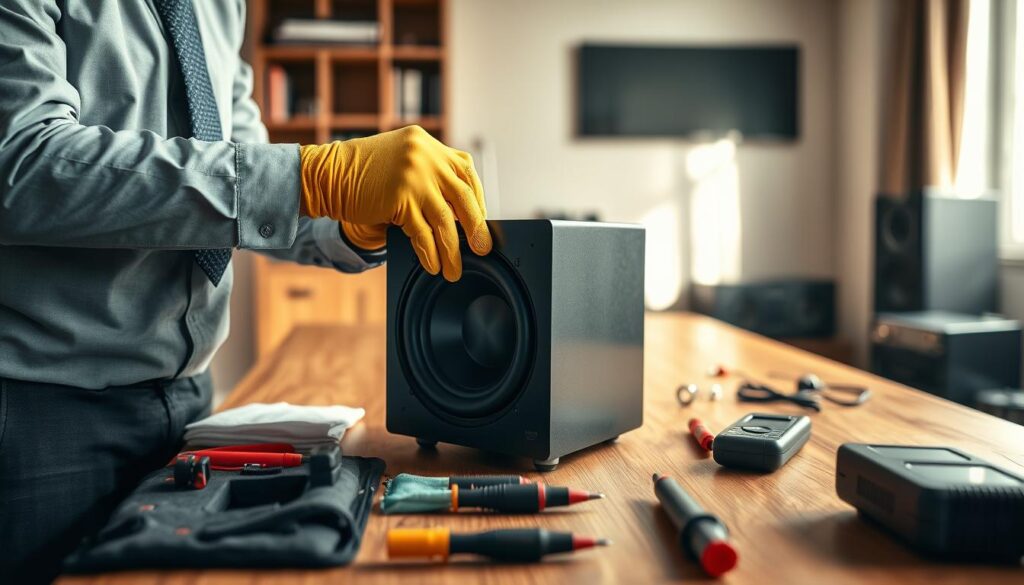
Keeping your audio setup in top shape is key to enjoying deep, clear sound. By following simple steps, you can keep your equipment working well for years. Proper wireless home subwoofer maintenance helps avoid common problems and keeps your sound immersive.
Regular Cleaning
Dust is a big problem for audio gear. Use a dry, soft microfiber cloth to clean the cabinet and grille. Avoid liquid cleaners and damp cloths to prevent damage.
Make sure the vents are clear to avoid overheating. Check your power cables and wireless transmitters for damage or dust.
Firmware Updates
Modern audio gear needs software to work its best. Manufacturers often update this through apps or websites. These updates improve performance and security.
By keeping your device up to date, you ensure it works well with your sound system. Check for updates in your manufacturer’s app every few months.
| Maintenance Task | Frequency | Action Required |
|---|---|---|
| Surface Dusting | Weekly | Use a dry, soft cloth |
| Vent Inspection | Monthly | Clear away any debris |
| Cable Check | Quarterly | Ensure tight connections |
| Firmware Update | As needed | Check manufacturer app |
Frequently Asked Questions about Wireless Home Subwoofers
Many people ask about how wireless subwoofers work and if they can fit into their home theater setup. They want to know how these devices can enhance their sound without a mess of cables.
How do wireless subwoofers work?
A wireless subwoofer system uses a special radio frequency to send audio from your receiver or soundbar to the subwoofer. This means no cables across your living room floor.
But remember, wireless only means the audio signal is sent wirelessly. Your subwoofer still needs to be plugged into a wall outlet for power. Without this, it can’t produce the deep bass sounds.
Can I use a wireless subwoofer with any sound system?
Not all wireless subwoofers work with every sound system. Many are made to work only with specific brands.
For example, a subwoofer for a certain soundbar might not work with a regular stereo receiver. Make sure your device uses the same wireless standard as your current equipment.
Before buying, always check the technical details. A high-quality wireless subwoofer that fits your system will save you time and hassle.
Comparing Wireless vs. Wired Subwoofers
When you’re looking to improve your sound, you have to decide between a wireless subwoofer system and traditional cables. Each option has its own benefits, depending on your home and what you like to listen to.
Pros and Cons of Each
Wireless subwoofers are great because they’re easy to set up. You can put them anywhere near a power outlet without dealing with long cables. But, they might have problems with signal interference or delays if your home has a lot of Wi-Fi.
On the other hand, a traditional wired subwoofer gives you a strong, clear connection. This is what audiophiles often choose. While it takes more work to set up, it’s more reliable and often cheaper for the same quality.
| Feature | Wireless | Wired |
|---|---|---|
| Installation | Easy/Flexible | Complex/Fixed |
| Signal Reliability | Good (Interference risk) | Excellent |
| Cost | Higher | Lower |
When to Choose a Wireless Subwoofer
Go for a wireless subwoofer system if you live in an apartment or have an open-plan room. These are great for keeping your space tidy while still enjoying deep bass. They’re perfect for modern soundbar setups.
If you like a more traditional setup with a receiver, a wired connection might be better for you. It all comes down to what you value more: a clean space or top-notch sound quality.
Future Trends in Wireless Home Subwoofers
Audio technology is changing fast. We’re looking forward to better low-latency transmission and automatic room correction. These updates will make your wireless subwoofer setup even more precise.
Emerging Technical Innovations
Engineers are working on new drivers that pack big sound into small spaces. Soon, you’ll have tools to fine-tune your listening experience easily. These advancements will enhance your audio investment.
Smart Home Integration
Today’s homes need devices that work together smoothly. Future subwoofers will connect easily with soundbars, speakers, and voice assistants. This will create a perfect harmony between your TV and audio equipment.
Choosing the right gear is key. Look for a subwoofer that fits your lifestyle. A good wireless subwoofer will turn your living room into a top-notch cinema for years.