
 Zoe Nora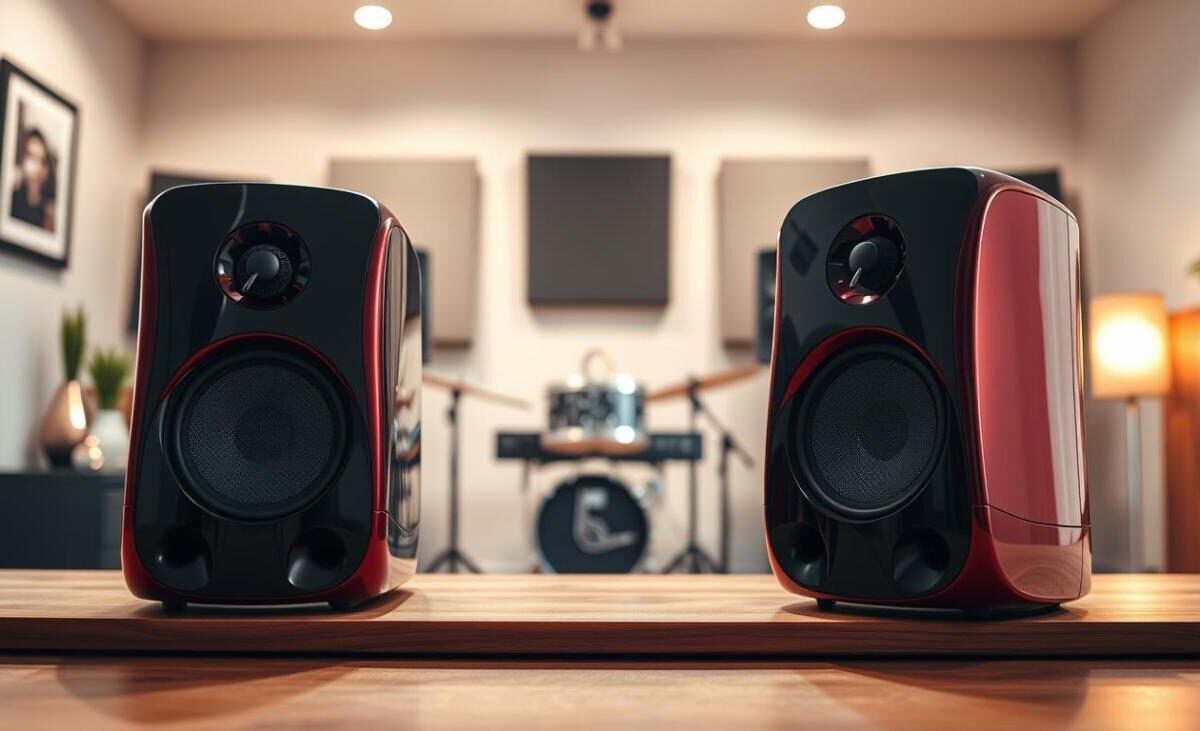
Did you know over 70% of home listeners struggle with high-quality audio? They often use outdated, complex systems. But, the industry has moved to a simpler solution.
Powered speakers are the answer. They have amplification built right into the cabinet. This means no need for separate amplifiers. It saves space and still delivers top-notch sound for your studio or living room.
Today’s active speakers are super versatile. They’re great for both casual listening and precise production work. We’ll look at how these systems compare in terms of price, connectivity, and design. This will help you choose the best one for you.
Key Takeaways
- Integrated amplification removes the need for bulky external receivers.
- Modern units offer seamless wireless connectivity for convenience.
- These systems provide a compact footprint without sacrificing sound fidelity.
- Professional models ensure accurate monitoring for creative work.
- Choosing the right setup depends on your specific room size and budget.
What Are Powered Speakers?
Ever wondered why some speakers plug directly into a wall outlet? That’s the world of active audio equipment. These units, known as powered speakers, have internal amplifiers that match the drivers. This setup keeps the signal path clean and efficient.
Definition and Functionality
Powered speakers are self-contained systems that don’t need bulky external receivers or separate power amplifiers. You just connect your audio source—like a turntable, smartphone, or computer—to the speaker inputs. This makes high-quality audio easy for everyone, no matter their tech skills.
Many modern active speakers come with advanced digital-to-analog converters and wireless connectivity. You can stream music via Bluetooth or Wi-Fi without extra cables or hardware. This turns a simple pair of speakers into a complete home entertainment hub.
Advantages of Using Powered Speakers
The main benefit is the big reduction in system complexity. You don’t have to match amplifier wattage to speaker impedance, as the internal components are already set. This plug-and-play nature saves space and reduces cable clutter in your living room or studio.
| Feature | Powered Speakers | Passive Speakers |
|---|---|---|
| Amplification | Built-in | External Required |
| Setup Complexity | Low | High |
| Space Efficiency | High | Low |
| Customization | Limited | Extensive |
Beyond convenience, these systems often provide better sound quality. The internal crossover and amplification are optimized for the drivers. Whether for a home office or a professional listening environment, active speakers are a reliable and high-performance choice.
Key Features to Consider
Understanding modern audio equipment is key to great sound at home. Before buying, think about how features fit your listening space and daily use.
Sound Quality
The main goal is clear, balanced sound. Look for speakers with good frequency response and volume handling without distortion.
Studio monitors give you precise sound, perfect for critical listening. For casual listening, choose speakers with a warmer sound that enhances your music.
Portability
Do you need something portable or a fixed setup? Portable speakers are great for outdoors or moving around. But they might not have the same depth as bigger speakers.
For better sound, a stationary system might be better. Check out this guide on active bookshelf speakers to find what suits you.
Connectivity Options
Today’s systems offer many ways to stream media. Bluetooth speakers are easy to pair with phones. Wireless speakers using Wi-Fi support higher quality audio.
For a full home theater, look for HDMI ARC or optical ports. If you love vinyl, make sure your speakers have a dedicated phono input.
Design and Aesthetics
Your speakers should match your home, not mess it up. Think about size and materials used.
High-end speakers often have wood veneers or fancy finishes. Pick a design that shows your style and supports great sound.
| Speaker Type | Best For | Connectivity | Portability |
|---|---|---|---|
| Bluetooth speakers | Casual, mobile use | Bluetooth | High |
| Wireless speakers | Multi-room audio | Wi-Fi/Bluetooth | Medium |
| Studio monitors | Critical listening | XLR/TRS/RCA | Low |
Best Powered Speakers for Home Use
Choosing the right sound system is all about your home and how you listen. The perfect powered speakers can make your daily entertainment better. Whether it’s a movie or your favorite music, the right speakers can enhance it.
Model Recommendations
The Edifier R1280DB is a great choice for those who want good sound and value. For a more detailed sound, the KEF LSXII is a top pick. It’s known for its exceptional clarity.
If you want to feel like you’re in the action, the Sonos Era 300 is perfect. It fills any room with amazing sound.
Price Range and Budget Considerations
You don’t need to spend a lot for high-quality audio. You can find great active speakers for under $200. But, if you want the best, expect to pay $500 to over $1,000.
Before you buy, think about what you need. This way, you’ll get the most value for your money.
- Entry-level systems are great for casual listeners.
- Mid-range models have advanced wireless speakers tech.
- High-end units are for serious audio lovers.
Ideal Use Cases
Your home’s size and layout matter when choosing speakers. For small spaces, Bluetooth speakers are perfect because they’re small and easy to use. If you move your setup around, a portable speaker keeps the sound consistent.
These systems are also great for improving TV sound without a big surround sound setup. The right active speakers make music and movies sound amazing. Make sure your speakers can fill your room with sound.
Best Powered Speakers for Professional Use
For those who make a living from sound, picking the right active speakers is key. You need gear that’s not just loud, but clear and reliable for years of use.
Look for systems with a flat sound and strong build. This way, every sound in a recording or live show is captured perfectly.
High-End Options for Professionals
At the top of the list are the Devialet Phantom Ultimate and the Marantz Horizon. These powered speakers are worth their high price. They use special amplification and have very low distortion.
Precision engineering lets these speakers handle complex sounds easily. Buying this level of audio equipment means you’re investing in years of research.
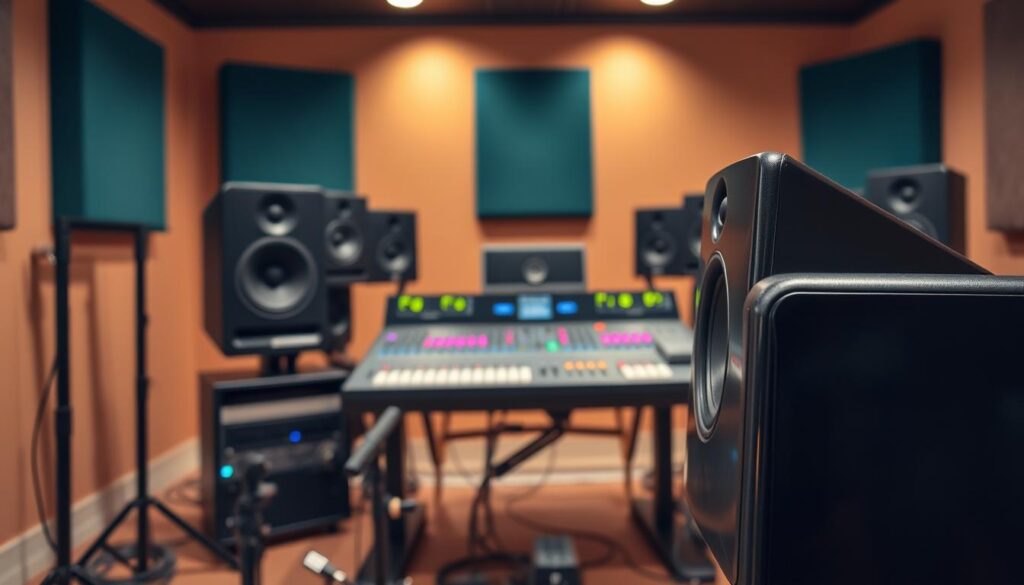
Versatility in Different Environments
Professionals have different needs in different places. In a studio, studio monitors are crucial for accurate mixing.
But for events, you need speakers that can fill big spaces. There’s also a growing demand for wireless speakers and portable speakers for engineers on the move.
Choosing the right audio equipment means picking the right tool for the job. Whether in a studio or a live venue, your active speakers must handle the unique sound challenges of each place.
Audio Performance: What to Expect
When we talk about high-quality audio, we look at key technical areas. These areas help us see if what we’re told matches what we hear.
Frequency Response
Frequency response shows what sounds a speaker can play, from 20Hz to 20kHz. Studio monitors aim for a flat sound for mixing. Other powered speakers might make bass or treble louder for a more fun sound.
A wider range means you can hear deeper bass and clearer highs. But, it’s how these sounds mix that really matters. A good mix makes the sound natural or just right.
Power Output
Power output tells us how loud a system can go before sound quality drops. The Devialet Phantom Ultimate has lots of power for huge sound without effort.
The Marantz Horizon focuses on detailed sound, even at low volumes. More power means you can play music louder without it sounding strained.
Distortion Levels
Distortion happens when the sound coming out doesn’t match the sound going in. It can make music sound harsh or muddy. Keeping distortion low is key for listening comfort, even during long sessions.
“The goal of a high-fidelity system is to disappear, leaving only the music and the space it inhabits.”
Speakers like Klipsch The Sevens use special design and processing to keep distortion low. This helps them stay clear, even when turned up.
| Feature | Studio Monitors | Home Powered Speakers |
|---|---|---|
| Frequency Focus | Flat/Neutral | Dynamic/Enhanced |
| Primary Goal | Accuracy | Enjoyment |
| Amplification | High Precision | High Efficiency |
| Distortion | Extremely Low | Low/Controlled |
Brands You Can Trust
Not all active speakers are the same. Finding the right maker is key to better sound. When you buy new audio equipment, picking top companies is smart. It ensures you get what you need.
Top Brands in the Powered Speaker Market
The market has many choices, but some stand out. Names like Klipsch and KEF are known for high-quality audio. They offer great sound for both casual and serious listeners.
Audioengine is great for those who want small speakers but big sound. For tough settings, QSC is the go-to for its durability and sound.
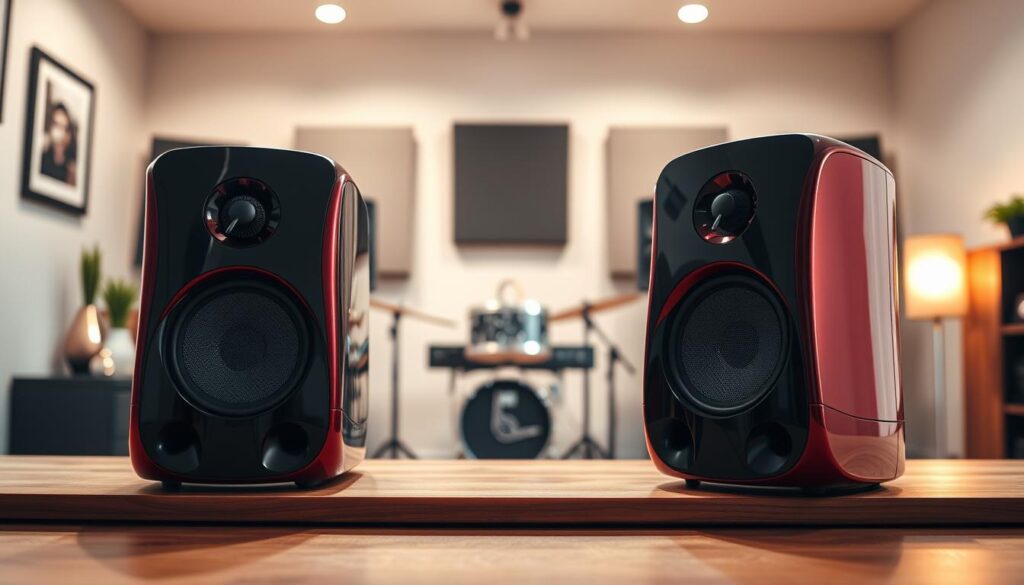
What Sets Each Brand Apart
Each maker has its own way of making sound. Knowing these differences helps you pick powered speakers that fit your needs. Whether you want deep bass, wireless, or durability, there’s a brand for you.
- Klipsch: Known for high-efficiency drivers and a signature dynamic sound that brings energy to any room.
- KEF: Celebrated for their Uni-Q driver technology, which provides an expansive soundstage and precise imaging.
- Audioengine: Perfect for desktop setups, these powered speakers offer a balance of simplicity and warm, detailed sound.
- QSC: The gold standard for professional settings, offering unmatched power and clarity for live events.
| Brand | Primary Strength | Best Use Case |
|---|---|---|
| Klipsch | Dynamic Impact | Home Theater |
| KEF | Spatial Accuracy | Critical Listening |
| Audioengine | Compact Design | Desktop Audio |
| QSC | Professional Reliability | Live Performance |
By choosing these trusted brands, you get high-quality audio for years. It’s about finding the right audio equipment for your life and listening habits.
How to Set Up Powered Speakers
We can make our listening experience better by placing our audio equipment right. Setting it up correctly makes our sound system work its best. It also keeps our living spaces tidy and organized.
Placement Tips for Optimal Sound
To get the best sound amplification, place speakers at ear level. If using bookshelf models, use strong stands to avoid vibrations that can mess up the sound.
Think about the environment to keep your speakers working well for a long time. Remember these tips:
- Ventilation: Leave at least six inches of space behind the unit to avoid overheating.
- Symmetry: Place speakers in an equilateral triangle with the listener for the best stereo imaging.
- Surface Stability: Don’t put units on thin glass or hollow wood to prevent sound issues.
- Corner Avoidance: Keep speakers away from tight corners to prevent unwanted bass buildup and distortion.
Connecting to Other Audio Equipment
Modern powered speakers make it easy to connect with our existing gear. Whether it’s a turntable or a TV, the process is simple and flexible.
There are several ways to connect, depending on what you need:
- Wired Inputs: Use optical or HDMI ARC cables for a high-quality connection to our televisions.
- Phono Stages: Many models include dedicated phono inputs, allowing us to connect turntables directly without an external preamp.
- Bluetooth and Wireless: Stream music from our smartphones using Bluetooth speakers technology.
- Multi-room Sync: For audio throughout the house, wireless speakers make it easy to link multiple zones without long cables.
Choosing the right connection method keeps our signal clean and clear. Use wired connections for serious listening. Save wireless options for casual music and convenience.
Maintenance and Care for Powered Speakers
Regular upkeep prevents common issues and keeps your audio equipment performing at its peak. By dedicating a few minutes to routine care, you protect your investment and ensure consistent sound quality. We recommend establishing a simple schedule to keep your gear in excellent condition.
Cleaning Techniques
Keeping your powered speakers free from dust and debris is the first step in long-term maintenance. Always use a soft, dry microfiber cloth to wipe down the exterior surfaces gently. Avoid using harsh chemicals or abrasive cleaners, as these can damage the finish or the sensitive driver materials.
If you notice stubborn spots, dampen the cloth slightly with water, but ensure no moisture enters the speaker cabinet. Never spray liquid directly onto the unit, as this can cause internal damage to the electronics. Proper ventilation is also vital; keep the rear heat sinks clear of dust to prevent overheating during extended listening sessions.
Troubleshooting Common Issues
Even with the best care, you might occasionally encounter technical hurdles. Before inspecting any connections, always disconnect the power to ensure your safety. If you experience missing audio or pairing failures, check your cables first for signs of wear or loose connections.
We suggest following this checklist if your active speakers are not performing as expected:
- Input Confusion: Verify that the correct input source is selected on the back panel or remote.
- Weak Bass: Check your equalizer settings and ensure the speakers are placed away from corners if the sound feels muddy.
- Overheating: Ensure there is at least six inches of clearance behind the unit for proper airflow.
- Intermittent Sound: Inspect all cables for fraying and ensure they are firmly seated in the ports.
If these steps do not resolve the problem, consult the manufacturer’s manual for specific reset procedures. Taking these proactive measures helps maintain the high fidelity of your audio equipment for years to come.
Comparing Active vs. Passive Speakers
When you start looking for audio equipment, you’ll see a debate between active and passive designs. The main difference is how they handle sound amplification. Active speakers have everything in one box, while passive ones need extra hardware.
Key Differences Explained
The biggest difference is the built-in amplifier. Active speakers, or powered speakers, have their own power and circuitry. This means you don’t need big external amps or receivers.
Passive systems, on the other hand, need an external amp to work. This setup has its own benefits:
- Cabling: Active speakers need just a power cord and an audio cable. Passive systems need speaker wire to an external amp.
- System Expansion: Passive setups let you change amps or upgrade parts over time.
- Maintenance: If an active speaker’s amp breaks, you might need a pro to fix it.
When to Choose Powered Over Passive
We often suggest powered speakers for those who value simplicity and convenience. They’re great for a quick setup without extra boxes and wires.
They’re perfect for small rooms or home offices where space is tight. With an integrated system, you get the best sound because the amplification is matched to the drivers.
| Feature | Active Speakers | Passive Speakers |
|---|---|---|
| Amplification | Built-in | External Required |
| Setup Complexity | Low | High |
| Upgrade Path | Limited | Highly Flexible |
Your choice should match your tech skills and what you want for your space. If you like custom setups, passive is flexible. But for easy, high-quality sound, active speakers are the better choice.
Final Thoughts on Choosing Powered Speakers
Choosing the right audio gear is all about matching your listening habits with your space. Powered speakers are great because they don’t need an external amplifier. They make setting up easy and keep the sound clear.
There’s something for every budget, from the Audioengine bookshelf units at $140 to high-end systems from Genelec or KEF at $5,000. Think about what you need: portability, connectivity, and volume. Good sound amplification makes your music sound just right.
Try out different models to find the best fit for your room. Whether you love deep bass or clear sound, the right speakers change how you listen every day. Share your favorite setups to help others find their perfect sound.