
 Zoe Nora
Did you know over 150 million units of voice-activated tech are active in American homes? This has changed how we do daily tasks, from setting timers to controlling home systems.
Finding the right smart speaker can be tough. Our smart speaker buying guide aims to simplify this. We look at audio quality, privacy, and how well they work with other devices.
Whether you want great music or easy phone integration, we’ve got you covered. We check setup, room placement, and display features. Our goal is to help you pick the best voice assistants for your life.
Key Takeaways
- Understand the core differences between major hardware ecosystems.
- Prioritize features like audio performance versus smart-home control.
- Learn how to evaluate privacy settings before your purchase.
- Match your new device to your current phone and service subscriptions.
- Consider room placement and setup complexity for optimal results.
- Use our comparison to find the best value for your budget.
What Are Smart Speakers and How Do They Work?
Smart speakers are advanced devices that connect your voice to digital actions. They use high-quality microphones, speakers, and internet to control your space.
These units have virtual assistants that understand complex requests quickly. They link your voice to the internet’s vast resources.
Overview of Smart Speaker Technology
The tech inside smart speakers is always ready for your voice. Multiple microphones pick up your voice, even with background noise.
When it hears a “wake word,” it records your request. This audio goes to secure servers. There, it’s analyzed and a response is sent back to you fast.
Voice Recognition and AI Capabilities
The brains of these devices are artificial intelligence. They learn your speech and preferences over time.
These virtual assistants do more than answer questions. They manage your schedule, set reminders, or play music based on your mood. Thanks to the cloud, they get smarter with each update.
Integration with Other Smart Devices
These speakers are key to smart home technology. They connect to many devices, like lights, thermostats, and security cameras.
With compatible apps or “skills,” you can set up routines. Saying one phrase can do many things at once. This makes your home respond to you instantly.
Benefits of Owning a Smart Speaker
Adding a smart speaker to your daily life changes how you interact with your home. These devices act as a central hub, making it easier to manage tasks and stay connected. They use advanced technology to simplify complex tasks and make life more seamless.
Convenience and Accessibility
For many families, these speakers are a big help with daily tasks. They are great for people with mobility issues, as they let users do things without reaching for a phone or changing channels.
For families with older relatives, a voice-controlled home means more independence. Simple voice commands can remind you to take medicine, make calls, or adjust the temperature. This keeps everyone safe and comfortable without the need for physical effort.
Entertainment Options
These devices are also entertainment powerhouses. You can stream top-notch music, listen to podcasts, or enjoy audiobooks while at home.
They also make family time more fun. You can play trivia, get news updates, or even learn new phrases with built-in translation tools. It’s a great way to keep everyone entertained.
Home Automation and Security Features
The real strength of these devices is in home automation. By linking various smart home devices, you can control lights, locks, and appliances with just your voice. This makes your home truly voice-controlled, responding to your needs instantly.
While these tools are very valuable, remember they don’t replace your regular security measures. They add an extra layer of safety, but they shouldn’t be your only security system. Using them wisely helps keep your home safe and efficient.
| Benefit Category | Primary Use Case | Key Advantage |
|---|---|---|
| Accessibility | Elderly support | Increased independence |
| Entertainment | Media streaming | Hands-free enjoyment |
| Automation | Device management | Centralized control |
Key Features to Look for in a Smart Speaker
Finding the perfect smart speaker for your home is about more than just the brand. It’s about the technical details that matter in your daily life. Look beyond the name and into the specs.
Just because a speaker costs more doesn’t mean it’s better. The real test is how well it works with your AI. Check out some of the best smart speakers to see what they offer.
Sound Quality and Audio Performance
When checking out audio performance, look at the driver size and bass quality. Bigger speakers usually sound fuller, perfect for music fans who want to fill a room.
Also, make sure the speaker can get loud enough for parties or background music. Clear, distortion-free sound at high volumes is key to a great speaker.
Smart Assistant Compatibility
Your choice of virtual assistants affects how well your speaker works with your home. Choose Alexa, Google Assistant, or Siri based on your current ecosystem.
Being part of the same ecosystem makes setup and daily use easier. Stick with one to ensure your smart speakers work well with your other devices.
Connectivity Options and Compatibility
Good connectivity is crucial for connected speakers. Make sure your speaker supports modern standards for smooth streaming and voice commands.
- Wi-Fi and Bluetooth: Essential for stable streaming and local device pairing.
- AirPlay and Chromecast: These protocols allow for easy casting from your mobile devices.
- Microphone Pickup: Look for advanced far-field recognition to ensure your voice is heard from across the room.
By focusing on these technical needs, you can find connected speakers that offer great audio performance and reliable virtual assistant support. Taking the time to compare these features will make your home experience better.
Popular Smart Speaker Brands in 2024
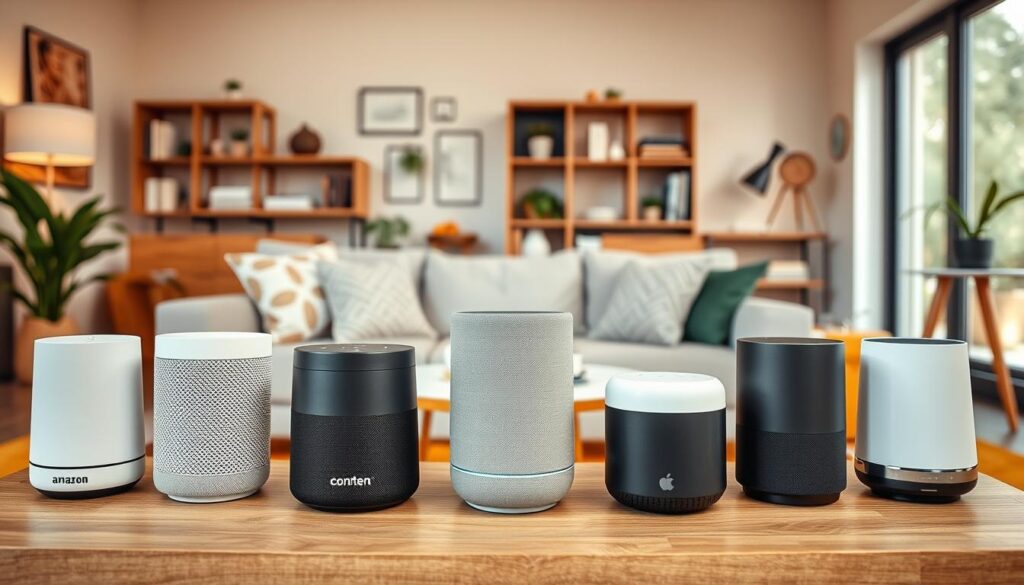
In the world of smart home technology, some brands really stand out. They are known for their new ideas and dependability. Choosing the right device means knowing what each leading smart speaker brand offers. Each brand has its own way of making devices work together.
Amazon Echo Lineup
Amazon leads with a wide range of devices. Their Echo speakers are versatile, from small to big ones with screens. These AI speakers use Alexa, which is great at controlling many smart home gadgets.
Google Nest Speakers
Google focuses on getting information and working well with digital tools. If you use Google Calendar, Gmail, or Maps, these speakers are perfect. They have top-notch voice recognition for complex searches.
Apple HomePod Series
For Apple fans, the HomePod series is the best choice. These speakers focus on great sound and work well with Siri. They’re great for those who want a secure and easy way to manage their home.
Sonos Smart Speakers
Sonos is the top pick for those who love premium connected audio. They support many voice assistants but are known for their sound quality. Make sure your preferred assistant works with your Sonos model before buying.
| Brand | Primary Assistant | Best For |
|---|---|---|
| Amazon | Alexa | Smart Home Variety |
| Google Assistant | Search & Productivity | |
| Apple | Siri | Apple Ecosystem |
| Sonos | Multiple | High-End Audio |
Your choice should match your current ecosystem. Think about these points when setting up:
- Compatibility: Make sure the speaker works with your smart devices.
- Audio Quality: Choose based on whether you want music in the background or high-quality sound.
- Display Needs: Decide if a screen helps you manage your day better.
Smart Speaker Price Ranges and What to Expect
When you look for voice-controlled devices, you’ll see many smart speaker prices to choose from. Most AI speakers do the same basic things, like setting timers and controlling your smart home. Even the cheapest models can do these things well.
Budget-Friendly Options
For those on a tight budget, there are affordable smart speakers from $30 to $60. These small speakers are great for small spaces like bedrooms or offices. They’re not perfect for music, but they’re good for everyday tasks.
Mid-Range Choices
In the $100 to $200 range, you’ll find speakers that focus on audio fidelity and sound quality. They have bigger drivers and better microphones for clearer voice commands. They’re a good choice if you want both smart features and good sound.
High-End Models
Premium AI speakers cost $300 or more and are for those who love music and smart homes. They offer advanced features like spatial audio and high-resolution cameras. You’re paying for top-notch materials, sound, and smart home integration.
| Tier | Price Range | Best For |
|---|---|---|
| Budget | $30 – $60 | Basic voice tasks |
| Mid-Range | $100 – $200 | Music and daily use |
| High-End | $300+ | Audiophiles and displays |
Before buying, check for sales or deals to save money. Make sure to look at the warranty and return policies of the seller. Comparing smart speaker prices will help you find the best deal for your home.
Setting Up Your Smart Speaker
We can guide you through setting up your voice-activated devices for a smooth start. Following the right steps ensures your device fits well with your network and digital world.
Unboxing and Initial Setup
The first step is to download the app for your smart speaker setup. Choose from Amazon, Google, or Apple, and the app is your control center.
After installing the app, create or log in to your account. Plug in your speaker and wait for it to show it’s ready. Most devices start pairing mode as soon as they’re powered on.
Connecting to Wi-Fi and Other Devices
Power on your device and use the app to find your Wi-Fi network. Enter your network details to connect your speaker to the internet.
Newer models offer easy connections:
- Frustration-Free Setup: Some devices automatically connect to your account if bought from certain stores.
- Device Discovery: The app finds and links your smart home devices like lights or thermostats.
- Music Linking: Connect your favorite streaming services to enjoy your playlists.
“The beauty of modern technology lies in its ability to simplify our daily routines through intuitive design and seamless connectivity.”
Customizing Your Voice Assistant Settings
Before daily use, check your privacy and personalization settings. Choose how much data to share and which features to keep active.
Adjust these settings for better home automation:
- Voice History: Review or delete past recordings for privacy.
- Wake-Word Options: Pick a trigger word that’s easy for your family to remember.
- Personal Results: Decide if you want your calendar or messages read aloud.
- Shopping Permissions: Set a PIN code to prevent accidental purchases by others.
By customizing your device, you make it more functional and secure. Tailoring your assistant to your needs makes your home environment more helpful for everyone.
Smart Speakers for Different Living Spaces
We think that smart speakers in the right spots can change how you use your home. A smart room-by-room speaker guide helps make sure your devices are useful without making your home look cluttered. Each room has its own sound and function needs.
Best Choices for Small Apartments
In small places, saving space is key. We suggest compact, puck-sized devices that fit on small tables or shelves. They work well with voice commands without taking up too much room.
For studios, one good device can cover the whole area. Look for ones with 360-degree sound to make sure sound reaches every part of your apartment.
Options for Family Homes
Bigger homes need more connected devices. Use display-equipped smart speakers in key spots like the living room or kitchen. These screens help manage schedules, watch security cameras, and make calls.
In open-plan areas, think about setting up connected speakers to play music everywhere. This way, music moves with you from the kitchen to the dining area smoothly.
Outdoor and Kitchen-Friendly Speakers
The kitchen is busy and needs splash-resistant designs. Make sure your speaker has an IP rating if it’s near water. Keep electronics away from heat and flames.
Outdoor speakers need special care. Most aren’t weather-proof. Check if a speaker is made for outdoor use before using it outside. Always keep power cords dry.
| Room Type | Recommended Feature | Primary Benefit |
|---|---|---|
| Small Apartment | Compact Design | Space Efficiency |
| Family Room | Display Screen | Visual Interaction |
| Kitchen | Water Resistance | Durability |
| Outdoor Patio | Weather-Proofing | Reliability |
Enhancing Your Smart Speaker’s Functionality
We can turn our smart speakers into powerful tools for home automation and daily tasks. They go beyond playing music, making our lives easier. These devices are the heart of our modern homes.
Third-Party Apps and Skills
The real strength of connected speakers is in their software. With Alexa Skills, Google Home integrations, or Apple Home accessories, you can customize your device. This makes it fit your exact needs.
- Productivity: Sync your digital calendars to hear your daily agenda upon waking.
- Entertainment: Link premium music services to access millions of songs instantly.
- Utility: Use third-party smart speaker skills to order groceries, track packages, or control smart lights.
Multi-Room Audio Setup
Setting up a seamless audio experience in your home is simple. Make sure all devices are on the same Wi-Fi network and account.
“The beauty of a connected home is the ability to have your favorite playlist follow you from the kitchen to the living room without missing a single beat.”
Begin by naming each device clearly, like “Kitchen Speaker” or “Bedroom Echo.” Then, create speaker groups in your app for synchronized playback. Always test the group by playing a song to ensure the audio is perfectly aligned across all rooms.
Voice Control Customization
Customizing your voice assistant makes interactions smoother. Set your preferred wake words and default music services to avoid repetition.
Also, use home automation routines. Create custom routine names for multiple actions with one command. For example, saying “Goodnight” can lock doors, dim lights, and lower the thermostat.
Enable personal results for your speaker to read emails or provide specific updates. This level of customization makes your connected speakers truly work for you. They adapt to your lifestyle, providing a tailored experience.
Privacy and Security Concerns with Smart Speakers
We often overlook the privacy implications when we invite virtual assistants into our homes. These tools offer great convenience but also collect a lot of data. It’s important to understand how this data is handled.
Data Protection and User Privacy
Most smart home devices need cloud processing to work. This means your voice recordings go to remote servers. Companies use this data to make your experience better, like suggesting music.
But, third-party developers might also get some of your data if you enable certain apps. It’s key to check which permissions you give to these services. Transparency helps protect your data from unwanted exposure.
Tips for Securing Your Device
To protect your home, start with a strong, unique password for your speaker’s account. Adding two-factor authentication is a great security step. It stops unauthorized access.
Keep your device’s software up to date to fix security holes. Many speakers have mute buttons or camera covers for extra security. Do a privacy review every few months to clear your history and check settings.
Understanding Voice Recording Policies
Policies on voice recording privacy can change. For example, Amazon has updated its policies to give users more control. Always read the latest policy notices from your device’s maker.
The table below shows how different platforms handle user privacy and data:
| Feature | Amazon Echo | Google Nest | Apple HomePod |
|---|---|---|---|
| Voice Data Storage | User-controlled | User-controlled | Anonymized |
| Physical Mute | Yes | Yes | N/A |
| Third-Party Access | Limited | Limited | Restricted |
| Privacy Focus | High | High | Very High |
Future Trends in Smart Speaker Technology
Our homes are becoming more like smart companions, not just gadgets. We’re moving from simple commands to a more natural way of talking to our devices. This change is a big step forward in smart home technology.
Advancements in Voice Recognition
Today’s AI speakers are getting better at understanding you. They remember your likes and get what you mean, even with complex requests. Soon, your home will know what you need before you ask.
The true potential of ambient computing lies in its ability to disappear into the background while remaining perfectly attuned to the user’s intent.
AI Integration and Smart Home Connectivity
The introduction of generative AI smart speakers is changing home automation. Google Gemini for Home and Amazon Alexa+ are leading with better conversation skills. Basic features are free, but advanced ones will need a subscription.
These systems will manage all your devices with great accuracy. They focus on working well with devices from different makers.
Emerging Brands to Watch
New brands are focusing on privacy and lasting software support. We look for strong privacy measures and support for universal standards. The table below shows what we expect from future devices.
| Feature Category | Current Standard | Future Expectation |
|---|---|---|
| Interaction Style | Command-based | Conversational AI |
| Privacy Control | Basic Settings | Local Data Processing |
| Device Support | Limited Ecosystems | Universal Interoperability |
| Service Model | One-time Purchase | Hybrid Subscription |
The future of smart speakers depends on privacy and usefulness. Keep up with software updates and subscription plans. Choose a brand that supports open standards for a lasting investment.
Conclusion: Choosing the Right Smart Speaker for Your Home
Finding the right tech for your home is all about matching your needs with what’s out there. We hope this guide helps you make a smart choice.
Essential Factors for Your Decision
Think about what you really need before you buy. Do you want top-notch sound, seamless integration, or easy voice control for everyday tasks?
Top Picks for Your Lifestyle
The Amazon Echo is great for those who love Alexa. Google Nest speakers are perfect for Android users and search fans. Apple HomePods offer amazing sound for music lovers. Sonos speakers are the best for playing music in different rooms.
Start Your Smart Journey
Try out the cool features these devices have. See how voice commands and routines work for you. Use these tips to make your home smarter and more connected today.