
 Zoe Nora
Did you know a small 1% gap in a wall or door can let up to 30% of outside noise in? If that gap grows to 5%, you lose 90% of your sound insulation. This shows why many homeowners find it hard to have peace in their homes.
We think your home should be a quiet place away from the world’s noise. To make this happen, you need smart noise reduction plans and top-notch materials. Whether it’s traffic or noisy neighbors, we have the solution for you.
Our guide covers soundproofing solutions from easy DIY fixes to big structural changes. With the right soundproofing materials, like soundproof panels or acoustic treatment, you can get your privacy back. Let us show you how to make your home a calm and cozy place.
Key Takeaways
- Small gaps in your walls can greatly reduce your home’s insulation.
- Good noise reduction means tackling both airborne and impact sounds.
- Professional acoustic treatment can make your home much more comfortable.
- Using soundproofing materials wisely can make your home peaceful.
- Simple DIY soundproofing can quickly reduce unwanted noise.
Understanding Soundproofing and Its Benefits
Many homeowners face the challenge of unwanted noise. But, the solution starts with understanding acoustics. Knowing how sound moves helps you make smart choices for your home. We think a quiet home is key to your happiness and comfort.
What is Soundproofing?
Soundproofing is about stopping sound from getting in or out of a room. It’s like a wall that blocks noise from passing through. This is different from acoustic treatment, which makes sound better inside a room.
Soundproofing keeps outside noise out. But, acoustic treatment makes sound quality better inside. Knowing this helps you pick the right materials for your needs.
Why Soundproof Your Home?
Good sound insulation brings many benefits. It gives you privacy and helps you focus at home. It also makes your sleep better by blocking outside noise.
| Feature | Soundproofing | Acoustic Treatment |
|---|---|---|
| Primary Goal | Block sound transmission | Reduce echoes/reverberation |
| Method | Mass, density, and sealing | Soft, porous materials |
| Best For | Privacy and quiet zones | Recording and home theaters |
Common Soundproofing Misconceptions
Many think all materials block sound equally. But, soft foam doesn’t stop sound waves. It’s for absorbing sound, not blocking it.
Some believe thicker materials always work better. But, it’s not just about thickness. How you install and seal materials matters. Focus on density and airtightness for the best results.
Types of Sound: Airborne vs. Impact Noise
Understanding sound starts with knowing airborne and impact noises. To improve soundproofing, we must tackle different noises with specific methods. Knowing where the noise comes from helps us find the best way to quiet our homes.
What is Airborne Noise?
Airborne noise travels through the air to our ears. Examples include voices, TV sounds, and traffic hum. These sounds make our walls, ceilings, and floors vibrate, spreading the noise.
Since airborne sounds move freely, they can sneak through small openings. To block them, we need to seal gaps and add weight to our walls.
Understanding Impact Noise
Impact noise comes from physical contact with our home. It’s caused by things like footsteps, moving furniture, or dropping objects. This type of noise is hard to stop once it hits our walls.
Unlike airborne sounds, impact noise needs special materials. These materials help absorb or block the vibrations before they spread.
How to Identify Different Sound Types
Identifying noise types is key. If you can hear a conversation through a wall, it’s airborne sound. But if you feel a thud or vibration, it’s impact noise.
By listening to the noise, we can pick the best soundproofing method. Knowing the source is crucial for effective noise reduction at home.
Popular Soundproofing Materials
Creating a quiet space needs the right soundproofing materials. The best mix of products can cut down on noise. By using both absorption and blocking, you can make a room soundproof like a pro.
Acoustic Panels
Acoustic panels help control echoes and sound reflections. These soundproof panels soak up sound waves instead of letting them bounce. Place them at key spots to make your room sound clearer.
Mass Loaded Vinyl
Mass Loaded Vinyl (MLV) is great for stopping airborne noise. It’s a thin, heavy material that blocks sound from passing through walls, ceilings, and floors. It’s effective because it adds mass without changing your home’s structure.
Soundproof Flooring Options
Impact noise, like footsteps, travels through floor joists. To stop this, use special underlayments or rubber mats. These soundproofing options keep the floor from vibrating, stopping noise from spreading.
Insulation Choices
Good insulation is key for acoustic treatment. Mineral wool or fiberglass batts are top picks for filling wall cavities. They keep sound in and offer thermal benefits too.
| Material Type | Primary Function | Best Use Case |
|---|---|---|
| Acoustic Panels | Sound Absorption | Home Theaters/Offices |
| Mass Loaded Vinyl | Sound Blocking | Walls and Ceilings |
| Rubber Underlayment | Vibration Damping | Flooring Systems |
| Mineral Wool | Sound Insulation | Wall Cavities |
Soundproofing Doors and Windows
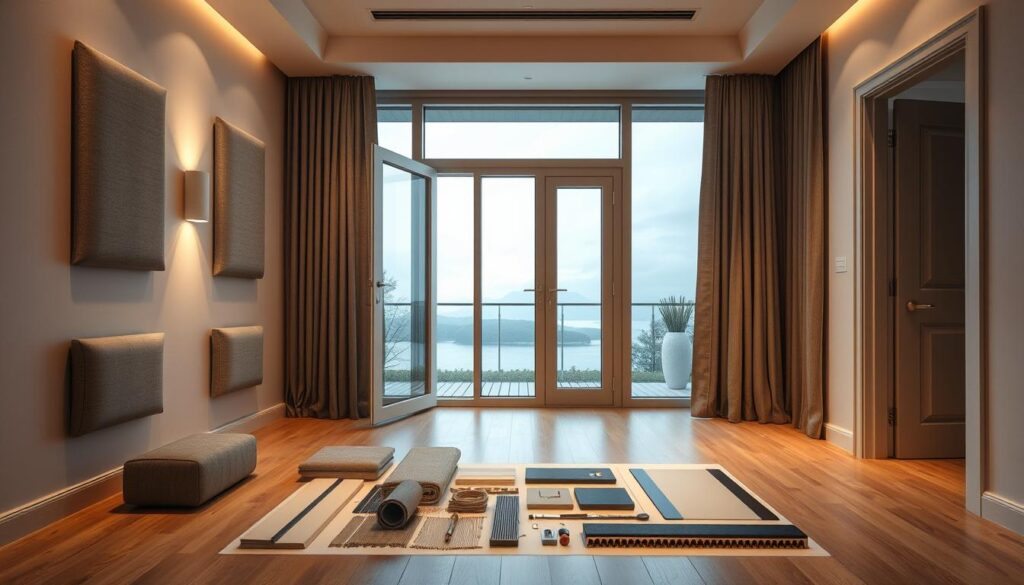
Creating a quiet home starts with fixing doors and windows. Even a small gap can let in a lot of sound. So, it’s key to use soundproofing solutions to block out noise from outside.
Upgrading Door Seals
Doors are often the weakest spot against noise. We suggest adding door sweeps and weatherstripping to seal gaps. Also, using acoustical caulk around the door frame helps block sound.
Using Soundproof Window Inserts
Windows can let in a lot of noise, more so in older homes. For a professional fix, consider custom-made window inserts. They add a layer of soundproofing without blocking your view.
Best Window Treatments
For more soundproofing solutions, try heavy, dense curtains. They soak up sound waves. Pair them with a good home audio setup for a quiet, immersive space.
| Method | Primary Benefit | Ease of Installation |
|---|---|---|
| Door Sweeps | Blocks air and sound gaps | Easy |
| Acoustical Caulk | Seals structural cracks | Moderate |
| Window Inserts | High-level noise reduction | Professional |
| Heavy Curtains | Absorbs echo and noise | Easy |
Enhancing Wall Soundproofing
Our walls are key in keeping out unwanted sounds. By focusing on them, we can make any room quieter. To do this, we need to use mass and absorption techniques together.
Adding Drywall Layers
Increasing a wall’s mass is a great way to block sound. Adding another layer of drywall makes the wall thicker. This makes it harder for sound to get through.
When adding layers, seal all gaps with acoustic caulk. This stops sound leaks. A well-sealed wall is the foundation of a quiet home.
Best Paints for Soundproofing
Some paints can help block vibrations, but they’re not a complete solution. These paints have ceramic microspheres that add density. Remember, paint alone won’t solve big noise problems, but it helps.
“Silence is not the absence of sound, but the presence of peace.”
Think about your wall’s structure when choosing materials. Harder woods like oak block sound better. Softer woods like pine absorb it. Mixing these can create a balanced sound environment.
Using Wall Hangings and Decor
Adding soft items to your walls can also help. Things like heavy tapestries or bookshelves filled with books absorb sound. They stop echoes by breaking up sound reflections.
For a more professional touch, try soundproof panels. They trap sound waves and come in styles that fit your decor. Mixing these with structural changes can make your walls a strong sound barrier.
Ceiling Soundproofing Solutions
We often focus on walls and floors, but the ceiling is a primary pathway for unwanted noise. In multi-story homes or apartments, impact sounds from neighbors above can easily travel through structural beams. Implementing effective soundproofing strategies overhead is essential for a truly quiet environment.
Installing Acoustic Tiles
Acoustic tiles are a popular choice for those who want both function and design. These soundproof panels absorb sound reflections within a room. This reduces echo and improves overall clarity. They are great in home theaters or offices where high-quality audio is important.
When selecting tiles, consider the following benefits:
- They provide an immediate acoustic treatment for hard surfaces.
- Installation is often straightforward, requiring only adhesive or simple mounting clips.
- They come in various textures and colors to match your interior decor.
Using Resilient Channels
If you are dealing with significant noise transmission, you may need more robust soundproofing solutions. Installing resilient channels is a highly effective way to decouple your ceiling from the floor joists above. This mechanical separation prevents vibrations from traveling directly through the structure.
To maximize the effectiveness of this method, we recommend the following steps:
- Attach the metal channels perpendicular to the ceiling joists.
- Fill the void between the joists with high-density rockwool for superior sound insulation.
- Attach new drywall layers to the channels, ensuring they do not touch the perimeter walls.
Considerations for Ceiling Height
Before starting any intensive project, you must account for your current ceiling height. Adding layers of drywall or suspended systems will inevitably lower the ceiling, which can make a room feel smaller. It is important to measure your space carefully to ensure that your chosen sound insulation method does not compromise the comfort of the room.
If your ceilings are already low, you might prefer thinner soundproof panels or surface-mounted treatments. Always prioritize a solution that maintains a functional living space while providing the necessary noise reduction. Balancing structural changes with aesthetic needs is the key to successful home acoustic treatment.
Outdoor Soundproofing Ideas
Creating a peaceful home starts before you enter. Managing noise at the property line boosts indoor soundproofing.
Landscaping for Sound Barriers
Nature is great at blocking noise. Thick hedges or evergreen trees act as natural sound barriers.
Strategically planting these barriers can stop noise before it hits your walls. Layering different vegetation makes a stronger shield against outside noise.
Fencing Options for Noise Reduction
If your yard is small, special fencing is a good choice. Solid, heavy-duty acoustic fencing blocks sound by acting as a physical wall.
Choose materials with high mass for best noise reduction. Garden screens or decorative panels add style and privacy, also blocking sound.
Utilizing Water Features
Masking noise with pleasant sounds is effective. Fountains or small waterfalls create a soothing background noise.
This method is great for reducing distant traffic or chatter. Adding these noise reduction features to your garden makes it a peaceful area that supports your soundproofing goals.
DIY Soundproofing Tips and Tricks
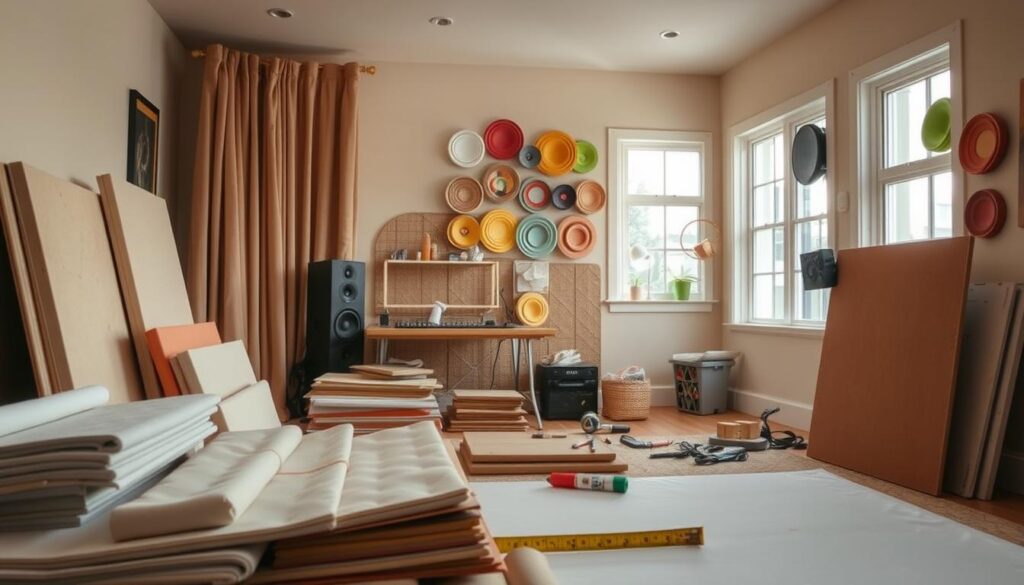
Improving your home’s quietness doesn’t need a big budget or pros. Many think soundproofing costs a lot, but simple items can make a big difference. Smart placement and clever materials can turn your home into a peaceful space.
Cost-Effective Solutions
Start your noise reduction journey with heavy fabrics. Thick moving blankets over doors or windows block sound well. These soundproofing materials are cheap and easy to take down when needed.
“The most effective way to manage sound in a home is to break up flat surfaces and add mass to your walls.”
Upcycling Household Items
Items in your home can be great for acoustic treatment. A big, heavy bookshelf against a shared wall blocks sound. Thick rug pads under furniture also help by dampening vibrations.
Old foam or fabric scraps can make DIY soundproof panels. Wrap them in decorative fabric for a stylish, sound-absorbing solution. This is both useful and looks good.
Soundproofing in Rental Spaces
In a rental, you can’t make permanent changes, but you can still reduce noise. A maximalist decor is a smart choice for renters. Fill your space with furniture, thick rugs, and heavy curtains to absorb sound.
- Use heavy area rugs with thick pads to dampen floor noise.
- Arrange bookshelves to create natural sound barriers against neighbors.
- Hang thick tapestries or canvas art to reduce echo and improve acoustic treatment.
- Apply temporary weather stripping to door frames to seal gaps.
These easy steps help with soundproofing without breaking your lease. By adding soft textures, you make your home cozy and quiet, a peaceful retreat from the outside.
When to Hire Professionals for Soundproofing
Creating a quiet home is a mix of doing it yourself and getting help from experts. Some tasks are easy for homeowners, but others need more skill.
Signs You Need Expert Help
Structural noise that won’t go away means there’s a big problem. If you want to put in floating floors, you need a pro. They make sure the floors work right and don’t vibrate too much.
Experts like QuietRock or Homasote can find leaks that DIY can’t. They know how to fix these problems.
Understanding Installation Costs
Planning for soundproofing means thinking about the cost of materials and labor. Getting professionals to do it right means your money goes further. They know how to make soundproofing work best.
Choosing the Right Soundproofing Company
Finding a good company takes some research. Look for ones with experience in homes. They should be clear about what they charge.
We suggest talking to local experts to make your home quieter. It’s a big step towards a peaceful home.