
 Zoe Nora
Did you know our ears can pick up audio delays as small as 0.05 milliseconds? This amazing sensitivity is why a top-notch surround sound setup changes how we enjoy movies and music. When sound moves just right around us, our brains treat it like real life.
We think making your home a place for an immersive sound experience is the best upgrade for any room. With tech like Dolby Atmos, we can place sounds in a three-dimensional space. This guide will show you how to turn your living room into a top-notch theater.
Key Takeaways
- Human hearing is highly sensitive to timing and spatial audio cues.
- Dolby Atmos creates a multidimensional audio environment for viewers.
- Proper speaker placement is vital for achieving true immersion.
- Modern technology allows for cinematic quality within residential spaces.
- Strategic planning ensures your home theater meets professional standards.
Understanding Surround Sound Basics
Learning the basics of multi-channel audio is key to a top-notch home theater. When setting up a surround sound system, we aim to mimic how sound moves in real life. This creates an immersive experience.
What is Surround Sound?
Surround sound uses multiple channels to place you right in the action. By placing speakers around the room, we create a three-dimensional soundscape. This soundscape moves with the visuals on your screen.
These setups are labeled with numbers like 5.1, 7.1, or 9.1. The first number shows the total number of speakers. The second number is for subwoofers. For example, a 5.1 surround sound system has five speakers and one subwoofer for deep bass.
Key Components of a Surround Sound System
Creating a strong setup needs specific hardware that works together. Each piece is crucial for delivering clear, balanced audio.
To start, you’ll need these key components:
- AV Receiver: The system’s brain that handles audio signals and powers speakers.
- Center Channel Speaker: Essential for dialogue, placed below or above your screen.
- Front Left and Right Speakers: These handle main music and sound effects.
- Surround Speakers: Situated to the sides or rear for ambient noise and direction.
- Subwoofer: Specialized for low-frequency effects, adding depth and impact to movies.
Knowing how these parts work together is the first step to a high-quality surround sound system. By balancing these elements, you ensure every sound is heard as the director meant.
Choosing the Right Speakers
Whether you love listening to music or watching movies, your speakers matter a lot. The right speakers make your sound better, fitting your room perfectly.
It’s all about matching your speakers to your space for the best sound. You might pick a soundbar setup or go for separate speakers. Either way, it shapes your home theater’s sound.
Types of Surround Sound Speakers
There are many speaker options, based on your budget and room size. Satellite speakers are great for small spaces, while floorstanding speakers offer a richer, more powerful sound for bigger rooms.
For a sleek look, consider a high-quality soundbar. Many soundbars come with wireless rear speakers. This creates a full surround sound without extra wires.
Speaker Placement Tips
After picking your speakers, where you place them is crucial. The “golden rule” is to form triangles with the listener for balanced sound.
Good speaker placement ensures sound reaches everyone clearly. Keep your front speakers at ear level for clear dialogue.
Angle your speakers slightly toward the main seating area. This directs high-frequency sounds to your ears, not the walls. Consistency is key for the best home cinema sound.
Selecting an AV Receiver
The AV receiver is the heart of your entertainment system. It handles audio and video signals from different sources. Without a good receiver, even the best speakers won’t sound their best.
Features to Look for in a Receiver
When looking for a surround sound system, modern connectivity is key. Make sure the receiver supports HDMI 2.1. This ensures it works with high-resolution video and advanced gaming.
Also, look for strong digital-to-analog converters. These keep your multi-channel surround sound clear and crisp. Choose a model with easy room correction software for balanced audio.
Importance of Power Ratings
Power ratings show how well a receiver can power speakers without distortion. For big rooms, you need more power to keep the volume up during loud scenes. For rooms over 500 square feet, aim for 100 to 150 watts per channel.
“The power rating of your receiver is not just about volume; it is about the ability to maintain control over your speakers during the most demanding audio passages.”
Here’s a quick guide to match room size with power output for your multi-channel surround sound setup.
| Room Size (Sq. Ft.) | Recommended Power (WPC) | Performance Level |
|---|---|---|
| Under 200 | 50–80 Watts | Standard |
| 200–500 | 80–100 Watts | Enhanced |
| Over 500 | 100–150+ Watts | Professional |
Make sure your surround sound system receiver fits your speakers’ impedance. Proper matching prevents overheating and protects your gear. Investing in the right power now saves you from expensive upgrades later.
Room Acoustics and Setup
Turning a regular living room into a home theater starts with sound. How sound moves in your space is key. A good home audio setup means looking at your room, not just the equipment.
Analyzing Your Room’s Sound Profile
Every room sounds different because of its size and materials. Hard surfaces like floors and walls reflect sound, making it unclear. Try the “clap test” to find where echoes are loudest.
Standing waves happen in square rooms, making bass sound boomy. Knowing where these waves hit helps place your gear right. A good home audio setup starts with controlling these reflections.
Acoustic Treatment Options
Knowing your room’s sound issues lets you fix them. Soft treatments like thick curtains and rugs soak up sound. They help cut down echo and improve sound quality.
Here’s a table to pick the right materials for your room:
| Treatment Type | Primary Benefit | Best Placement |
|---|---|---|
| Acoustic Panels | Absorbs mid-high frequencies | First reflection points |
| Heavy Curtains | Reduces window reflections | Over glass surfaces |
| Plush Rugs | Minimizes floor bounce | Between speakers and seating |
By managing reflections, you make your room sound like a cinema. Strategic placement of treatments makes your home audio setup sound clear and immersive every time.
Connectivity Options
Getting a good connection is key for a top-notch home theater. Whether you’re setting up a complex system or a simple soundbar setup, the right cables matter a lot. They help keep your sound clear and free from interference.
Wired vs. Wireless Surround Sound
Wired connections are the best for uncompromised audio quality. They avoid signal dropouts and latency found in wireless systems. This is crucial for keeping your video and audio in perfect sync.
Wireless options are great for convenience and a tidy room. New wireless tech lets you stream high-quality sound without messy cables. But, your network needs to be strong enough for high-resolution surround sound.
Understanding HDMI and Optical Cables
Choose cables that support HDMI 2.1 or higher for your setup. These are needed for 4K UHD video and advanced audio like Dolby Atmos. Old cables can slow down your system during your soundbar setup.
Optical cables, or TOSLINK, are good for basic surround sound. But, they can’t handle the latest high-definition audio. Use them for older devices or secondary zones where you don’t need 4K video.
| Connection Type | Best For | Max Resolution | Audio Quality |
|---|---|---|---|
| HDMI 2.1 | Modern Receivers | 8K / 4K 120Hz | Lossless / High-Res |
| HDMI ARC/eARC | Soundbar Systems | 4K 60Hz | High-Res / Atmos |
| Optical (TOSLINK) | Legacy Audio | N/A (Audio Only) | Compressed Surround |
Setting Up Your Surround Sound System
Turning your living room into a sound paradise starts with a good surround sound setup. A successful home theater installation needs careful planning and attention to detail. This ensures all parts work together for top-notch sound.
Basic Setup Steps
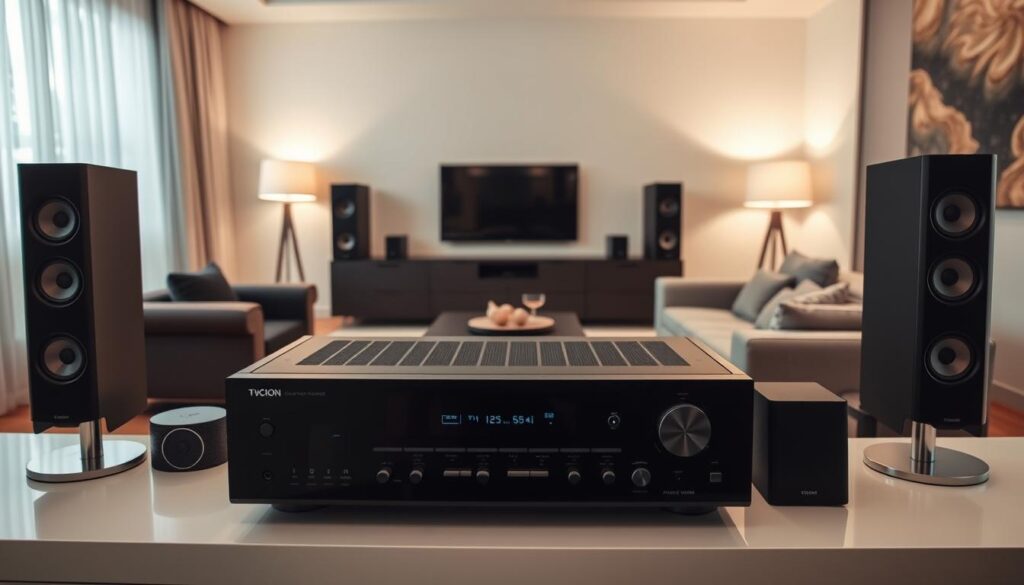
First, set up your main speakers correctly. Place them an equal distance apart, forming a triangle with you in the middle. This precise alignment gives you a balanced soundstage that draws you into the action.
Next, connect your speakers to your AV receiver with quality cables. For more details on setting up your surround sound, check out this guide. After connecting, turn on your system and test it with tones to make sure everything works.
Common Installation Mistakes to Avoid
Even the most expensive gear can fail if installed wrong. A common mistake is placing speakers too close to walls, causing muddy bass and reflections. Keep your speakers a few inches from walls for clear sound.
Another mistake is bad cable management. Tangled or poorly routed wires can cause signal problems and look messy. Use cable ties or conduits to keep your cables neat and safe from damage.
Don’t skip the calibration step. Many think just plugging in speakers is enough. But adjusting levels is key for a balanced sound. Taking the time to calibrate will make your movies sound better.
Calibration and Tuning
After setting up your hardware, the next step is audio calibration. This makes sure all speakers work together well in your room. Without it, sound can bounce off walls or get lost, making it sound muddy.
Importance of Calibration
Calibration is key because it balances each speaker’s sound. It adjusts the timing and volume so you can hear subtle nuances in movies. This turns your room into a perfect sound environment.
By fine-tuning these settings, you get a home audio setup with great sound. It ensures no speaker is too loud, keeping the sound balanced. This detail makes a big difference in how immersive your experience is.
Tools for Tuning Your System
Many modern receivers have built-in audio calibration tools. These use a microphone to measure your room and adjust the sound. Just place the microphone where you sit and let it do the work.
If you like to get your hands dirty, there are other tools too. Sound pressure level meters or room correction software can give you more control. They let you tweak the sound to your liking. The goal is always to get the sound just right.
Enhancing the Experience with Technology
Getting an immersive sound experience is easier than ever thanks to new tech. We don’t just adjust settings by hand anymore. Now, we can link our devices to a digital world.
Smart Assistants and Sound Systems
Smart helpers like Amazon Alexa, Google Assistant, and Apple Siri change how we control our home theaters. By linking your AV receiver to these, you can change volume, inputs, or sound modes with voice commands. This makes your immersive sound experience smooth during movie nights.
Smart tech brings many benefits to your setup:
- Automated Scenes: Dim lights and turn on your system with just a voice command.
- Multi-room Audio: Connect your home theater with other room speakers for a unified sound.
- Firmware Updates: Get automatic updates to keep your gear at its best.
Streaming Services and Their Impact
Our media habits have changed, moving towards digital high-quality content. Streaming services are adding Dolby Atmos and Dolby Vision, offering more content for a immersive sound experience. These formats give you a feeling of being right in the action.
“The future of home entertainment lies in the seamless marriage of high-fidelity audio and intelligent, user-centric software.”
Today’s platforms focus on high-quality audio to match 4K visuals. Pairing these with a good receiver unlocks depth like in professional cinemas. These updates keep your home setup up-to-date for years.
Incorporating Subwoofers
Deep, low-frequency sounds are key to an immersive audio experience. Standard speakers handle mid and high ranges well but struggle with the deep rumble needed for intense scenes. Adding a dedicated subwoofer turns your multi-channel surround sound system into a top-notch theater.
How Subwoofers Enhance Sound
Subwoofers are made to handle the Low-Frequency Effects (LFE) channel in movie soundtracks. They take on the heavy bass, letting your main speakers focus on dialogue and music clarity. This setup creates a cleaner, more balanced soundstage that fills your room with depth.
Without a subwoofer, you miss the physical sensation of sound in action scenes. The roar of an engine or the subtle thrum of music scores add weight to the scene. Proper integration keeps your multi-channel surround sound punchy and precise.
Placement Tips for Subwoofers
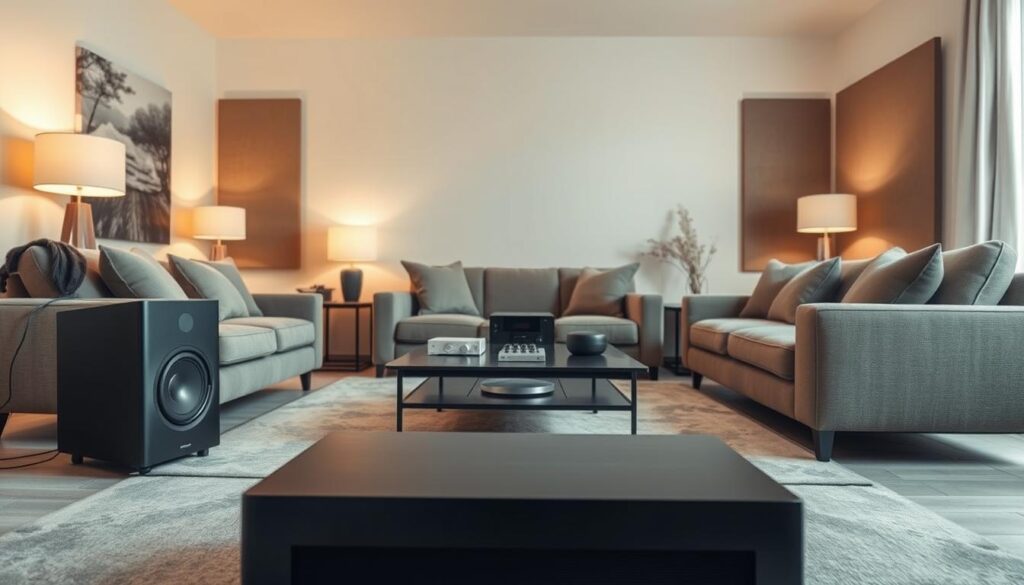
Getting the best bass response depends on where you place your subwoofer. A good starting point is on the floor against the same wall as your TV. Keep it 6 to 12 inches away from the corner to avoid muddy or boomy sound.
If your room layout is tricky, check out 5 home audio setup tips for narrow spaces. Small adjustments in speaker placement can greatly reduce unwanted vibrations or rattles. Always test a familiar track while moving the subwoofer to find the perfect spot for tight, controlled bass.
DIY Surround Sound Setup
If you want to start your first home theater, you might be surprised by how much you can do on a small budget. Creating a top-notch surround sound system doesn’t need to cost a lot if you know what to buy first. By focusing on the most important parts, you can make a space that’s fun for years.
Cost-Effective Alternatives
Looking for deals can save you a lot of money. You can find great deals on used gear or entry-level models from well-known brands. Many people start with a good receiver and add speakers later as they can afford it.
- Prioritize the center channel: This speaker is key for clear dialogue.
- Consider open-box deals: Stores often sell returned items at a discount.
- Focus on room placement: Where you place speakers is more important than their price.
Customized Solutions
Creating a unique space is more than just about the sound system. It’s also about comfort and how the room is set up. Adding home theater recliners with cupholders and power headrests can make your surround sound system even better.
Customizing your setup lets you fit it to your room’s size and style. Whether you have a small space or a big basement, you can design a personalized setup. With smart furniture and the right speaker placement, every movie night will feel like a visit to the cinema.
Maintenance and Care
Keeping your home theater installation in top shape is key. A little time each day can make a big difference. Treat your audio gear like you would any expensive electronic.
Regular Maintenance Best Practices
Using top-notch surge protectors is crucial. They save your home theater installation from power surges. Also, clean your gear with a soft, dry cloth to avoid dust buildup.
Check your cables every few months. Loose cables can cause sound problems. Make sure your receiver and speakers have good airflow to avoid overheating.
Troubleshooting Common Issues
Sound quality drops? It might be time for a new audio calibration. Changes in your room can affect sound. Run your system’s setup tool again to adjust.
Signal loss or buzzing? Check your cables and input sources first. A quick restart or HDMI cable swap might fix it. If not, check if your audio calibration settings were changed.
Enjoying Your Surround Sound Setup
Your home theater journey peaks when everything is set up and ready. Get comfy in your favorite chair. Prepare for an immersive sound experience that brings scenes to life.
Optimizing Your Visual and Audio Environment
Visual clarity is as important as audio precision. To find the right screen size, divide your viewing distance in inches by 1.5. This ensures your display matches your audio output.
Place your seating at the center of your speakers for perfect balance. Dim the lights and clear the room to focus on your media. These tweaks turn your living room into a professional space.
Refining Your Listening Sessions
For high-fidelity music, use direct mode on your Denon or Marantz receiver. It lets you hear music as the artists meant it. This setting skips unnecessary processing for a pure sound.
Try different music genres to test your subwoofer and speakers. Invite friends to experience your setup. Your custom setup opens the door to endless entertainment and quality audio.